






Asian Folding Screen
An asian folding screen brings architectural presence and divided space to a room, spanning styles from Chinoiserie to Japanese Meiji.
Asian Folding Screen
When you search for an asian folding screen, you are looking at hinged panels designed to divide a room, screen a hearth, or dress a corner. The examples appearing here range from Victorian photographic props and fire screens to large multi-panel room dividers spanning the nineteenth and twentieth centuries.
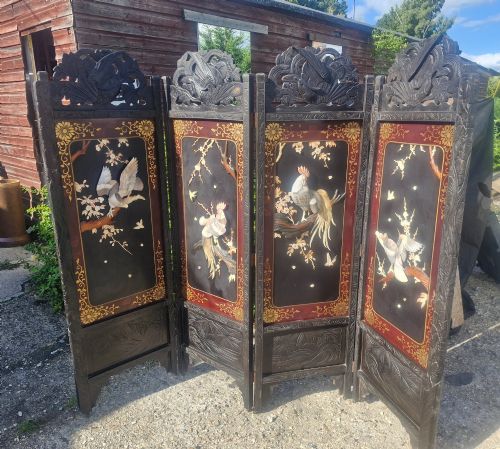
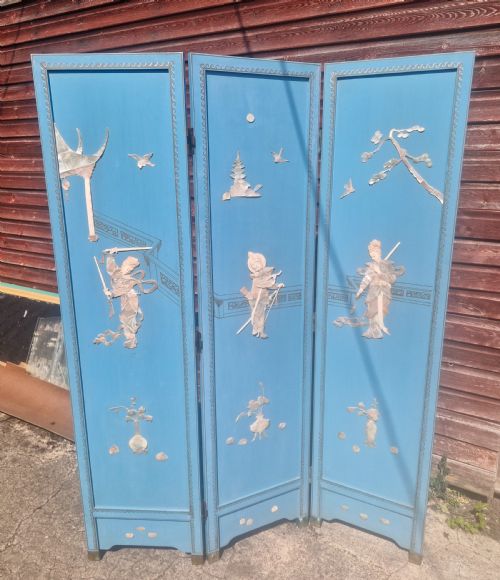
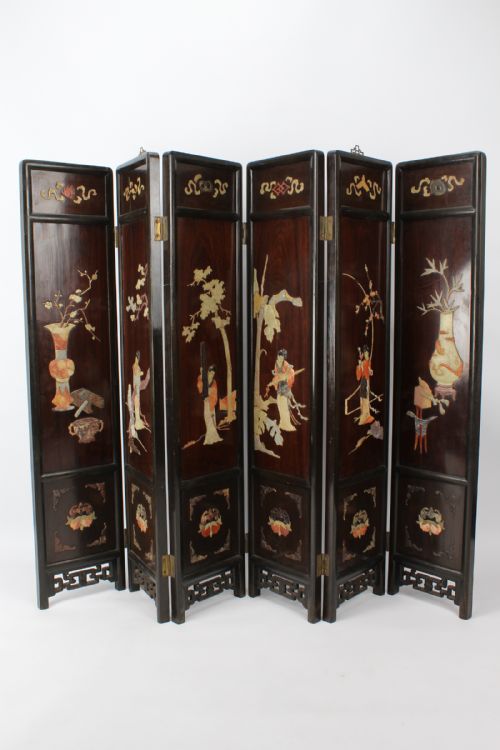
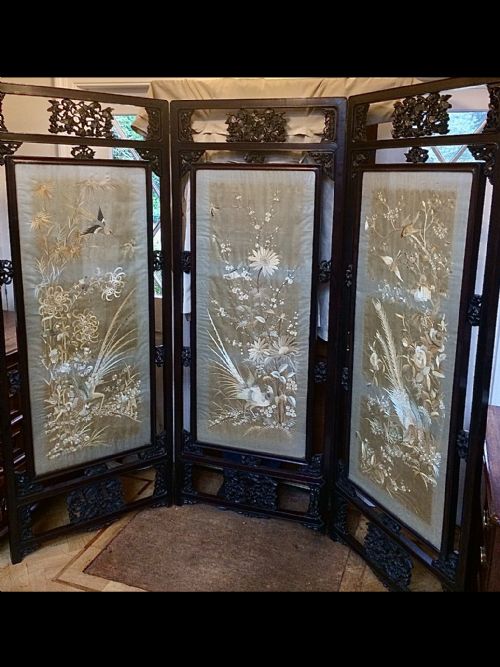
The configurations vary from three-fold dressing screens up to massive eight-fold Coromandel pieces. You will frequently encounter black lacquer grounds decorated with carved bone figures, hardstone mounts, or painted silk panels.
Origins stretch across China, Japan, and Burma, taking stylistic cues from the Qing Dynasty, Chinese Chippendale, and Meiji periods. Each piece functions simultaneously as structural furniture and decorative art.
Materials and construction methods
Makers built the structural frames from timber and dense hardwood, supporting hinged wooden panels that fold in alternating directions. Lacquered wood forms the most common base, finished with deep carving or flat painted decoration.
Surface ornamentation relies on applied materials including silk, cotton, bone, and hardstone. Artisans secured these details into carved recesses within the lacquer or wood ground.
Brass hardware frequently joins the panels together, allowing smooth articulation across three, four, six, or eight folds. Textile panels utilise stretched silk or cotton mounted within rigid frames.
Asian Folding Screen Retail Price Guide 2026
Typical asking prices for asian folding screen among the pieces listed under this phrase on Sellingantiques today, from the lower quarter to the upper quarter. They describe what is for sale here now, not the wider market.
Some nineteenth-century photographers utilised decorated folding screens as portable studio backdrops for portrait sitters.
Assessing quality in construction and surface
The distinction between tiers rests upon the depth and precision of the carving within the lacquer, alongside the quality of the timber core. Heavy hardwood frames and deeply incised Coromandel work represent the more substantial end of the range.
Surface execution also defines the standard, distinguishing between simple painted motifs and intricate inlaid bone or hardstone figures. The stability of the hinges and the tautness of mounted textiles further separate standard examples from finer works.
The Asian Folding Screen Glossary
- Coromandel lacquer
- A Chinese incised lacquer technique where the surface is covered in layers of dark lacquer, carved into designs, and filled with colours. This method creates a rich, textured finish often seen on large multi-fold panels.
- Chinoiserie
- A European artistic style reflecting Chinese motifs and decorative techniques, popularised during the eighteenth and nineteenth centuries. It appears on screens made for Western interiors.
- Meiji
- A period in Japanese history spanning the late nineteenth and early twentieth centuries, known for meticulous decorative arts. Pieces from this era often feature detailed lacquerwork and bone inlay.
- Fire screen
- A small decorative screen placed in front of an unused fireplace during warmer months. These items protect the room from drafts or simply hide an empty grate.
- Hardstone
- A semi-precious stone such as jade, agate, or soapstone carved and applied to decorative surfaces. In Asian screens, these stones form floral or figurative inlay.
Asian Folding Screen: Frequently Asked Questions
How do I use a folding screen in a modern room?
These screens work well to zone open-plan spaces, hide storage areas, or create a backdrop behind furniture.
Position the panels at slight angles to ensure stability and to catch the light across the lacquer or carved details.
What is the difference between a room divider and a fire screen?
Room dividers consist of multiple tall panels designed to partition space and stand independently on the floor.
Fire screens are smaller, shorter single or triple-fold pieces originally built specifically to shield a hearth.
How do I care for antique lacquer surfaces?
Dust the panels gently with a dry, soft cloth and keep them away from direct sunlight and excessive humidity.
Avoid chemical polishes and moisture, which can damage the delicate lacquer ground and inlaid materials.
How can I tell a Chinese screen from a Japanese one?
Chinese pieces often utilise deep incised Coromandel lacquer, carved hardwood, or applied hardstone and bone figures.
Japanese examples frequently display painted lacquer, textile panels, or intricate metal fittings reflecting Meiji craftsmanship.