




Asian Dragon Lighting
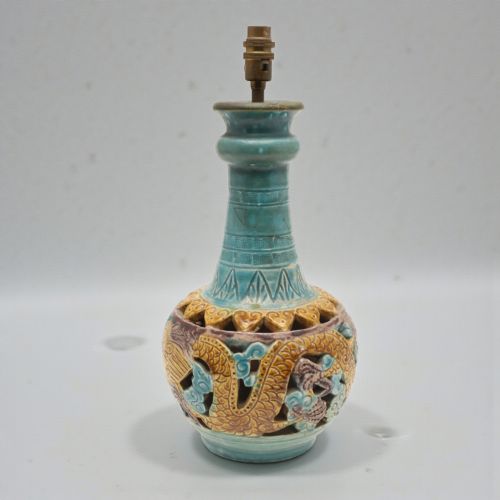
Asian dragon lighting brings powerful imperial symbolism and intricate nineteenth-century craftsmanship into your room through carved hardwood, bronze, and porcelain.
Asian Dragon Lighting
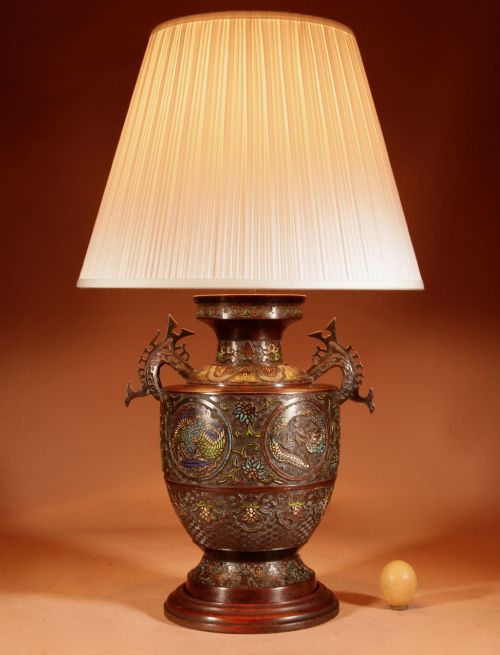
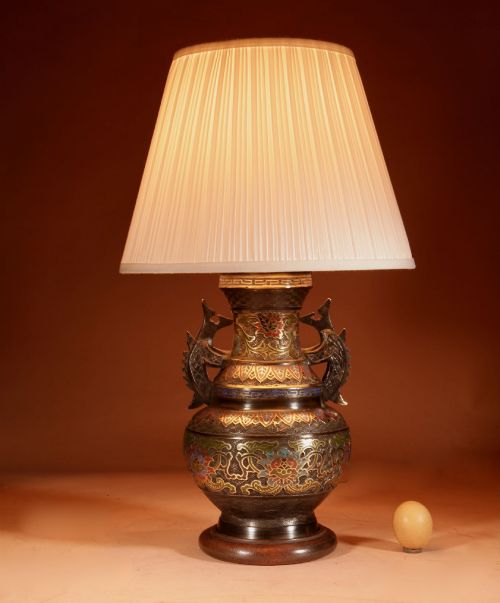
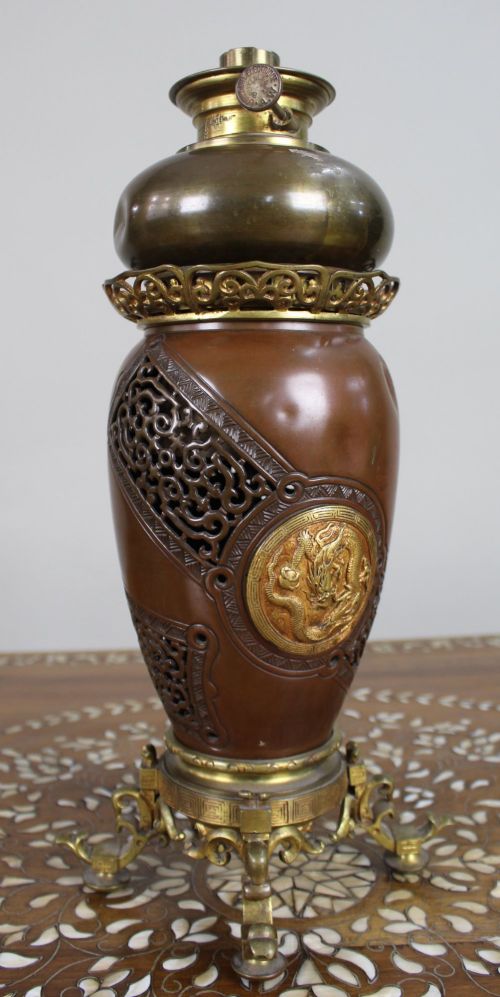
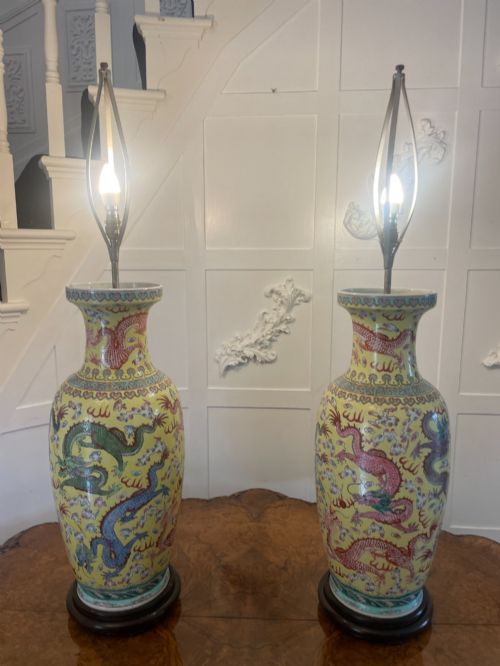
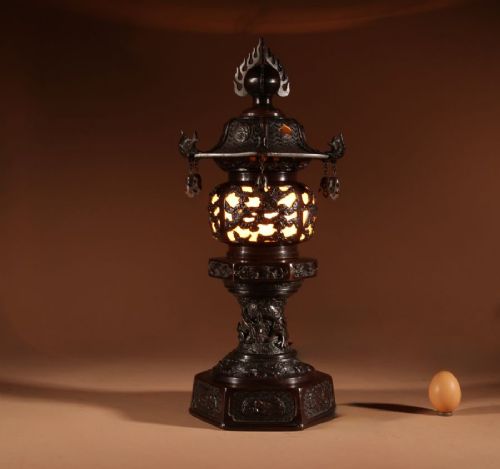
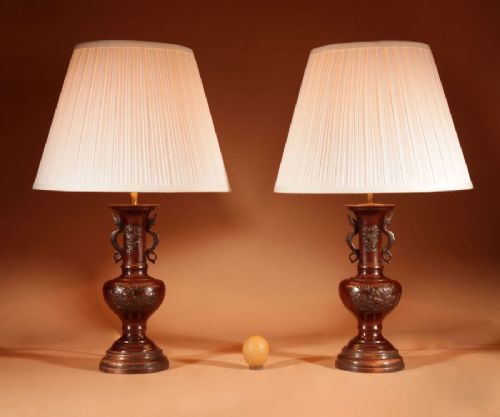
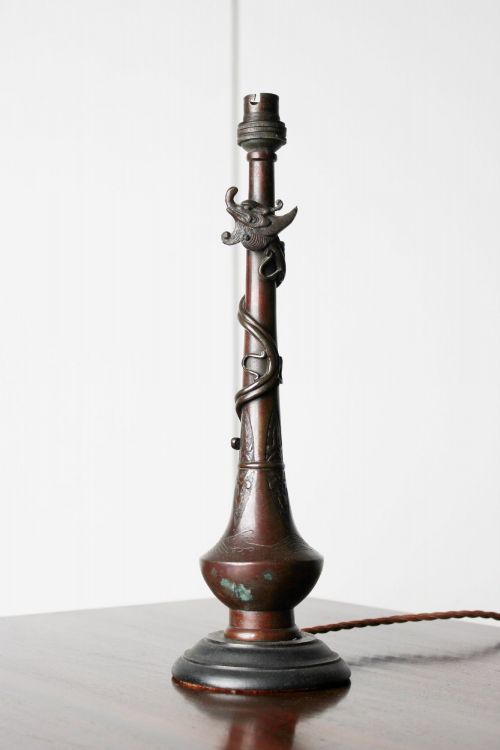
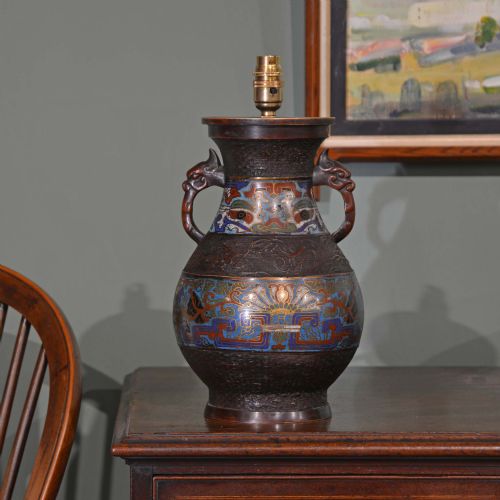
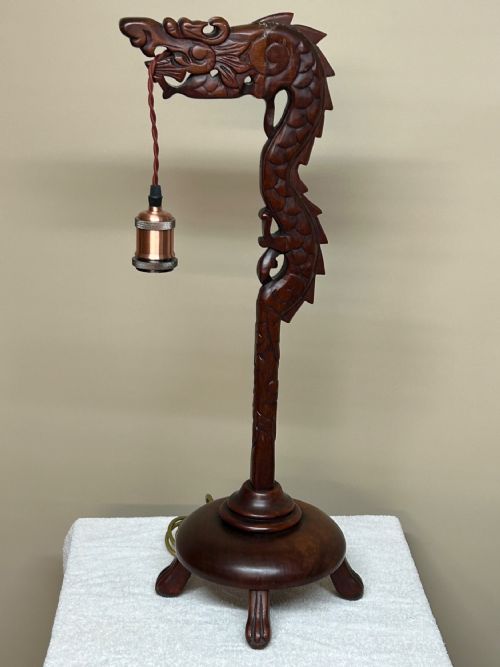
When you search for asian dragon lighting, you are looking at nineteenth-century table lamps, floor lamps, and lantern stands rooted in Chinese and Japanese traditions. These pieces incorporate distinct motifs from the Qing Dynasty and the Meiji period, ranging from bronze table lamps to carved hardwood stands.
You are most likely to meet Japanese bronze table lamps and Chinese hardwood lantern stands on this page. These items reflect diverse stylistic influences, including champlevé enamel, cloisonné, and Chinoiserie aesthetics.
The objects serve primarily as functional illumination while functioning equally as sculptural centrepieces. Their forms bridge traditional Asian furniture and European lighting adaptation.
Materials and construction
Makers utilised heavy bronze and brass to cast elaborate dragon figures and bases, often employing traditional lost-wax techniques during the Meiji period. Champlevé and cloisonné enamelling added colourful decorative cells directly onto the bronze or brass surfaces.
Carpenters carved dense hardwood and general wood to construct tall floor lamps and lantern stands. These wooden structures frequently featured intricate pierced carvings of dragons and floral motifs to support heavy lanterns.
Asian Dragon Lighting Retail Price Guide 2026
Typical asking prices for asian dragon lighting among the pieces listed under this phrase on Sellingantiques today, from the lower quarter to the upper quarter. They describe what is for sale here now, not the wider market.
Listings feature items spanning the Victorian and Edwardian periods, alongside the Meiji period and Qing Dynasty.
Assessing quality
The distinction between standard and superior pieces rests on the depth and crispness of the bronze casting or wood carving. Master craftsmen of the Meiji period and Qing Dynasty achieved fluid, highly detailed dragon scales and claws that lesser workshops rendered flat and formulaic.
The integration of materials also defines the upper tier of objects. Fine examples combine heavy bronze castings with pristine porcelain vases or intact champlevé enamel work without awkward structural modifications.
The Asian Dragon Lighting Glossary
- Champlevé
- An enamelling technique where troughs are dug into a bronze surface and filled with vitreous enamel before firing. This method creates rich, colourful decorative patterns across the metal body.
- Cloisonné
- A metalwork technique where thin metal wires are soldered to a base to form compartments filled with enamel paste. The piece is then fired and polished to a smooth finish.
- Meiji Period
- The era in Japanese history spanning from 1868 to 1912, noted for opening trade with the West and producing highly detailed bronzes. Works from this time often feature dynamic naturalistic motifs.
- Qing Dynasty
- The final imperial dynasty of China, lasting from 1644 to 1912, known for sophisticated porcelain and hardwood craftsmanship. Objects from this period display formal imperial symbolism.
- Chinoiserie
- A European artistic style reflecting Chinese motifs and decorative techniques, popular during the Victorian and Edwardian periods. It reinterprets Asian forms through Western design sensibilities.
Asian Dragon Lighting: Frequently Asked Questions
How do I identify Meiji period pieces?
Meiji period pieces date between 1868 and 1912 and typically feature Japanese bronze casting with high attention to anatomical detail.
Look for dynamic dragon figures, dark patination, and traditional signatures or workshop marks where present.
Were these lamps originally electrified?
Many nineteenth-century items such as hardwood lantern stands and Chinese vases were adapted for electrical lighting later in their lifespan.
Original oil or candle configurations were often converted during the Edwardian era or later to accommodate modern bulbs.
How do I clean a bronze dragon lamp?
Bronze surfaces benefit from gentle dusting with a soft, dry cloth to prevent the accumulation of dirt in intricate crevices.
Avoid chemical polishes or abrasive cleaners, which can strip away historical patination and damage enamel work.