



Asian Display Table
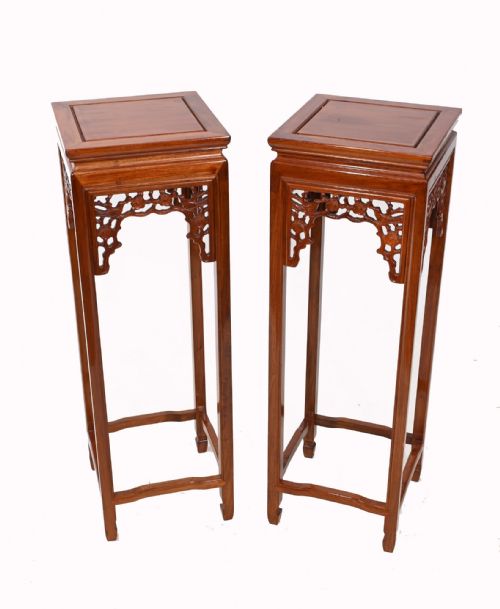
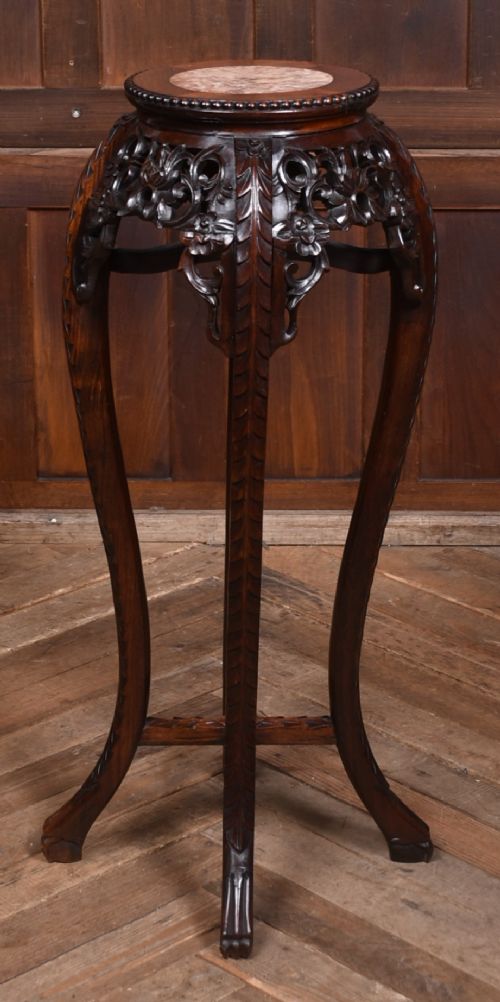
An asian display table elevates a cherished vessel or plant, bringing carved timber and marble into a room with quiet authority.
Asian Display Table
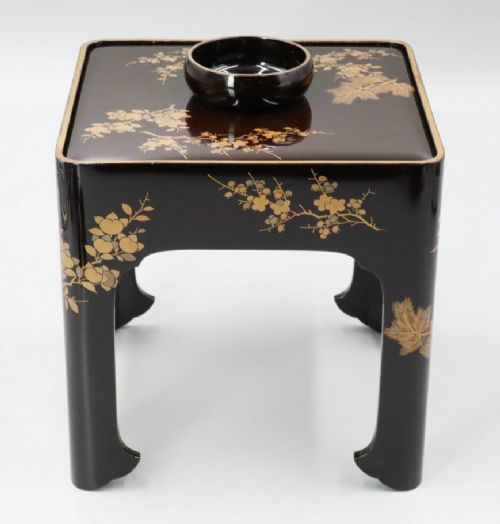
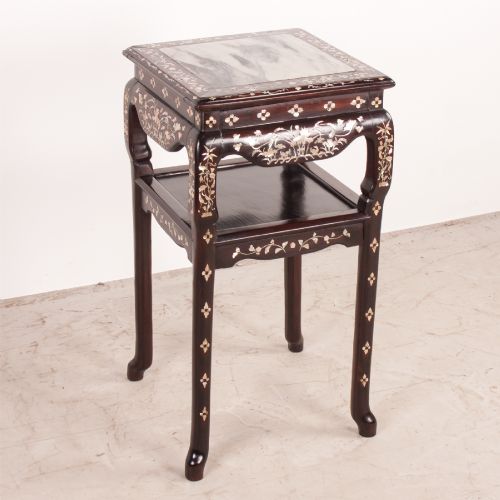
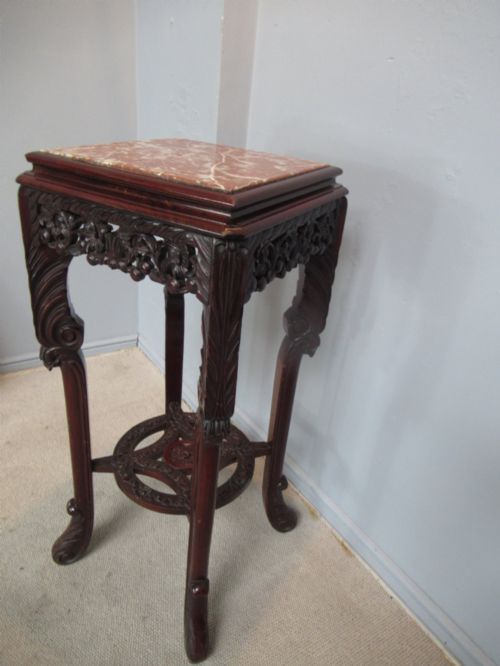
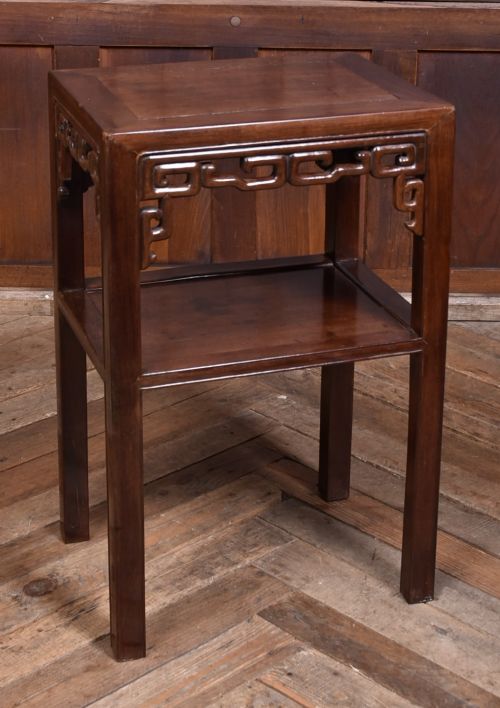
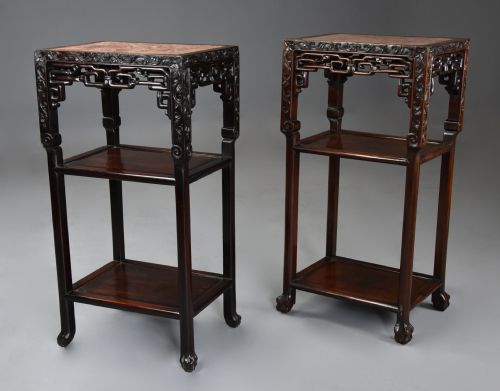
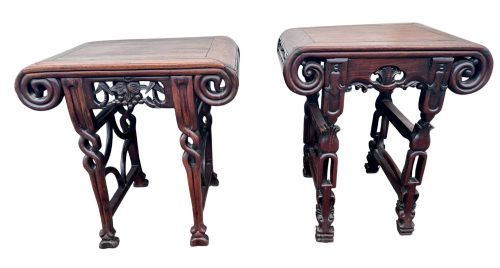
When searching for an asian display table, collectors encounter pieces designed to elevate porcelain, plants, and decorative objects within a room. The selection spans compact plant stands, tiered pedestal tables, occasional tables, and low Kang tables suited for domestic display.
The inventory on this page consists predominantly of nineteenth-century Chinese hardwood and Japanese Meiji period pieces. Common forms include marble-topped vase stands, rosewood occasional tables, and graduated nests of tables originating from Chinese Qing dynasty traditions and Japanese workshops.
Materials and Construction
Cabinetmakers utilised dense timbers such as hongmu, padouk, rosewood, and ebonised elm to build these structures. These heavy hardwoods permitted deep, intricate carving along the apron and legs without compromising the load-bearing capacity required for heavy stone insets and ceramic vessels.
Surface treatments frequently involved inset marble panels, mother-of-pearl inlay, and polished lacquer finishes. Joints were typically assembled using traditional woodworking techniques that accommodated the natural movement of timber over decades of use.
Asian Display Table Retail Price Guide 2026
Typical asking prices for asian display table among the pieces listed under this phrase on Sellingantiques today, from the lower quarter to the upper quarter. They describe what is for sale here now, not the wider market.
Some nineteenth-century tables arrived in British drawing rooms packed securely inside tea clippers alongside actual chests of tea.
Distinctions in Execution
The depth and crispness of the hand-carving separate standard pieces from finer examples. Superior specimens display undercut foliage and animal motifs that retain sharp edges, while lesser pieces show softer, shallower relief work.
The selection and fit of inset materials also mark the tier of execution. A tightly fitted marble disc or porcelain panel that sits flush with the surrounding hardwood frame indicates superior craftsmanship compared to loose or poorly aligned inserts.
The Asian Display Table Glossary
- Hongmu
- A dense, dark tropical hardwood favored by Chinese cabinetmakers for tables and stands. The material takes a fine natural polish without requiring heavy stains.
- Kang table
- A low domestic table traditionally placed on a heated brick platform or seating surface for dining or writing. These low tables translate well into modern interiors as compact coffee tables.
- Jardiniere stand
- A tall pedestal or small table specifically proportioned to support a large plant pot or ceramic jardiniere. They generally feature sturdy tops designed to bear heavy loads of soil and ceramic.
- Meiji period
- The era of Japanese history spanning from 1868 to 1912, characterised by opening trade and exceptional decorative arts production. Pieces from this period often display refined lacquer and metalwork details.
- Cloisonne
- A decorative metalwork technique where enamel paste is applied within compartments created by soldered wire before firing. The resulting plaques and vessels appear frequently alongside nineteenth-century stands.
Asian Display Table: Frequently Asked Questions
How do I identify a Qing dynasty stand?
Qing dynasty stands are typically constructed from heavy tropical hardwoods like hongmu or padouk and often feature inset marble or porcelain panels. Look for deep, meticulous hand-carving depicting traditional floral, dragon, or geometric motifs.
Many nineteenth-century examples display construction methods that reflect traditional Chinese joinery without reliance on modern metal fasteners.
Where should I place a plant stand at home?
Plant stands work well in corners, beside seating, or near windows where natural light highlights the carved timber details. Their narrow footprints allow them to fit into tighter spaces than standard occasional tables.
Ensure the surface is protected from moisture if placing living plants directly on unsealed wood or antique lacquer finishes.
How do I clean antique hardwood furniture?
Dust the surfaces regularly with a soft, dry cloth to prevent grit accumulation in the carved recesses. Avoid commercial silicone sprays, which can build up and dull the natural patina of the wood.
Occasional application of a suitable furniture wax helps nourish hardwoods like rosewood and padouk while maintaining a gentle, historical sheen.