




Asian Decorative Cabinet
An asian decorative cabinet brings hand-painted lacquer, gilt surfaces, and intricate storage compartments directly into a room.
Asian Decorative Cabinet
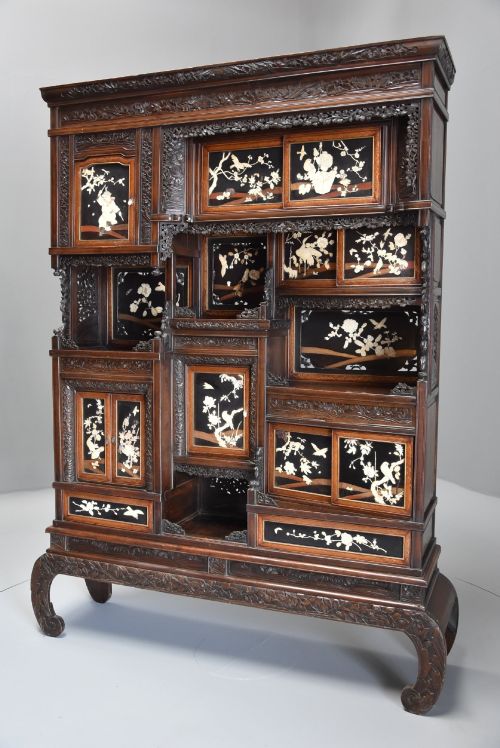
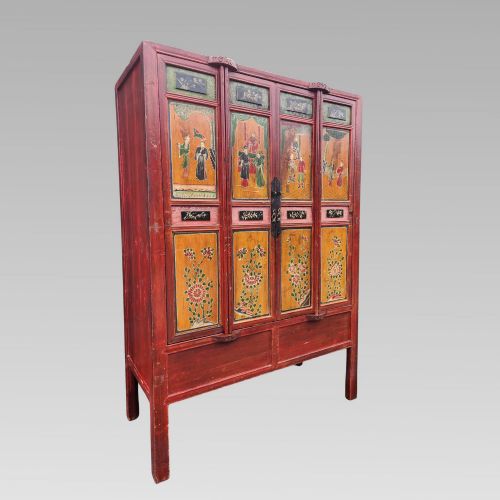
When you search for an asian decorative cabinet, you encounter storage forms ranging from table cabinets and shodana cabinets to larger marriage cupboards and red lacquered stands. These pieces predominantly date from the late nineteenth century through the early twentieth century, spanning periods such as the Meiji and Taisho eras alongside Chinese export and Korean Joseon styles.
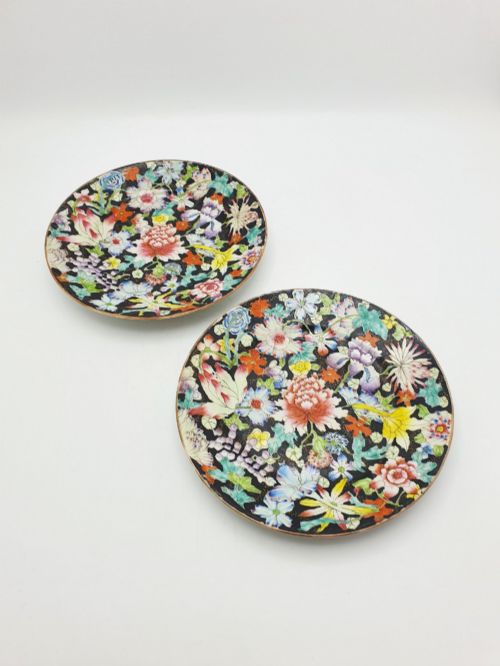
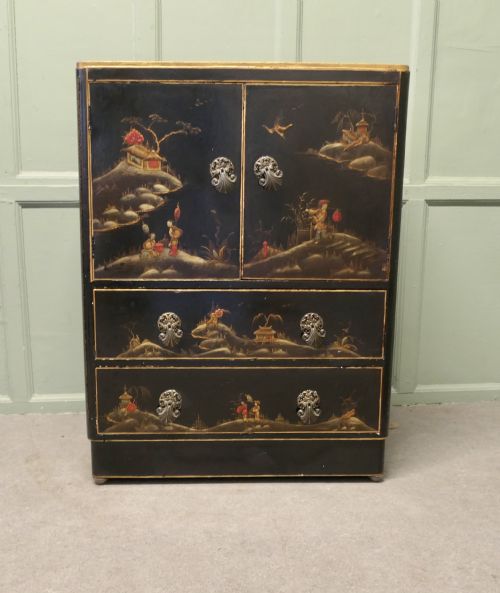
The selection on this page balances smaller table cabinets with standing cupboards finished in black or red lacquer, often complemented by related decorative ceramics and plates. Such items serve as focal points for interiors that draw on Chinoiserie and traditional Asian craftsmanship.
Materials and construction
Makers constructed these cabinets using wood as the primary substrate, applying layers of dark or coloured lacquer to build durable, lustrous surfaces. Artisans then embellished these panels with gold leaf, enamel details, and brass fittings to create high-contrast decorative schemes.
Techniques relied on meticulous hand-finishing, whether through the application of Chinoiserie motifs or the integration of porcelain plaques and cloisonné elements into the cabinetry. The resulting structures combine functional storage with detailed pictorial scenes rendered in metal and pigment.
Asian Decorative Cabinet Retail Price Guide 2026
Typical asking prices for asian decorative cabinet among the pieces listed under this phrase on Sellingantiques today, from the lower quarter to the upper quarter. They describe what is for sale here now, not the wider market.
One unexpected piece accompanying the storage cabinets is a Victorian opium pipe.
Evaluating the standard
Quality in these cabinets rests upon the depth of the lacquer work and the precision of the applied gold leaf or brass hardware. Superior examples maintain intact surface details and tightly fitted joinery across doors, drawers, and stands.
Lesser pieces show flat surfaces with simplified painting and worn fittings that lack the crisp definition found in the finest workshops. The complexity of the internal arrangement and the preservation of original colour schemes also divide standard production from exceptional pieces.
Chosei
The Asian Decorative Cabinet Glossary
- Chinoiserie
- European decorative style reflecting Chinese artistic influences. It appears frequently in lacquer cabinets featuring painted landscape and figural scenes.
- Shodona
- Japanese display cabinet featuring asymmetrical shelving and small cupboards. These pieces showcase intricate woodwork from the Meiji period.
- Kodansu
- Traditional Japanese small portable cabinet or box with multiple drawers. They are often finished in black lacquer with fine metal mountings.
- Cloisonne
- Enamelwork technique where thin metal wires create cells for coloured paste. This decoration often appears on companion pieces like plates and vases.
Asian Decorative Cabinet: Frequently Asked Questions
What is a shodona cabinet?
A shodona is a traditional Japanese display cabinet characterised by asymmetrical shelving and small storage compartments.
Craftsmen built these pieces to showcase decorative objects, balancing open display spaces with enclosed drawers.
How do I care for lacquer furniture?
Lacquer surfaces require gentle dusting with a soft, dry cloth and protection from direct sunlight and excessive humidity.
Avoid chemical polishes and abrasive cleaners that can scratch or dull the delicate finish.
What distinguishes Chinese export cabinets?
Chinese export cabinets were made specifically for Western markets, often combining traditional Asian lacquer techniques with European furniture forms.
They frequently feature bold Chinoiserie motifs designed to appeal to contemporary international tastes.
Where were table cabinets placed?
Table cabinets served as desktop storage for letters, documents, and small precious items in studies or parlours.
Their compact size allowed them to sit securely on larger desks, chests, or tables.