

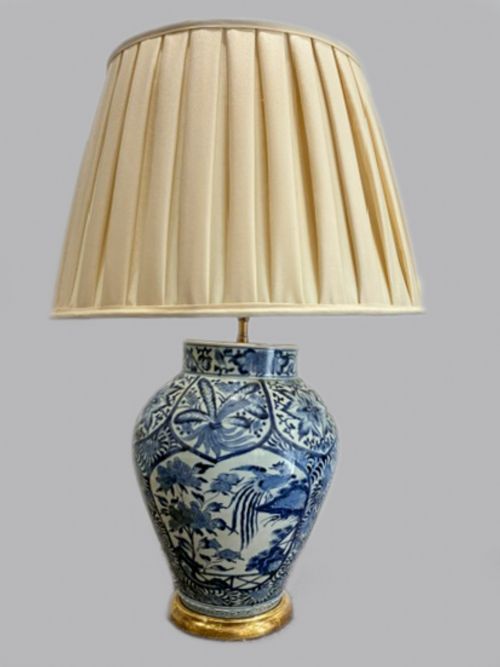
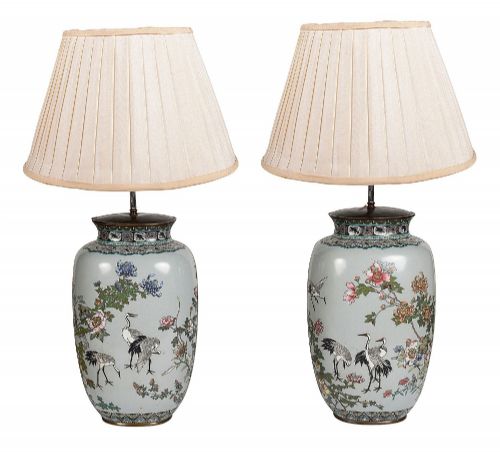
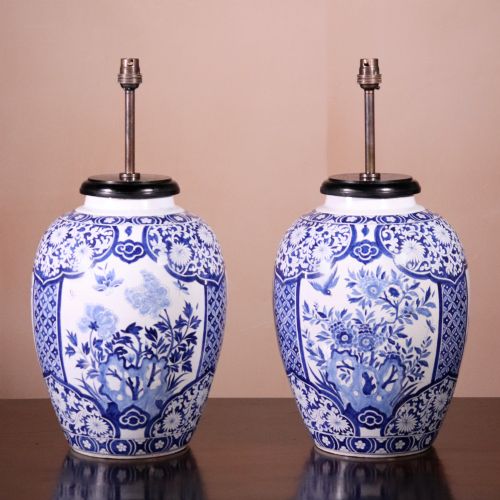
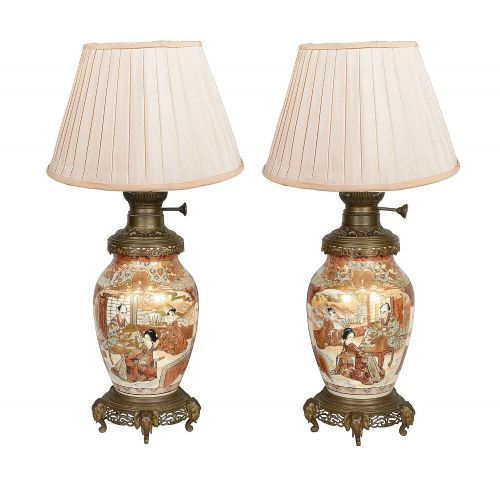


Asian Ceramic Vase Lamps
Asian ceramic vase lamps bring historic porcelain and earthenware into domestic interiors by mounting historic vessels for modern lighting.
Asian Ceramic Vase Lamps
When searching for asian ceramic vase lamps, buyers encounter converted vessels originating from various Asian ceramic traditions, principally Chinese and Japanese manufacture. These pieces combine historic vases, jars, and baluster forms with electrical fittings to serve as table lamps.
The selection on this page leans heavily towards Japanese Satsuma, Imari, Kutani, and Arita wares alongside Chinese celadon, blue and white, and famille rose pieces. Many examples survive as pairs, spanning periods from the late seventeenth century through the early twentieth century.
Makers often adapted these vessels using brass mounts or wooden bases to support lamp hardware securely. Buyers select these items to anchor room schemes with centuries of decorative art converted to practical illumination.
Materials and Construction
The primary bodies utilise porcelain, earthenware, or pottery, decorated with hand-painted enamel, cobalt blue, or cloisonné work. Artisans shaped these vessels on the wheel or in moulds before firing them at high temperatures.
Metal mounts in brass frequently secure the necks or bases of the ceramics to house the electrical wiring and bulb holders safely. Silk and fabric shades often complete the composition, though the core of the piece remains the historic Asian ceramic vessel.
Listings incorporate porcelain, earthenware, ceramic, brass, wood, silk, and fabric across eight distinct historical periods.
Factors of Quality
Quality rests in the crispness of the ceramic body, the precision of the hand-painted or enamelled decoration, and the preservation of the glaze. Finer pieces display subtle tonal variations in celadon or intricate detail in Satsuma and Imari patterns.
The integrity of the conversion matters significantly, as professional mounting preserves the original ceramic structure without causing undue stress or damage to the antique body. Well-balanced proportions between the vase and the associated brass or wooden mounts separate standard conversions from superior examples.
The Asian Ceramic Vase Lamps Glossary
- Satsuma
- A type of earthenware originating from Japan, typically characterised by a crackled ivory glaze and detailed polychrome and gilt decoration. These pieces frequently depict figurative scenes or dense floral motifs.
- Celadon
- A term for ceramics featuring a pale green jade-like glaze derived from iron oxide in the kiln reduction process. This tradition spans multiple Chinese dynasties and exhibits subtle variations in tone.
- Imari
- A style of Japanese export porcelain featuring a distinctive palette of underglaze blue, iron red, and gilt overglaze. The patterns often incorporate complex panels of floral and geometric designs.
- Cloisonné
- A metalwork technique where enamel paste is applied within compartments created by soldered flat wires on a base. Surviving examples demonstrate immense skill in controlling colour and pattern during firing.
- Baluster
- A vase shape characterised by a rounded body that tapers toward the base and swells outward before rising to a narrow neck. This classic form provides a stable silhouette for conversion into table lighting.
Asian Ceramic Vase Lamps: Frequently Asked Questions
How do I clean these lamps?
Dust the ceramic body gently with a dry microfibre cloth and avoid harsh chemical cleaners that might damage historic glazes.
Keep moisture away from the electrical fittings and brass mounts during maintenance.
Are these conversions permanent?
Most antique vase lamps involve drilled bases or fitted brass mounts designed to secure electrical wiring through the centre.
Reversing these alterations requires specialist restoration because the original ceramic structure has been adapted for modern use.
How do I identify Satsuma ware?
Satsuma ceramics display a characteristic creamy, crackled earthenware body beneath intricate enamel and gilt painting.
They often feature Japanese figural groupings, landscapes, or dense flower arrangements across the surface.
Can I use modern lamp shades?
Standard shade fittings adapt easily to these lamps provided the harp and spider dimensions match the bulb holder.
Proportion remains the main consideration when pairing a historic vase with a new fabric shade.