



Asian Bronze Table Lighting
Asian bronze table lighting brings sculptural weight and rich patination to a room, spanning Meiji period Japanese works and Chinese forms.
Asian Bronze Table Lighting
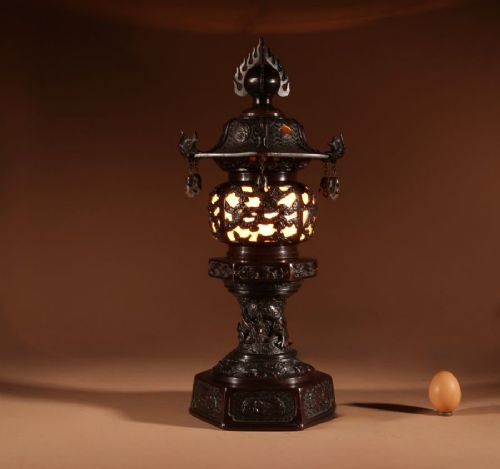
Asian bronze table lighting primarily comprises table lamps adapted from earlier vases, vessels, lanterns, and figures, alongside dedicated pieces produced across the nineteenth and early twentieth centuries. These objects draw from Japanese Meiji period metalwork and Chinese Qing dynasty or archaic traditions, often mounted for electricity during conversion.
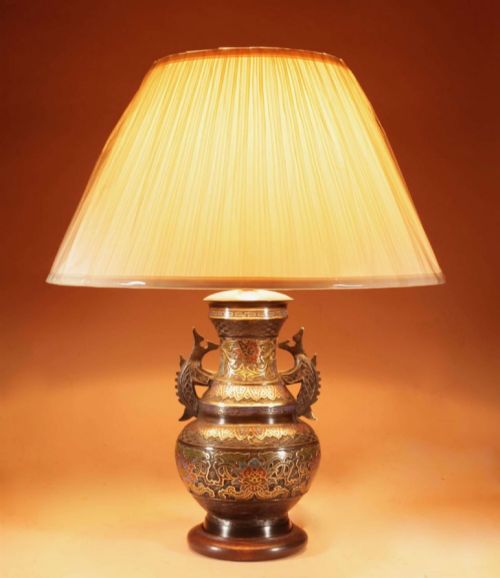
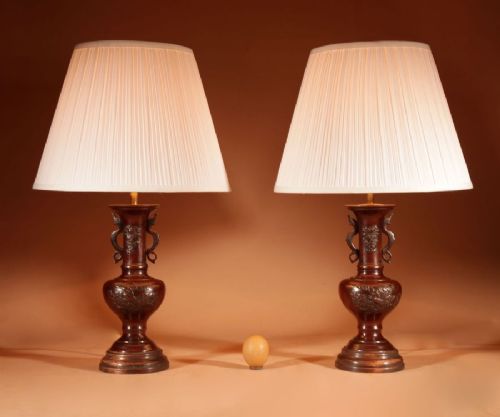
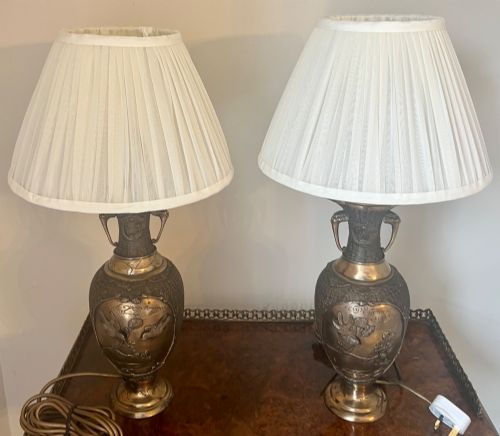
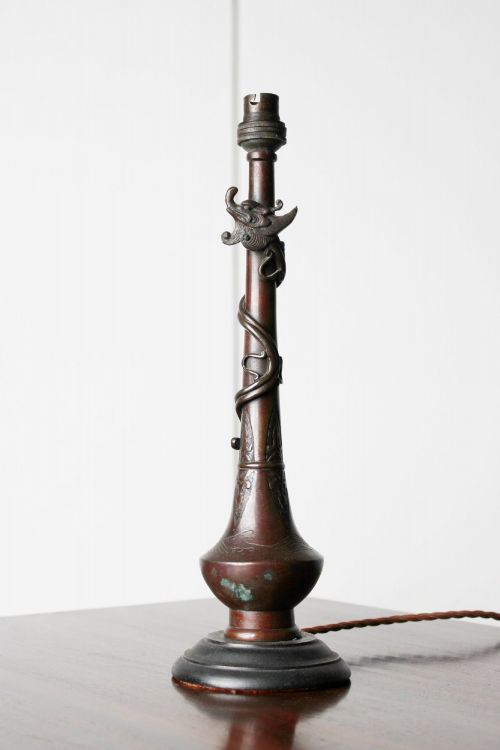
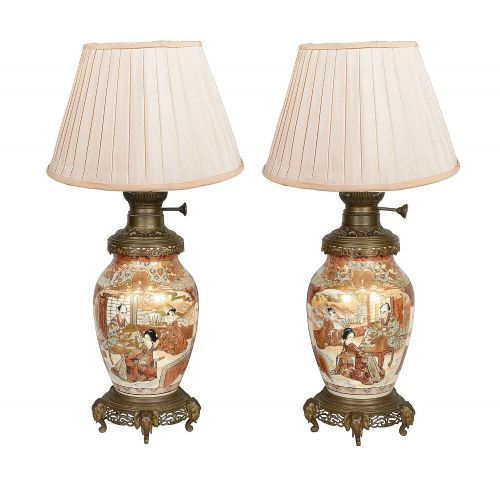
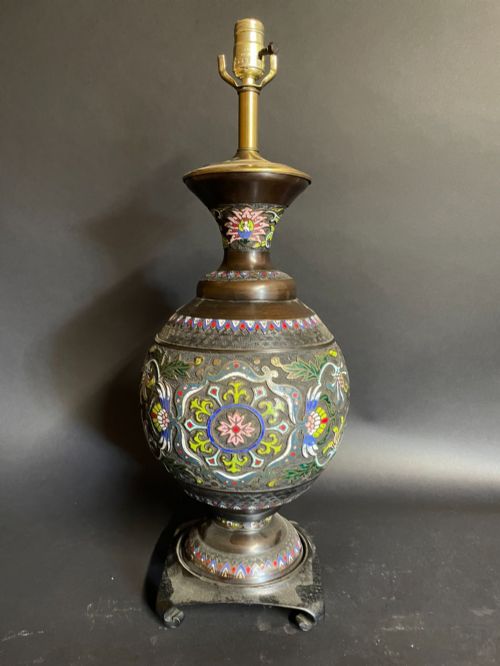
The most common formats met here include pairs of Japanese bronze vases fitted as lamps, champlevé and cloisonné enamel vessels, and figural designs such as dragons or elephants. Pieces range from Victorian and Edwardian adaptations to items dated across the decades up to nineteen thirty.
Materials and Construction
Construction relies on cast bronze, brass, and gilt bronze, frequently combined with hand-applied enamel work in cloisonné and champlevé techniques. Artisans also incorporated ceramic elements such as Satsuma and Celadon porcelain bodies, mounting them into metal bases for domestic utility.
Surfaces receive detailed chased or engraved decoration, patination, and sometimes applied silk or fabric shades to complete the lighting fixture.
Elephants and dragons hold up the lanterns, proving that nineteenth-century wiring doubles as an excuse for miniature wildlife.
Assessing Quality
Quality rests upon the crispness of the bronze casting, the depth and complexity of the chasing, and the precision of any enamel work. Superior examples display carefully integrated mounts and well-preserved patination that respects the original object's integrity.
The sophistication of the underlying vessel, whether an archaic-style Chinese bronze or a detailed Meiji period figural casting, dictates the distinction of the finished table light.
The Asian Bronze Table Lighting Glossary
- Champlevé
- An enamelling technique where troughs are dug into the bronze surface and filled with vitreous enamel before firing. This method creates bold coloured patterns across the metal body.
- Cloisonné
- A technique utilising thin metal wires soldered to the bronze base to form compartments, which are subsequently filled with enamel paste and heated. It produces intricate, compartmentalised designs.
- Meiji Period
- The era in Japanese history spanning from eighteen sixty-eight to nineteen twelve, noted for exceptional metalwork and decorative arts exported to Western markets. Pieces from this time frequently feature dragons, elephants, and flora.
- Archaist
- A style referencing ancient Chinese ritual bronzes, incorporating traditional motifs and forms from early dynasties into later decorative objects. These designs provide a solemn, monumental character.
- Celadon
- A type of transparent green-glazed ceramic originating in China, often incorporated into oriental table lamps alongside bronze mounts. The glaze mimics the appearance of jade.
Asian Bronze Table Lighting: Frequently Asked Questions
Are these lamps converted from older vases?
Many examples began life as Japanese or Chinese vases, vessels, or lanterns before receiving electrical fittings at a later date. This adaptation preserves historic craftsmanship while serving modern interior needs.
Conversion methods vary from period wiring to contemporary components, allowing these decorative objects to function as practical table lighting.
How do I identify a Meiji period bronze?
Meiji period pieces typically date between eighteen sixty-eight and nineteen twelve, displaying dynamic casting in forms like elephants, dragons, or highly ornamented vases. They reflect the high technical skill of Japanese metalworkers from that era.
Examining the surface detail and patination helps distinguish these Japanese works from Chinese bronzes or later European adaptations.
What is champlevé enamel?
Champlevé involves carving or casting depressions directly into the bronze surface to hold coloured enamel pastes. After firing, the metal partitions stand proud between the vibrant enamel fields.
This technique adds rich colour and textural contrast to the bronze body of the lamp.
How do I style an oriental bronze lamp?
These lamps suit rooms requiring sculptural focal points, pairing well with traditional wooden furniture or contrasting modern interiors. Their patinated surfaces introduce depth and metallic warmth to a scheme.
Placing them on side tables or desks allows the detailed casting and enamel work to catch ambient light.