


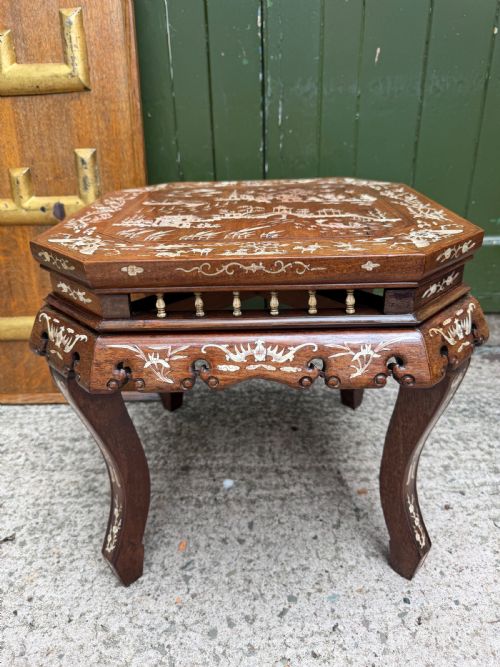


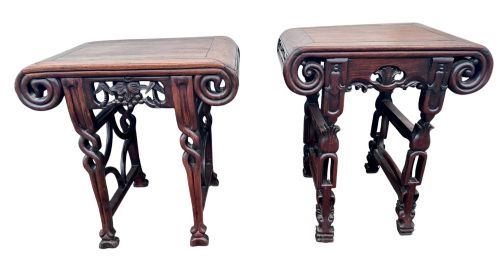


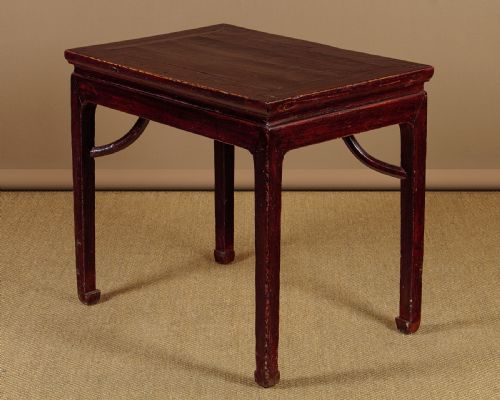


Asian Accent Stool
These asian accent stool listings bring together nineteenth-century hardwood and elm forms designed to anchor a room with quiet utility and grounded presence.
Asian Accent Stool
When you search for asian accent stool, you are looking at nineteenth-century seating and support forms originating from China and Japan. These items bridge domestic utility and decorative display through low profiles and compact footprints.
The selections encountered here span from rustic elm stools to intricately carved hardwood side tables and plant stands. Makers across the Qing dynasty and Meiji periods produced these pieces for versatile placement within domestic interiors.
Forms vary from round and square occasional tables to low stools and quartz-topped rootwood stands. Hardwood examples sit alongside ebonised elm and lacquer pieces, reflecting diverse regional workshops.
Materials and construction
Construction relies heavily on dense timbers such as hardwood, rosewood, and elm, selected for structural resilience and grain character. Rootwood appears in organic forms, utilising natural contours shaped by growth.
Surface detailing incorporates inlaid bone decoration, marble inserts, and deep carving. Ebonised finishes and lacquer applications provide smooth, dark surfaces that contrast with inset stone panels.
Asian Accent Stool Retail Price Guide 2026
Typical asking prices for asian accent stool among the pieces listed under this phrase on Sellingantiques today, from the lower quarter to the upper quarter. They describe what is for sale here now, not the wider market.
Distinctions in quality
Quality rests in the precision of the joinery and the selection of materials, particularly where marble or quartz is fitted directly into the timber frame. Dense hardwoods and substantial hongmu displays greater weight and resistance to movement than lighter vernacular pieces.
The refinement of surface embellishment dictates distinction at the upper end of the range. Finely executed bone inlay and deep, crisp carving separate masterwork stands from simpler, rustic workshop output.
The Asian Accent Stool Glossary
- Hongmu
- A dense, dark tropical hardwood valued in Chinese furniture making for its strength and rich grain. It takes a fine polish without additional staining.
- Meiji
- A Japanese imperial period spanning the late nineteenth and early twentieth centuries known for refined craftsmanship in wood and lacquer. Pieces from this era often feature ebonised surfaces.
- Rootwood
- Timber harvested from the root burls of trees, shaped by natural growth patterns into organic stands and tables. Each piece presents entirely unique contours.
- Vernacular
- Everyday objects made for local use rather than court or export markets. These items emphasise practical construction over formal ornamentation.
- Inlay
- A technique where contrasting materials such as bone are set flush into the wooden surface to form decorative patterns.
Asian Accent Stool: Frequently Asked Questions
How were these stools used?
These pieces served multiple functions in traditional interiors as seats, low tables, and elevated platforms for plants or decorative objects.
Their compact proportions allowed them to be moved easily around the room to support daily domestic tasks.
What woods are most common?
Hardwood and elm appear frequently across nineteenth-century examples, providing durable frames for daily use.
Specialist pieces also incorporate rosewood, hongmu, and organic rootwood.
How do I date these items?
Dating relies on stylistic markers from the Qing dynasty and Meiji periods alongside material wear and construction methods.
Nineteenth-century pieces typically display traditional joinery techniques and period-specific decorative motifs like bone inlay.
Can I use these as side tables?
Their low height and flat tops make them well-suited for use as occasional tables next to seating or as lamp stands.
Stools and low tables function effectively in modern spaces to hold drinks, books, or small decorative items.