



Arts and Crafts Vanity Mirror
An arts and crafts vanity mirror brings tactile metalwork and honest timber into daily routines, offering adjustable reflection alongside period character.
Arts and Crafts Vanity Mirror
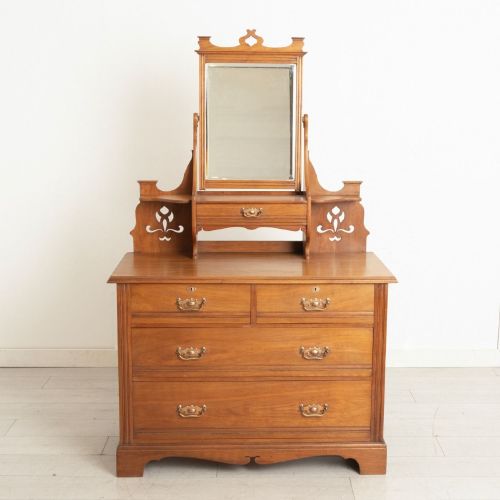
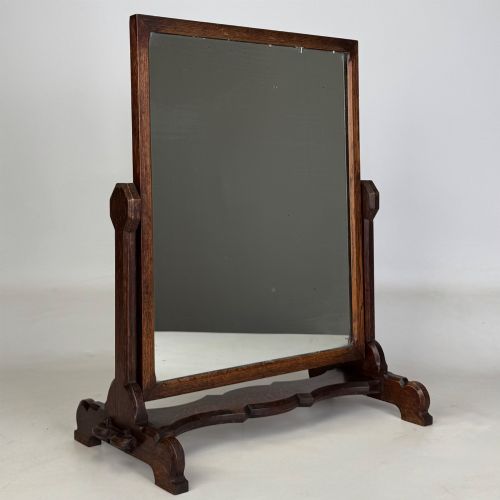
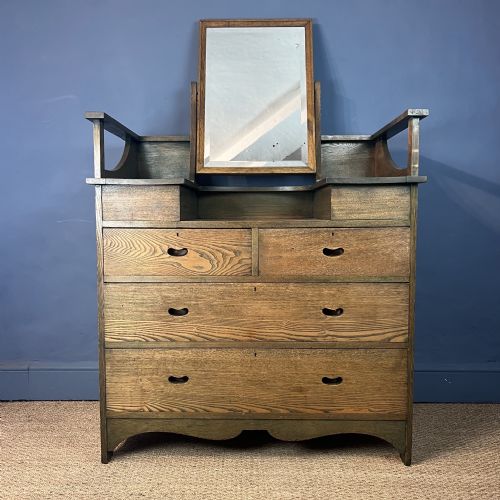
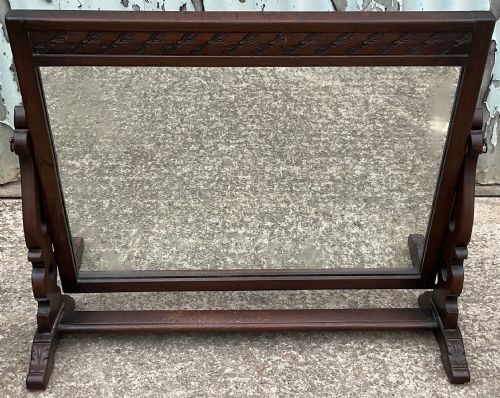
When buyers search for an arts and crafts vanity mirror, they encounter portable dressing mirrors, adjustable toilet glasses, and larger dressing chests fitted with swing plates.
The pieces on this page span from the late nineteenth century through the Edwardian period and into the nineteen-thirties, reflecting the longevity of the movement.
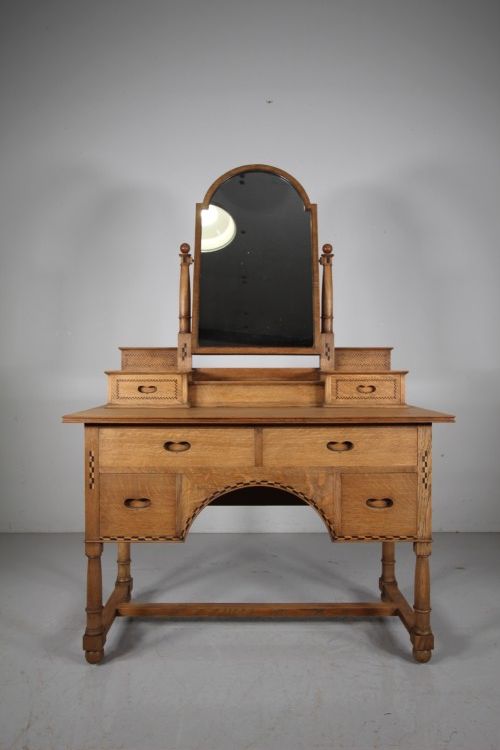
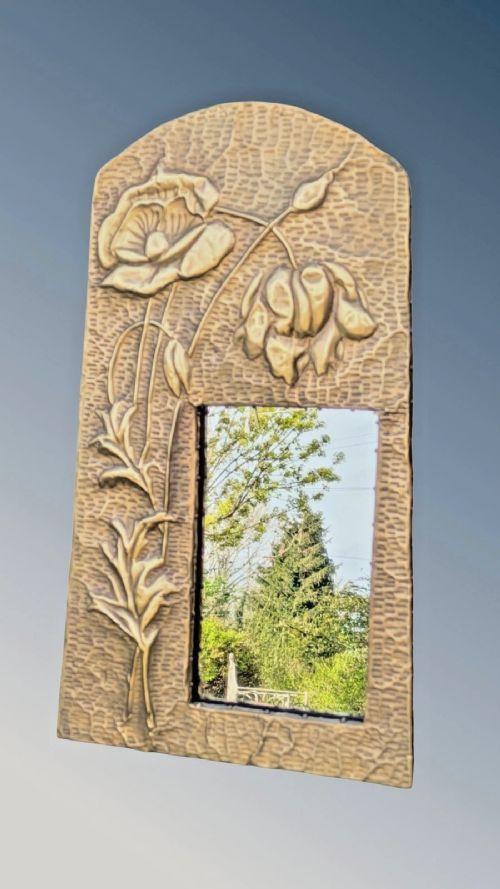
Forms range from simple oak desk stands to copper-framed wall mirrors and elaborate dressing tables incorporating wood inlay and brass easel supports.
Materials and Construction
Cabinetmakers utilised solid oak and green stained ash as the primary structural timbers, frequently applying marquetry wood inlay for surface decoration.
Metal components relied heavily on hand-beaten copper and brass, often shaped through repoussé work or accented with silvered finishes and stylised honesty seed pods.
Some copper frames feature stylised honesty seed pods, bringing dried garden seed heads into permanent metallic form.
Quality and Distinction
The distinction between standard workshop output and top-tier pieces rests on the integrity of the timber framing and the execution of the metalwork.
Makers who supplied labelled pieces or stamped their work demonstrated superior joinery, while simpler versions relied on straightforward assembly without maker identification.
George Walton·Heals of London·Shapland and Petter·Liberty and Co·Wright and Hunter of Belfast·Harris Lebus·J. Shoolbred
The Arts and Crafts Vanity Mirror Glossary
- Repoussé
- Metalwork technique where the design is hammered into relief from the reverse side. This method creates tactile surface patterns on copper frames.
- Easel mirror
- A freestanding glass supported by a hinged leg at the back. These small mirrors sit easily upon dressing tables and chests.
- Dressing chest
- A low chest of drawers fitted with an attached mirror frame on top. They combine storage with a functional surface for personal grooming.
- Bevel edge
- A sloping cut along the perimeter of the mirror glass. This treatment catches the light and adds depth to the reflection.
Arts and Crafts Vanity Mirror: Frequently Asked Questions
How do I date an arts and crafts mirror?
Dating relies on observing construction methods, timber choices, and any maker stamps or retailer labels found on the reverse or inside drawers.
Earlier pieces from the late nineteenth century often display hand-hammered copper work and rich oak patination, whereas later examples from the nineteen-thirties adopt simpler lines.
Are these mirrors adjustable?
Many dressing mirrors and toilet glasses feature pivoting side screws that allow the glass to tilt to a comfortable angle.
Wall-mounted copper variants remain fixed, while easel models rely on a folding rear prop for stability.
What is the difference between a vanity mirror and a dressing chest?
A vanity mirror or dressing glass is a smaller, portable piece designed to sit on top of an existing table or chest of drawers.
A dressing chest integrates the mirror directly into a larger set of drawers, forming a single substantial piece of furniture.
How should I clean copper mirror frames?
Copper and brass frames benefit from gentle dusting with a soft, dry cloth to prevent the accumulation of grime.
Avoid abrasive polishes that might strip the historic patination or damage delicate hand-beaten surfaces.