

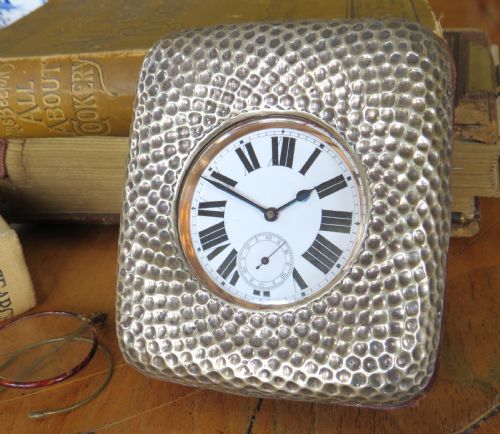


Arts and Crafts Timepiece
An arts and crafts timepiece brings honest metalwork and timber into daily rooms, offering sturdy mechanical service wrapped in thoughtful design.
Arts and Crafts Timepiece
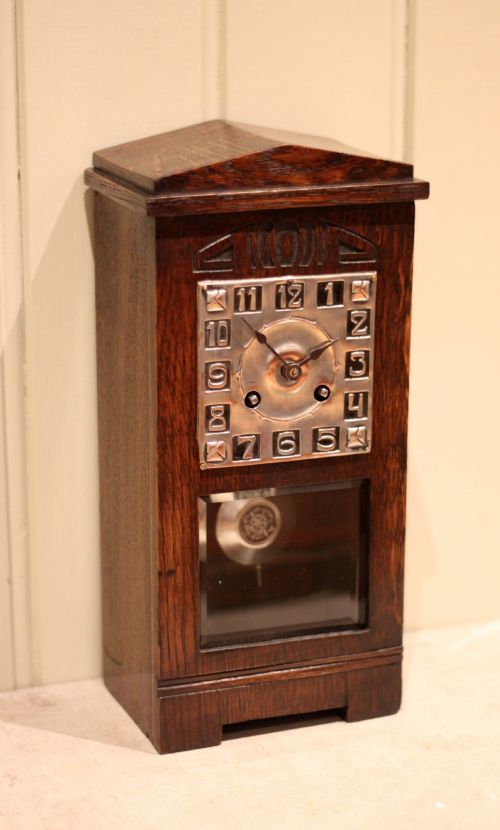
When you search for an arts and crafts timepiece, you enter a field defined by early twentieth century craftsmanship, where utility meets hand-worked charm. The pieces appearing here span the Edwardian era through the nineteen thirties, encompassing both wall clocks and mantel clocks.
The most frequent encounters on this page include oak and patinated brass housings alongside distinct metal alloys. Makers from this movement favoured architectural simplicity over excessive ornamentation, resulting in dependable timekeepers with strong silhouettes.
Origins stretch across English workshops and continental centres, touching upon Amsterdam School aesthetics and Art Nouveau curves. Buyers find both modest travel clocks in silver cases and substantial domestic timepieces.
How they were made
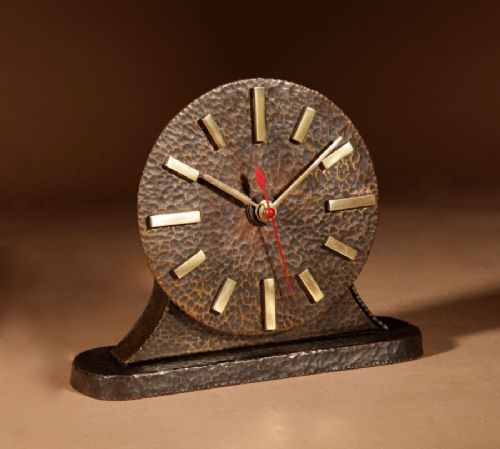
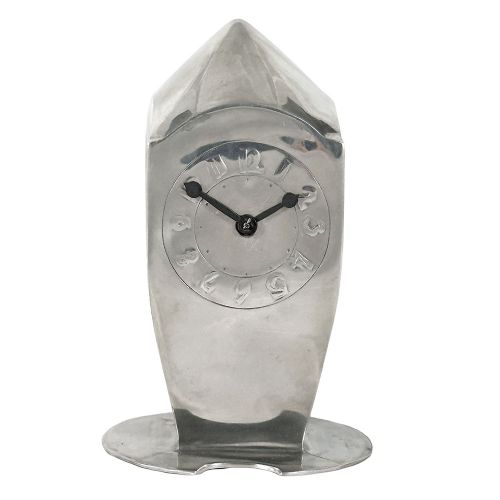
Makers utilised hammered metals, patinated brass, and polished pewter to build durable cases that protected delicate clockwork movements. Oak formed the structural backbone for larger wall and mantel pieces, often shaped through hand carving or simple geometric joinery.
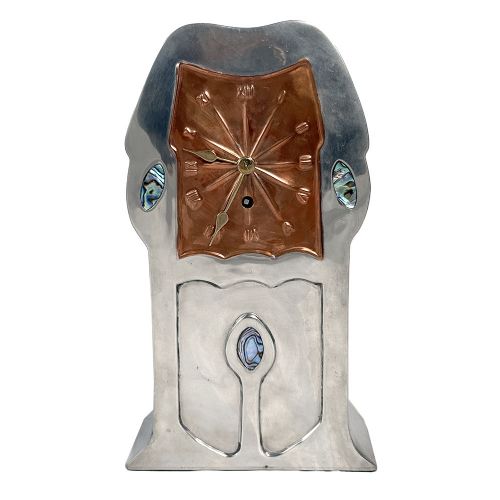
Enamel and abalone dial details added subtle colour contrasts to the metallic surfaces without breaking the restrained design language. Sterling silver casing appeared on smaller travel clocks, combining precious materials with practical portability.
Arts and Crafts Timepiece Retail Price Guide 2026
Typical asking prices for arts and crafts timepiece among the pieces listed under this phrase on Sellingantiques today, from the lower quarter to the upper quarter. They describe what is for sale here now, not the wider market.
Several clocks wear tiny abalone panels that catch the parlour light like trapped pieces of ocean.
What varies in quality
The degree of hand-finishing marks the boundary between standard production and exceptional work. Hammered textures show the direct touch of the artisan rather than uniform machine stamping, while inlaid abalone and enamel accents reveal careful placement.
Materials dictate the weight and presence of each clock, with solid silver cases and patinated brass holding their finish distinctively over decades. The harmony between timber selection and metal fittings establishes the visual balance of the piece.
Liberty and Co·Archibald Knox·David Veasey
The Arts and Crafts Timepiece Glossary
- Tudric
- The trade name used by Liberty and Co for their range of pewter ware. It often contained a high proportion of silver to give a bright finish.
- Patinated brass
- Brass treated with chemical solutions or heat to age the surface colour. This process deepens the tone and subdues factory shine.
- Amsterdam School
- An architectural and design style originating in the Netherlands. It emphasises rounded brickwork, expressive masonry, and rich metal detailing.
- Mantel clock
- A domestic timekeeper designed to sit on a fireplace shelf or sideboard. These objects balance decorative front facades with stable standing bases.
- Enamel
- Fused glass powder applied to metal surfaces and fired at high temperatures. It creates smooth, glossy coloured details that resist fading.
Arts and Crafts Timepiece: Frequently Asked Questions
How do I wind an arts and crafts timepiece?
Most mechanical clocks from this period use a key inserted directly into the dial face to tension the mainspring. Turn the key gently until you feel firm resistance, stopping before you force the mechanism.
Overwinding can snap older springs, so regular partial turns are safer than complete tightening. Consult the specific movement type inside your clock before attempting full maintenance.
Where should I place a pewter clock?
Keep pewter and silver cased clocks away from direct sunlight and damp environments to protect the metal finishes and timber backings. Stable indoor temperatures prevent the expansion and contraction of wooden joints.
A mantelpiece or a secure shelf away from heavy vibrations allows the pendulum or balance wheel to keep accurate time.
Are these clocks suitable for daily use?
Many early twentieth century timepieces still function reliably when serviced by a professional clockmaker. Mechanical movements require periodic cleaning and oiling to prevent wear on the brass gears.
Treating them as working antiques means accepting minor timekeeping variations compared to modern quartz movements.
How do I clean patinated brass safely?
Dust brass surfaces gently with a dry, soft cloth to remove everyday particles without disturbing the darker surface layer. Avoid abrasive polishes that strip away the intentional ageing applied by the maker.
Preserving the original patination maintains both the historical character and the visual depth of the metalwork.