





Arts and Crafts Hall Lantern
An arts and crafts hall lantern brings honest metalwork and warm glass into an entryway.
Arts and Crafts Hall Lantern
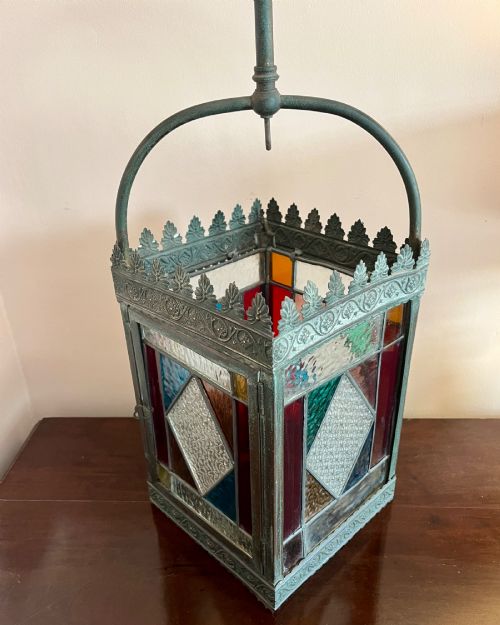
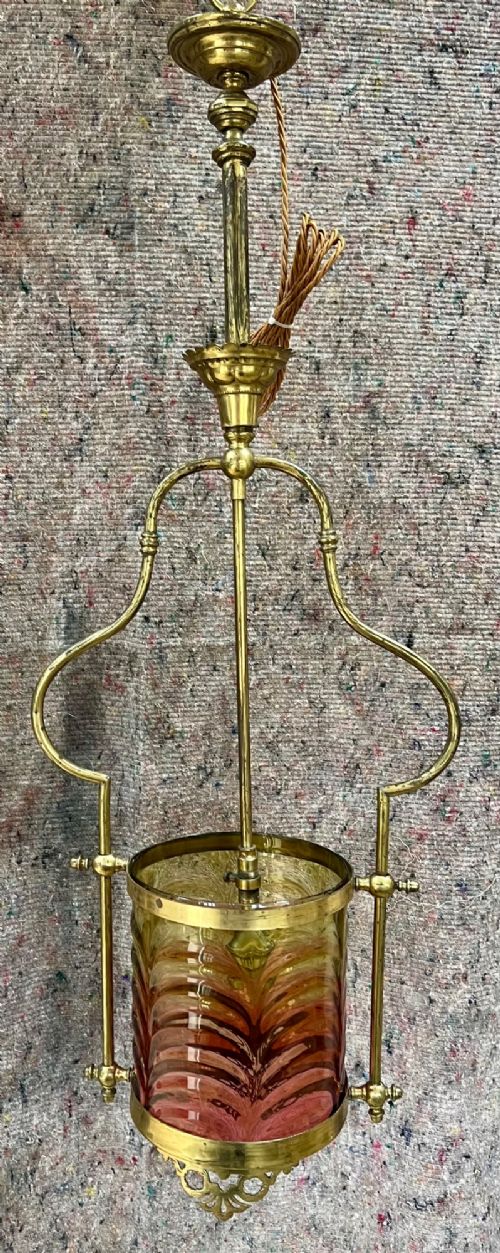
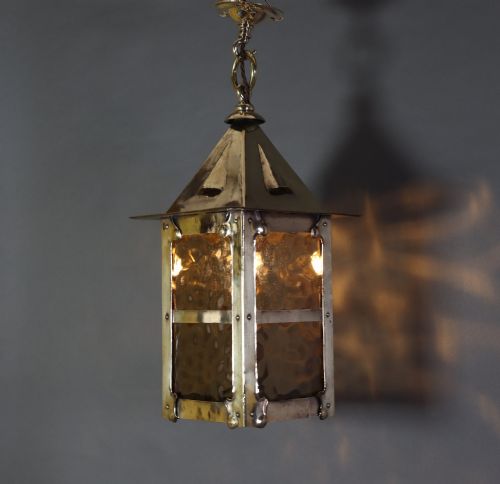
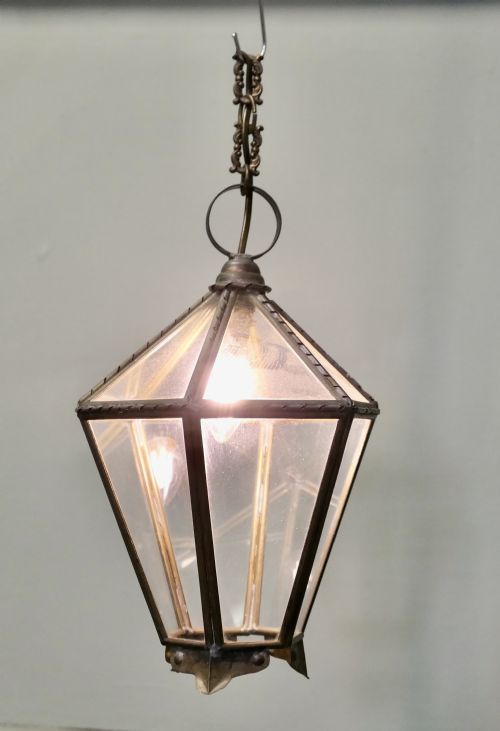
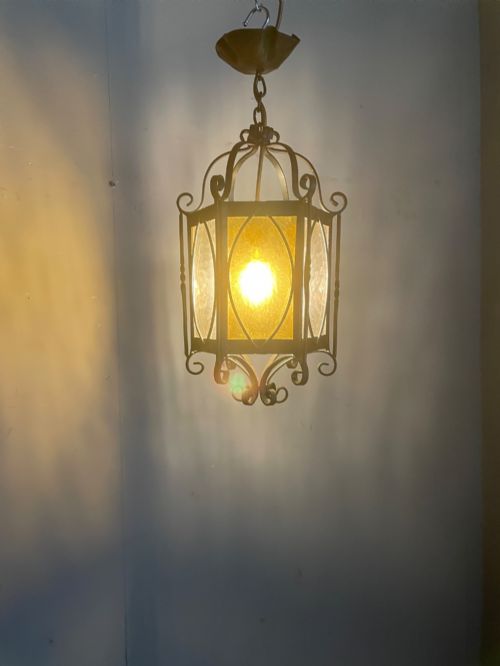
An arts and crafts hall lantern is a ceiling-hung light fixture designed for entranceways and corridors, appearing primarily in brass, copper, and wrought iron. The selection on this page spans the late nineteenth century through to the nineteen-thirties, drawing on Victorian, Edwardian, and Gothic Revival design influences.
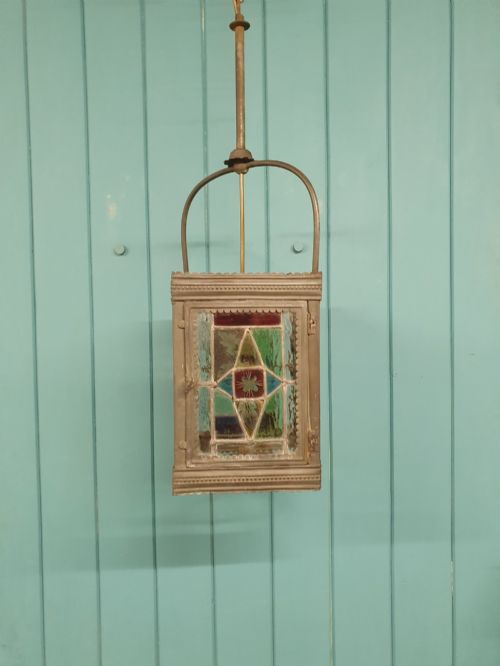
Buyers will encounter various forms, including hexagonal glazed lanterns, leaded stained glass hanging lights, and opalescent ceiling pendants. Many pieces reflect the straightforward construction and hand-finished surfaces characteristic of the period, ranging from small porch lanterns to larger hanging lights.
How they were made
These lanterns rely on metals such as brass, copper, bronze, and wrought iron, often shaped by blacksmiths or metalworkers into structural frames. Glass panels are held securely within lead cames or metal channels, sometimes featuring stained, opalescent, or clear glass to diffuse the light.
Construction techniques emphasise visible rivets, soldered joints, and hand-hammered textures rather than concealed factory assembly. Iron frames are frequently paired with glazed sides, while brass and copper components are polished or left with patinated surfaces.
Arts and Crafts Hall Lantern Retail Price Guide 2026
Typical asking prices for arts and crafts hall lantern among the pieces listed under this phrase on Sellingantiques today, from the lower quarter to the upper quarter. They describe what is for sale here now, not the wider market.
One grand nineteenth-century survivor comes with the charming note that it was once lit by candles before electricity took over the hallway.
What varies in quality
Quality in these lanterns rests upon the gauge of the metal and the integrity of the structural frame. Heavier copper and brass frames maintain their rigidity over decades of suspension, whereas lighter sheet metal can distort under strain.
The craftsmanship of the glazing further separates examples, seen in the precision of leaded stained glass work and the weight of the individual glass panes. Original suspension chains and ceiling roses also contribute to the integrity of a piece.
The Arts and Crafts Hall Lantern Glossary
- Came
- A grooved strip of lead used to hold pieces of glass together in a window or lantern. It is soldered at the joints to form a rigid network.
- Opalescent glass
- A milky, translucent glass that diffuses light with a soft glow. It gained popularity during the late nineteenth century for decorative lighting.
- Wrought iron
- Iron that is heated and hammered into shape by hand, showing subtle surface textures. It provides durable structural support for heavy glass panels.
- Gilt metal
- Metal that has been given a thin coating of gold leaf or gilt paint. This finish adds a reflective sheen to decorative light fittings.
Arts and Crafts Hall Lantern: Frequently Asked Questions
How do I hang a heavy hall lantern safely?
Heavy metal and glass lanterns require secure anchorage to a ceiling joist using appropriate fixings and weight-rated chains. It is wise to consult an electrician to ensure the ceiling structure supports the load.
Wiring also needs inspection, as many antique lanterns require modern internal electrical fittings to meet current safety standards while preserving the original exterior appearance.
Can these lanterns be used outdoors on a porch?
Some pieces in this category are recorded as porch lanterns, though their weather resistance depends on the tightness of the glazing and the metal's finish. Wrought iron and untreated copper can react to damp outdoor environments over time.
Protected exterior entryways work best for antique fixtures, provided the wiring is sealed properly against moisture and rain.
How do I clean antique brass and copper safely?
Dusting with a soft, dry cloth preserves the aged patina that accumulates on brass and copper over the decades. Harsh chemical polishes should be avoided because they strip away the historic surface character.
Glass panels can be removed carefully or wiped in place with a mild glass cleaner applied to a cloth rather than sprayed directly onto the metal.
How do I tell an Edwardian lantern from a Victorian one?
Victorian lanterns often incorporate heavier Gothic Revival or ornate decorative elements, sometimes reflecting earlier candle-lit traditions in their design. Edwardian examples tend to lean towards simpler, lighter proportions.
Exact dating relies on construction clues, material thickness, and stylistic shifts recorded across the period range from eighteen-eighty to nineteen-thirty.