


Arts and Crafts Corner Table
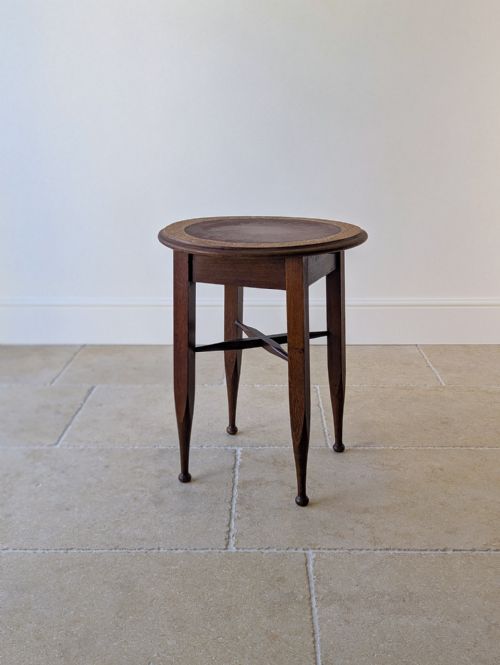
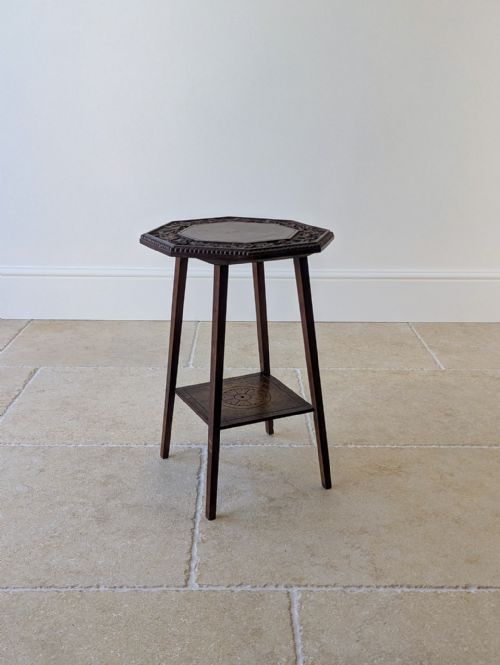
These arts and crafts corner table pieces bring solid oak and walnut timber into neglected angles with quiet utility.
Arts and Crafts Corner Table
When you search for an arts and crafts corner table, you find pieces designed to fit room angles cleanly without wasting floor space. The form emerges across the Victorian, Edwardian, and early twentieth century periods in sturdy timber.
Occasional tables and side tables dominate the offerings here, accompanied by occasional plant stands and stools. Oak and walnut form the backbone of the selection, often shaped with simple lines typical of the movement.
Materials and construction
Makers built these tables primarily in solid oak and walnut, alongside ebonised wood, beech, and carved hardwood. Timber surfaces often display natural grain rather than heavy veneer.
Construction relies on traditional joinery suited to supporting triangular or angular tops. Selected examples incorporate hand-carved detailing or fabric elements like velvet.
One past piece managed to double as both a corner washstand and a dressing table, proving Victorians loved multitasking furniture.
Assessing quality
Quality rests on the selection of timber and the restraint of the design. Pieces with honest, solid oak construction and clean joinery stand apart from simpler utility items.
The integration of carving or the use of walnut shifts a piece up the scale. Condition of the timber surface and original finish dictate the enduring character of each table.
Liberty of London
The Arts and Crafts Corner Table Glossary
- Arts & Crafts
- A design movement valuing handcraft, honest materials, and simple utility over mass production. It shaped domestic furniture from the late nineteenth century onward.
- Occasional table
- A small, movable table used for specific tasks like holding a lamp or book. These pieces adapt easily to various corners of a room.
- Ebonised wood
- Timber treated with a dark finish to imitate expensive ebony. This technique appeared frequently in Aesthetic Movement and late Victorian furniture.
- Trefoil
- A three-lobed shape resembling a clover leaf. The term describes the plan of certain small tables and stools in this selection.
Arts and Crafts Corner Table: Frequently Asked Questions
What is an arts and crafts corner table?
These are small tables built specifically to occupy room angles. They provide a surface in tight spaces while reflecting the honest construction of the movement.
Most examples date from the late nineteenth century to the early twentieth century. They use timbers like oak and walnut.
How were these tables used originally?
Households placed them in corners to hold lamps, plants, or decorative objects. Their footprint made them practical for smaller Victorian and Edwardian parlours.
They served as occasional furniture rather than primary dining surfaces. Their lightweight build allowed owners to move them easily.
How do I style a corner table?
Pair the wooden frame with a simple lamp, a ceramic pot, or a small trailing plant. The angular top sits neatly against intersecting walls.
Keep surrounding items minimal to let the timber grain and form stand out. Avoid overcrowding the surface.
How do I date an arts and crafts table?
Examine the timber, construction methods, and stylistic cues. Pieces from the Victorian era often show heavier turning, while 1910 and 1920 examples lean towards cleaner lines.
Archival records and maker labels help narrow the date further. Oak and walnut were favoured across all these decades.