

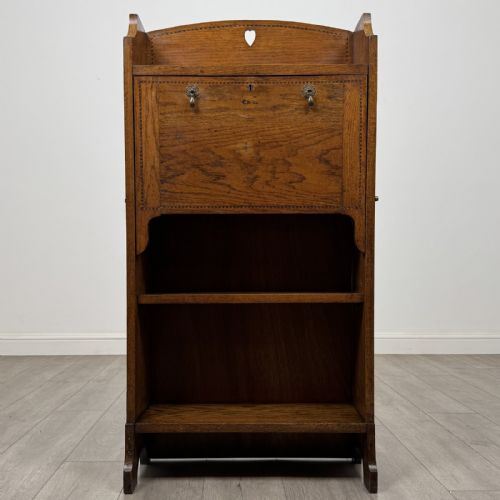
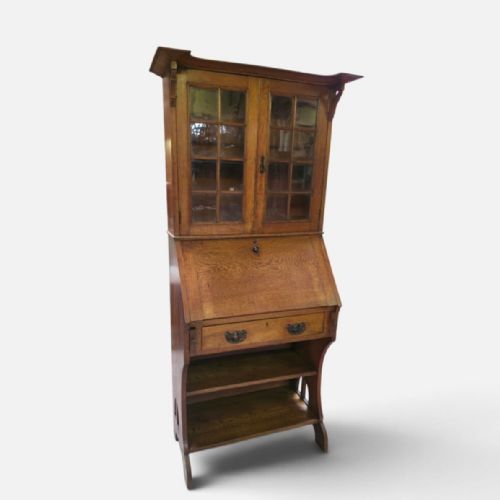
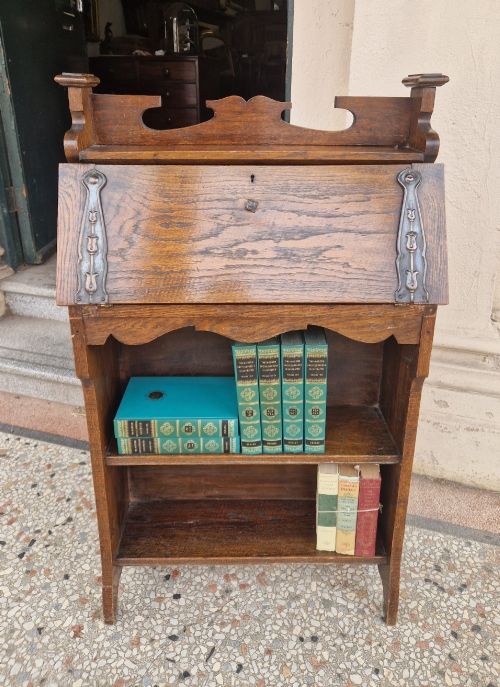
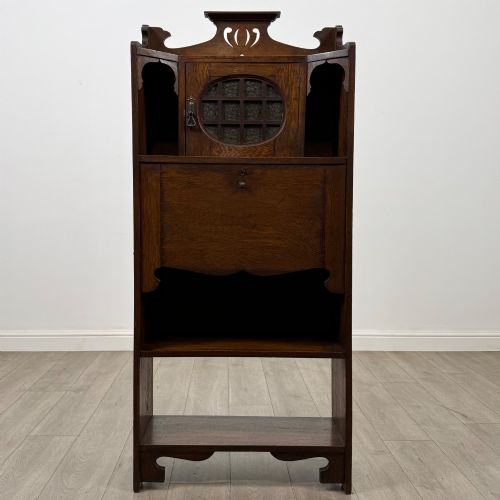
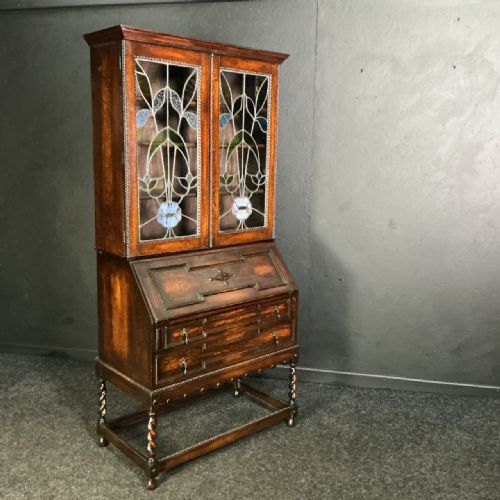
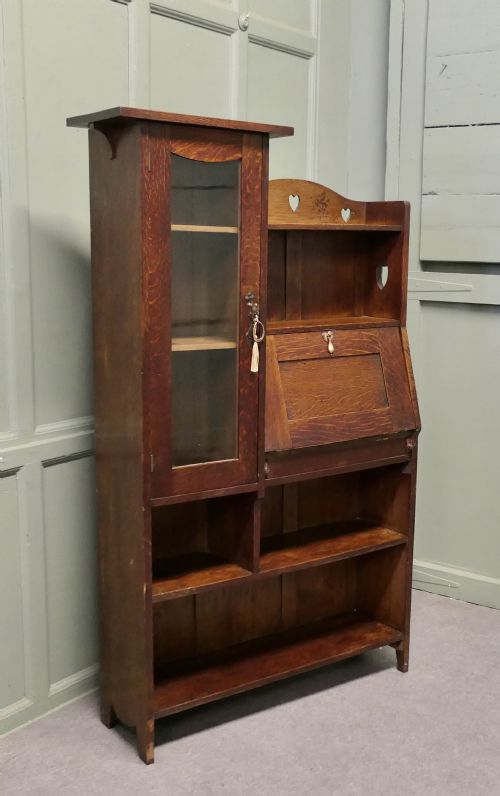


Arts and Crafts Bureau Bookcase
An arts and crafts bureau bookcase offers a combination of fitted writing slope and upper shelving that suits daily study.
Arts and Crafts Bureau Bookcase
An arts and crafts bureau bookcase combines a drop-front writing surface with enclosed upper shelving for books and display. These pieces frequently appear in oak, spanning periods from the Victorian era through the Edwardian years up to 1920.
Forms on this page range from compact students bureaux and cabinet desks to taller bureau bookcases featuring glazed cabinets and inlaid detail. Makers such as Morris & Co, George W Jack, Harris Lebus, and Liberty & Co are represented alongside unsigned examples.
The dominant material throughout these listings is oak, occasionally paired with glass, brass, lead, copper, iron, and fabric elements. Buyers encounter styles labelled as Arts & Crafts, Arts and Crafts, and Edwardian.
Materials and construction
Construction relies heavily on oak timber, shaped into bureaux, cabinet desks, and display cabinets with fitted interiors. Cabinet makers utilised solid wood alongside glass for glazed cabinet doors and metalwork in brass, copper, iron, and lead for hinges, handles, and decorative accents.
Detailing often includes inlaid work and fabric panels alongside leaded or clear glass panes. The structural approach reflects the principles of the period, prioritising visible grain and straightforward joinery.
Arts and Crafts Bureau Bookcase Retail Price Guide 2026
Typical asking prices for arts and crafts bureau bookcase among the pieces listed under this phrase on Sellingantiques today, from the lower quarter to the upper quarter. They describe what is for sale here now, not the wider market.
Even the smallest students bureau manages to house enough tiny pigeonholes to lose several postage stamps.
Factors of quality
Quality in these pieces rests upon the precision of the cabinet work, the clarity of the oak grain, and the integration of decorative elements such as inlaid detail or leaded glass. Pieces bearing attributions or firm names carry distinct provenance.
The sophistication of the internal fittings, from small pigeonholes to fitted writing slopes, distinguishes standard production items from workshop pieces designed by notable architects and makers.
Morris & Co·George W Jack·Harris Lebus·Liberty & Co
The Arts and Crafts Bureau Bookcase Glossary
- Bureau
- A desk featuring a sloping hinged lid that drops down to form a writing surface, often concealing small drawers and pigeonholes inside.
- Bureau bookcase
- A combined furniture form featuring a lower bureau desk section beneath an upper bookcase or display cabinet enclosed by doors.
- Glazed cabinet
- An upper section enclosed by glass-paned doors designed for housing books or displaying decorative objects.
- Inlaid detail
- Ornamental patterns created by fitting contrasting slices of wood or other materials flush into the primary timber surface.
- Students bureau
- A smaller, more compact form of desk tailored for individual study use.
Arts and Crafts Bureau Bookcase: Frequently Asked Questions
What is an arts and crafts bureau bookcase?
An arts and crafts bureau bookcase is a dual-purpose item featuring a lower writing desk with a drop-front slope and an upper section for storing books.
These pieces typically date from the Victorian and Edwardian periods up to 1920, constructed mainly in oak with occasional metal and glass details.
How were these bureau bookcases used?
The drop-front flap opens to create a writing surface while keeping correspondence and stationery organised in interior compartments.
The upper shelves provide enclosed storage for volumes and display items, making the piece practical for studies and living rooms.
How do I date an arts and crafts piece?
Dating relies on stylistic markers, construction methods, and materials associated with periods such as Victorian, Edwardian, and the early twentieth century.
Labels, stamps, or attributions to specific firms can also help narrow down the date of manufacture.
What woods are used in these items?
Oak is the primary timber found across these listings, often finished to display the natural grain of the wood.
Additional materials like brass, copper, lead, iron, and glass appear in the hardware, handles, and upper cabinet doors.