

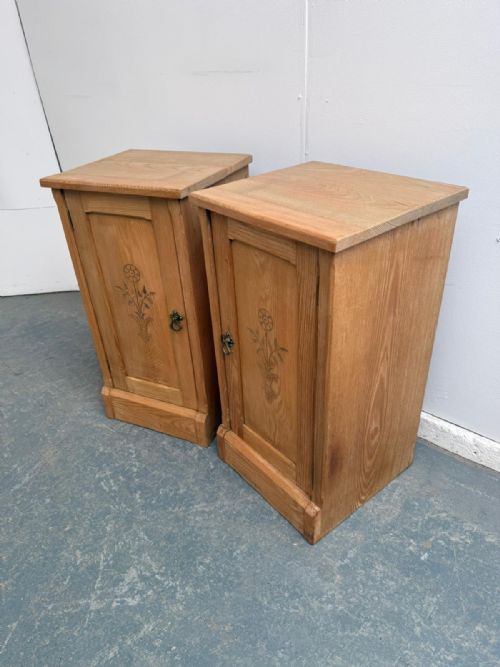


Arts and Crafts Bedside Cabinets
These arts and crafts bedside cabinets bring solid oak, ash, and mahogany together with copper and brass hardware for functional bedroom storage.
Arts and Crafts Bedside Cabinets
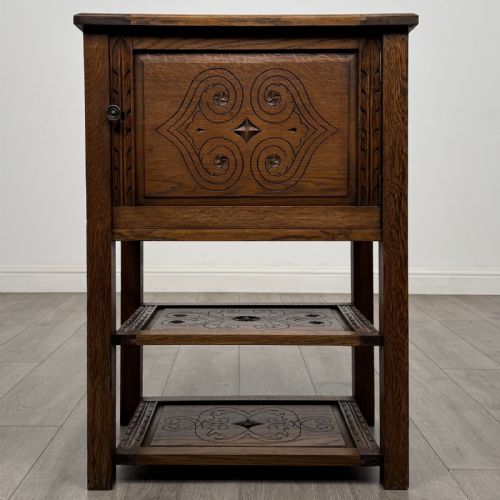
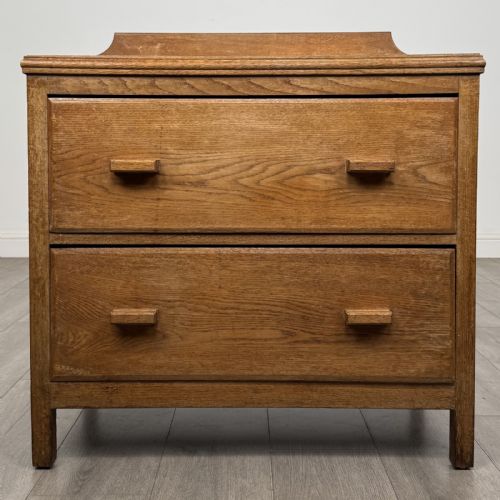
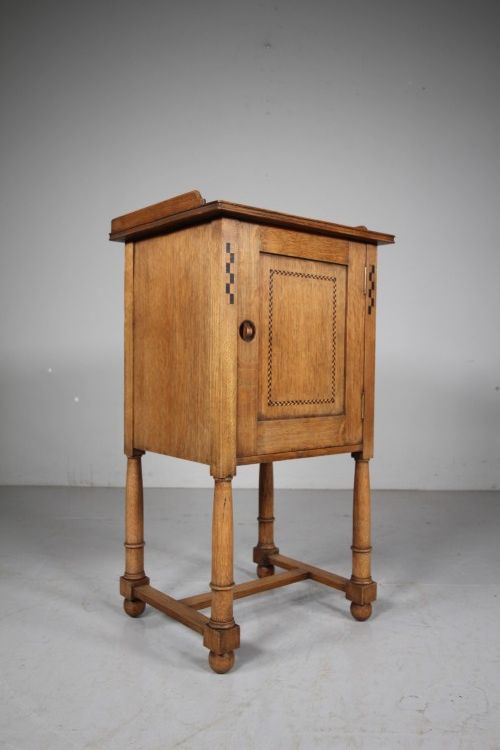
Arts and crafts bedside cabinets combine practical utility with the honest construction methods championed by the movement, frequently appearing as compact pot cupboards and side tables with raised galleries. The examples on this page span from the late nineteenth century through the Edwardian period and into the nineteen-twenties, showing how cabinetmakers adapted the style for everyday domestic use. Solid oak remains the most frequent material encountered here, alongside waxed ash and occasional mahogany examples.
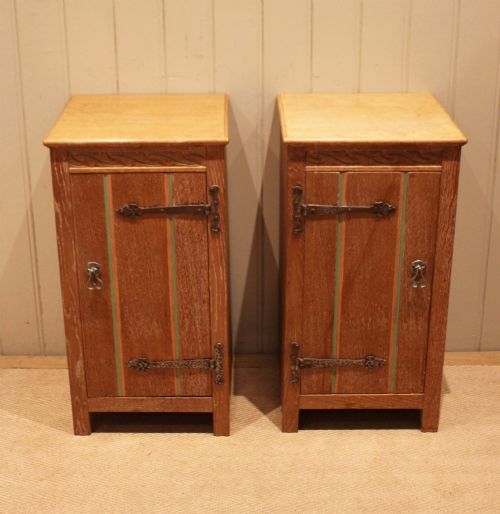
Buyers will find single cabinets and matched pairs equipped with internal shelving, small drawers, or tile tops. Some pieces incorporate decorative fretwork or subtle boxwood and ebony inlay, while others rely entirely on the natural grain of the timber and exposed joinery for their character. Proportions are typically modest, designed to sit beside period beds while offering secure enclosed storage for night-time essentials.
Materials and Construction
Makers relied heavily on solid oak and ash, working the timber with waxed finishes that protected the surface while highlighting the natural grain. Metal fittings such as brass drop handles, copper panels, and decorative hinges formed an integral part of the design rather than mere ornamentation.
Joinery techniques prioritised durability, utilising panelled construction for doors and raised galleries to keep items secure on top. Inlaid details in boxwood and ebony occasionally appear on drawer fronts, demonstrating careful hand-detailing within domestic workshops.
Arts and Crafts Bedside Cabinets Retail Price Guide 2026
Typical asking prices for arts and crafts bedside cabinets among the pieces listed under this phrase on Sellingantiques today, from the lower quarter to the upper quarter. They describe what is for sale here now, not the wider market.
Current listings feature pieces spanning from eighteen-ninety through the Edwardian era up to nineteen-twenty, predominantly constructed in solid oak and ash.
Distinctions in Quality
Quality rests upon the selection of timber and the integration of metalwork, where substantial solid oak or figured ash boards outlast veneered alternatives. Superior pieces display thoughtful proportions, well-fitted panel doors, and original hardware that matches the aesthetic vision of the movement.
The presence of maker attribution, specialised elements like ceramic tile tops, or refined inlay work elevates certain cabinets above standard utility pieces. Honest patination through time further separates cabinets that retain their original waxed finish from those heavily altered.
Heals·Shapland and Petter
The Arts and Crafts Bedside Cabinets Glossary
- Pot Cupboard
- A small bedside cabinet originally designed to house a chamber pot behind a single panelled door. These items now function as compact storage beside modern beds.
- Raised Gallery
- A low decorative railing around the top edge of a cabinet or table. This feature prevents items from sliding off the surface.
- Fretwork
- Openwork ornamentation cut through thin wood or metal panels using a scroll saw. It appears on side tables and cabinet doors for decorative ventilation.
- Tile Top
- A tabletop inset with decorative ceramic tiles, often floral or geometric in design. This surface resisted heat and moisture in period domestic settings.
Arts and Crafts Bedside Cabinets: Frequently Asked Questions
What fits inside an arts and crafts bedside cabinet?
These cabinets typically feature a single interior shelf or a small drawer suitable for books and personal items. Their internal space reflects nineteenth-century storage needs rather than modern bedside bulk.
Buyers often use the enclosed cupboard for lighting accessories or journals while placing a lamp or glass on the solid wood surface above.
How do I care for waxed oak furniture?
Waxed timber requires occasional feeding with a quality beeswax to maintain its lustre and protect the grain from moisture. Avoid placing these pieces near direct heat sources that might dry out the wood.
Regular dusting with a soft cloth keeps the finish intact without disturbing the natural patination acquired over the decades.
Are these cabinets sturdy enough for daily use?
The heavy oak and ash construction of these pieces ensures they remain robust for everyday placement in modern bedrooms. Solid timber framing provides natural strength across the joints.
Care should be taken with older hinges and drawers, treating them with the same gentle respect appropriate for antique furniture.
How can I identify the Edwardian period?
Edwardian furniture often blends traditional craftsmanship with lighter proportions than heavy Victorian designs. Common indicators include simpler lines and functional brass or copper hardware.
Documentation or stylistic markers such as geometric inlays and waxed oak finishes help confirm this era of production.