
Arts and Crafts Art
Arts and crafts art brings together honest construction and decorative utility, offering functional furniture and metalwork shaped by late nineteenth and early twentieth century ideals.
Arts and Crafts Art
When buyers search for arts and crafts art, they encounter a wide range of domestic objects spanning from the late nineteenth century into the Edwardian period and the decades that follow. These pieces bridge the gap between utilitarian purpose and artistic design, reflecting the shift away from mass industrial production toward hand-finished craftsmanship.
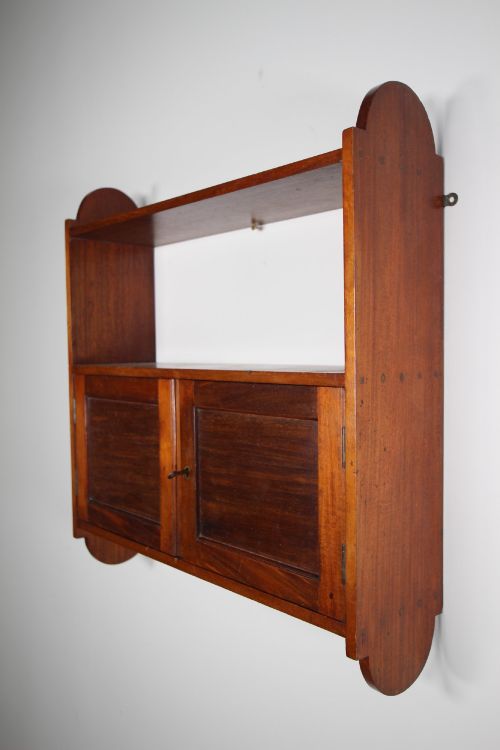
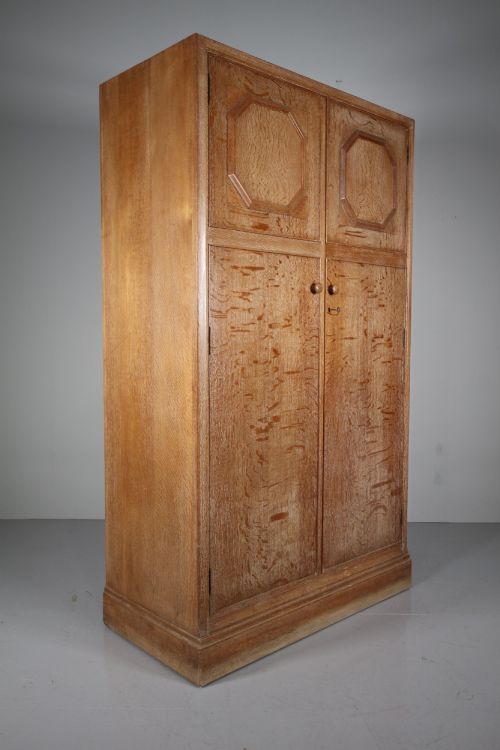
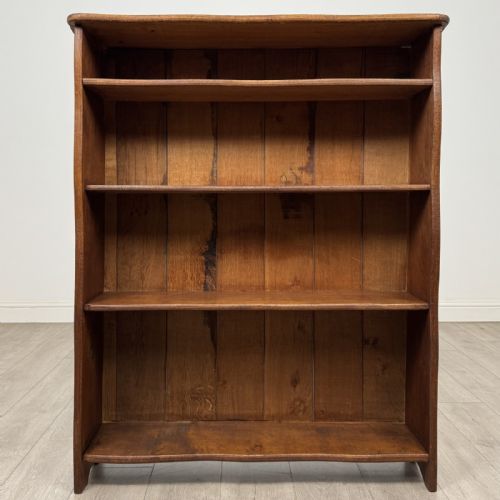
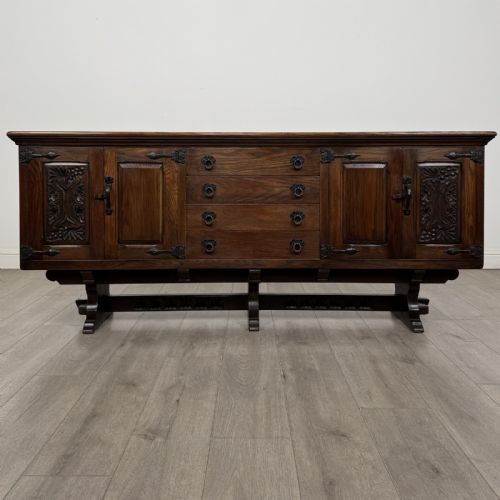
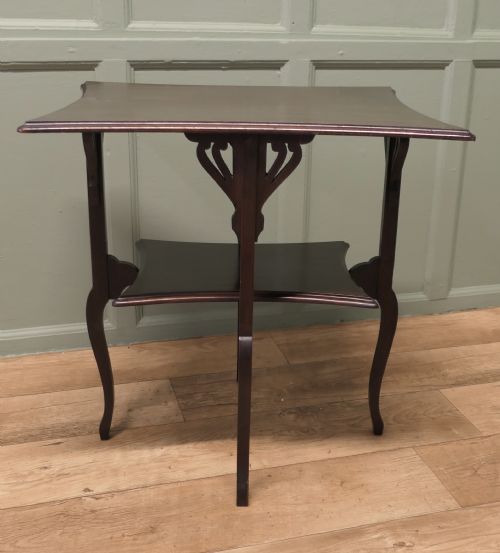
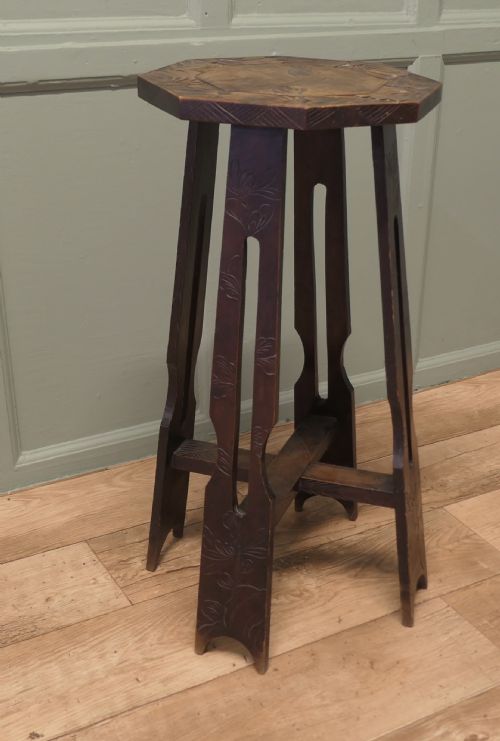
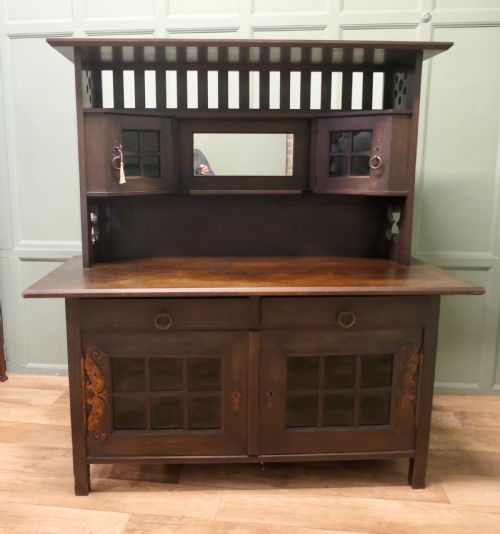
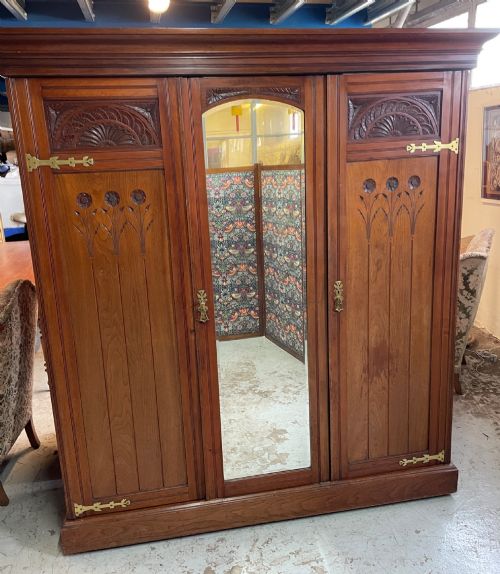
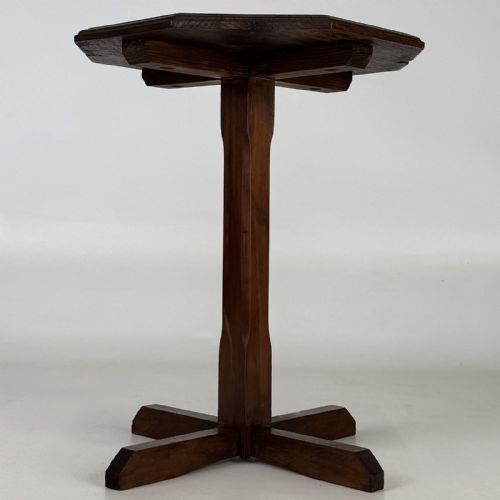
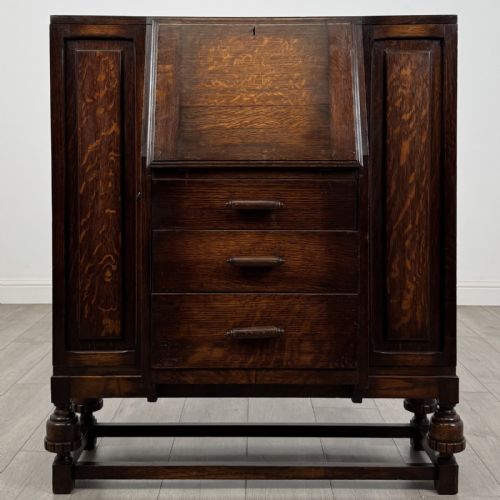
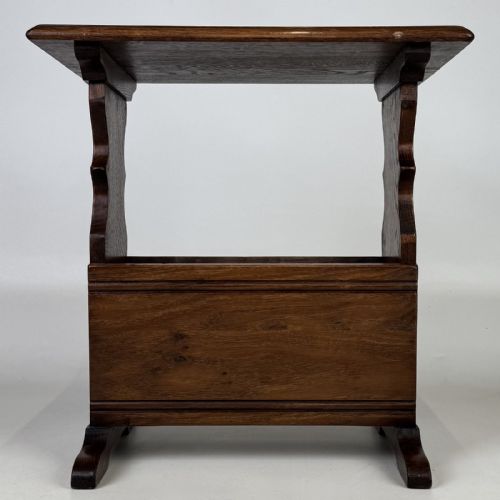
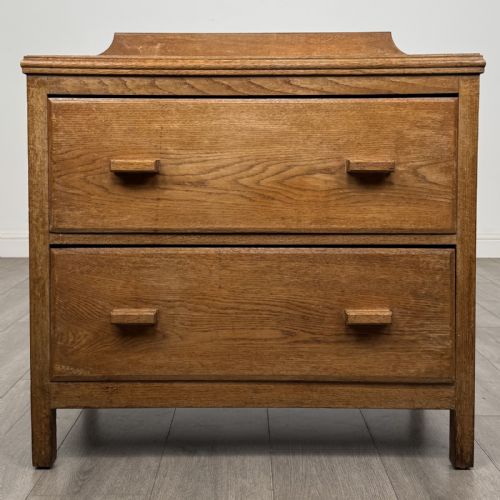
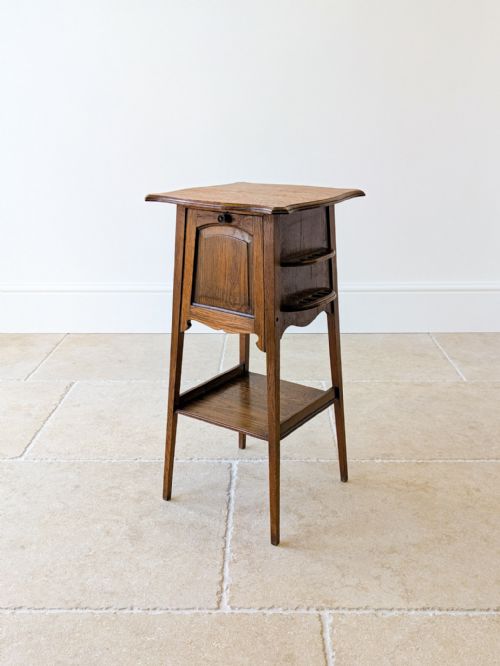
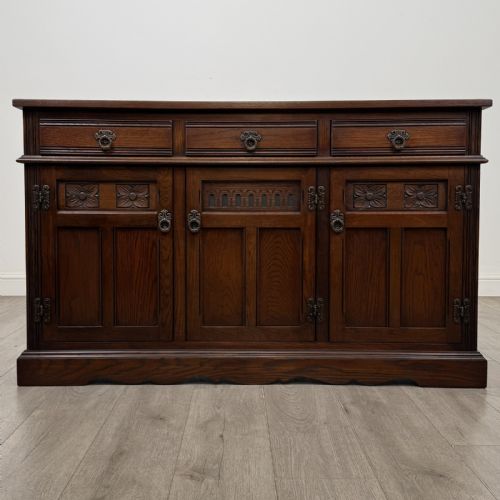
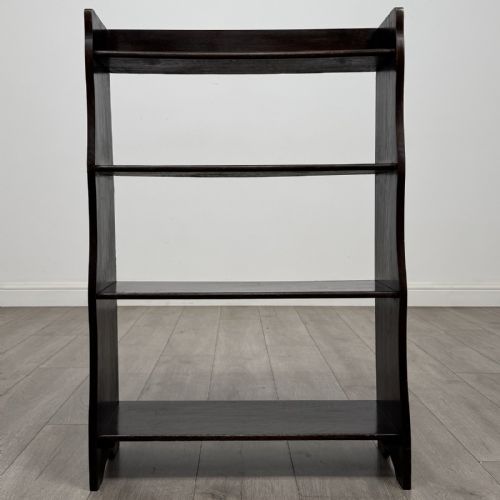
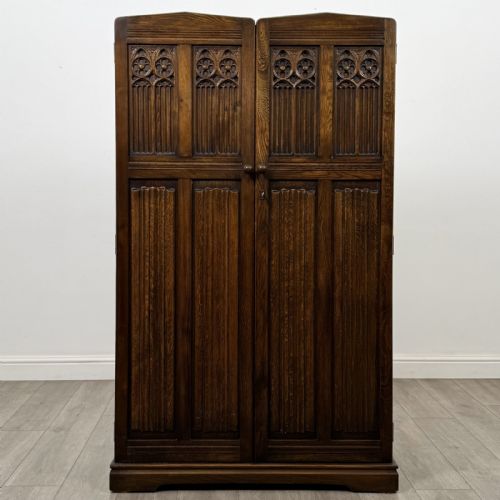
The selections on this page are predominantly oak furniture, ranging from side tables and bookcases to dining chairs and dressers, often accompanied by metalwork in copper, brass, and pewter. Pieces from associated movements such as Art Nouveau and the Gothic Revival also appear frequently, sharing the same material honesty and structural integrity.
Buyers will also find decorative accessories including silver caddy spoons, ceramic vases, and mirrors set with cabochons. These smaller items provide accessible entry points into collecting the aesthetic, maintaining the same focus on material character as the larger furniture forms.
Materials and Techniques
Solid oak serves as the primary structural material for furniture, frequently selected for its quarter-sawn grain that reveals distinctive medullary rays. Joinery relies on traditional methods such as exposed tenons and wooden pegs rather than hidden metal fasteners, celebrating the physical construction of each piece.
Metalwork utilises copper, brass, and pewter, shaped by hand-beating and planishing to leave visible hammer marks across the surface. These tactile finishes highlight the work of the individual metalsmith and give the material a distinct texture.
Decorative elements incorporate natural motifs through carving, ceramic inserts, and inlaid panels of contrasting timbers or semi-precious stones. Textiles and metal mounts further complement the woodwork, relying on honest assembly and simple lines.
Listings feature oak as the dominant wood, accompanied by copper, brass, and sterling silver across Edwardian and late nineteenth-century periods.
Distinguishing Quality
Material selection dictates much of the distinction at the upper end, where makers utilised choice golden oak, heavy-gauge planished copper, and genuine silver rather than thin veneers or plated base metals. The weight of a piece and the consistency of its hand-finished details separate standard commercial output from workshop creations.
Maker attribution and original labels or stamps elevate certain pieces significantly, showing documented provenance from notable retail houses or specific guilds. Unattributed items still succeed on their physical merit, but traceable craftsmanship provides a clear indicator of superior design execution.
Heals·Liberty·Georg Jensen·Royal Doulton·Moorcroft·Archibald Knox·Newlyn Copper·Shapland and Petter·William Morris·Hugh Wallis·R E Stone·Arthur Simpson of Kendal·Bernard Instone
The Arts and Crafts Art Glossary
- Planishing
- A metalsmithing technique involving systematic hammer blows across a metal surface to smooth it and create a faceted texture. This process hardens the copper or silver while leaving a subtle record of the maker's hand.
- Quarter-sawn
- A method of cutting logs radially through the centre, producing timber boards with enhanced dimensional stability and striking grain patterns. Furniture makers favoured this cut to display distinctive medullary rays on oak surfaces.
- Caddy spoon
- A small utensil specifically designed for measuring loose tea leaves from a storage caddy. Arts and Crafts examples often feature hand-beaten bowls and decorative hammered handles.
- Quaich
- A traditional Scottish two-handled drinking vessel, reinterpreted by period silversmiths with clean lines and hammered finishes. These shallow bowls reflect Celtic revival influences within modern metalwork.
- Cabochon
- A gemstone polished into a smooth, convex dome rather than faceted, frequently set into pewter or copper mirror frames and metalwork. These stones add spots of natural colour to metallic surfaces.
Arts and Crafts Art: Frequently Asked Questions
How do I identify genuine pieces?
Look for visible construction methods such as exposed tenons, pegged joints, and hand-beaten tool marks on metal surfaces rather than concealed machine assembly. Weight, material honesty, and the presence of maker stamps or retailer labels further confirm authenticity.
Examine the timber to check for quarter-sawn oak and natural ageing consistent with the turn of the twentieth century. True examples prioritize structural integrity and simple utility over excessive ornamentation.
Can I use these items daily?
Most furniture and metalware from this movement were built for robust everyday use, utilising solid hardwoods and durable metals. Dining chairs, side tables, and bookcases function as practically today as they did a century ago.
Care for wooden surfaces with natural waxes and protect metalwork from excessive moisture to preserve their original finishes. Gentle handling ensures these utilitarian antiques remain part of active domestic life.
How do I care for copper and brass?
Maintain metal surfaces by dusting them regularly with a soft, dry cloth to prevent the accumulation of grime. Avoid harsh chemical cleaners or abrasive polishes that strip away historical patination and original tool marks.
Allow the metal to age naturally in the air, as a gradual darkening enhances the visual depth of hand-beaten pieces. Preservation of the surface patina maintains the character intended by the original metalsmith.
Where were these pieces made?
Production centred largely around British workshops, guilds, and commercial retailers that promoted handcraft ideals. Urban centres like London and Glasgow housed prominent designers, while regional cooperatives flourished in Cornwall and the Lake District.
Retail houses commissioned independent makers and workshops to produce specific furniture lines and decorative metalwork. This network of regional guilds and metropolitan shops defined the broader movement.