

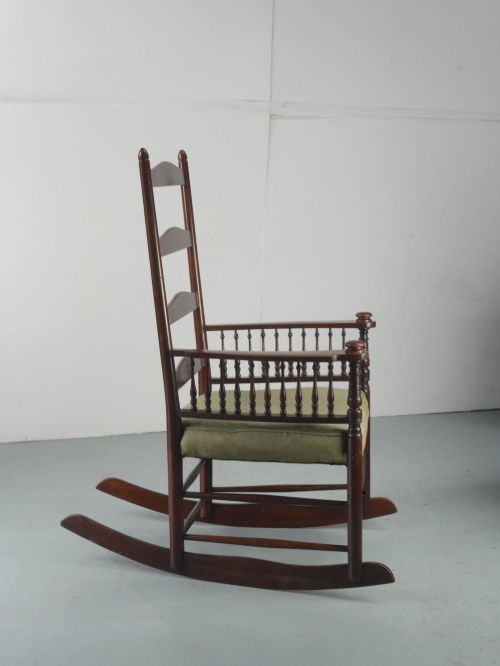
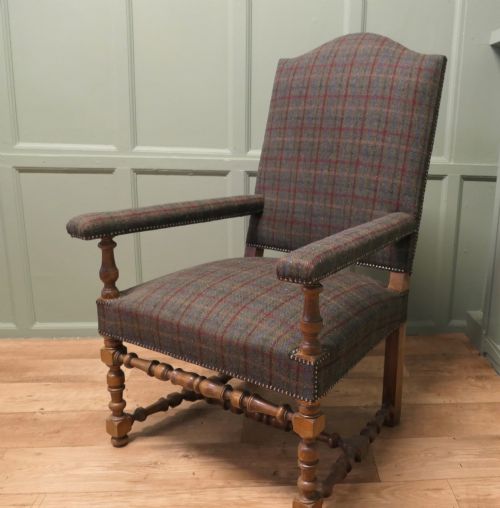
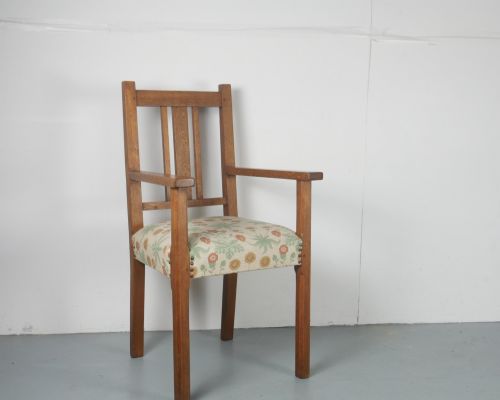
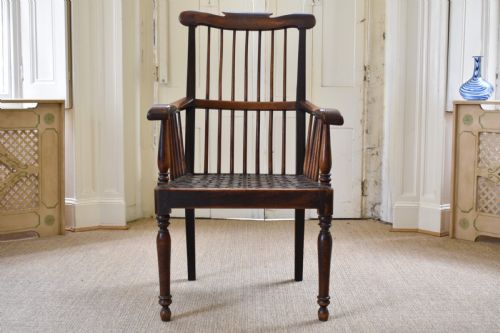


Arts and Crafts Arm Chair
An arts and crafts arm chair brings honest construction and solid timber into a room, offering sturdy comfort rooted in the ideals of the movement.
Arts and Crafts Arm Chair
An arts and crafts arm chair represents a period of design that prized utility and simple construction over excessive ornamentation. These seats appear in forms ranging from heavy oak carver armchairs to lighter rush-seated versions.
The selection includes pieces spanning the late nineteenth century through to the early twentieth century, incorporating related styles like Art Nouveau, Aesthetic Movement, and English Country. Makers and retailers such as Morris & Co and Liberty of London heavily influenced this domestic seating tradition.
Buyers encounter functional variations including adjustable reclining models, corner chairs, and desk chairs. Oak remains the predominant timber, frequently paired with rush, leather, or upholstered pads.
Materials and construction methods
Timber selection dictated the character of each chair, with solid oak, mahogany, laburnum, elm, and walnut forming the structural frames. Craftsmen utilised traditional joinery techniques to ensure durability without relying on hidden metal fasteners.
Seating surfaces frequently featured woven rush or supportive upholstery finished in materials like leather, fabric, and velvet. Brass components occasionally appeared as functional hardware or decorative accents on adjustable reclining mechanisms.
Arts and Crafts Arm Chair Retail Price Guide 2026
Typical asking prices for arts and crafts arm chair among the pieces listed under this phrase on Sellingantiques today, from the lower quarter to the upper quarter. They describe what is for sale here now, not the wider market.
The selection includes regional vernacular pieces like Orkney chairs alongside urban designs attributed to Liberty of London.
Distinguishing quality in construction and design
Superior examples reveal themselves through the integrity of the timber framing and the precision of the joinery. The weight and grain of the oak or walnut set finer workshop productions apart from simpler provincial output.
Attribution to notable designers or retail houses elevates a piece, as seen in documented work by makers like George Jack or William Birch. The survival of original upholstery materials, rush seating, and patinated brass hardware further enhances the standing of an individual chair.
George Jack·Morris & Co·Liberty of London·William Birch·Wheelers of Arncroach
The Arts and Crafts Arm Chair Glossary
- Carver armchair
- A sturdy wooden chair featuring arms, traditionally placed at the head of a dining table or used as a desk seat.
- Rush seat
- A seating surface woven from dried marsh grasses, commonly utilised in vernacular and movement-influenced chairs for its texture and durability.
- Aesthetic Movement
- A late nineteenth-century design phase emphasising visual beauty and artistic expression above narrative or moral function.
- Art Nouveau
- A decorative style characterised by flowing, organic lines and floral motifs that frequently intersected with movement-era production.
Arts and Crafts Arm Chair: Frequently Asked Questions
How do I identify an arts and crafts arm chair?
Look for visible tenon joints, straight-grained oak timber, and simple structural forms that prioritise function over heavy Victorian ornamentation.
Many examples feature slat backs, woven rush seats, or leather pads secured with brass studs.
Are these chairs comfortable for daily use?
Most models provide a supportive upright posture, though reclining versions offer adjustable angles for relaxed sitting.
Upholstered and rush variants offer varying degrees of cushioning depending on the specific model.
Where should I place this chair in my home?
These pieces suit studies, libraries, and living rooms where natural timber finishes complement traditional or contemporary interiors.
Desk chairs and carvers fit well working alongside writing tables or occasional side tables.
How do I care for the wooden frame?
Maintain the timber by applying occasional beeswax to nourish the grain and protect the surface from drying out.
Keep wooden frames away from direct heat sources to prevent the timber from splitting over time.