




Art Nouveau Writing Desk
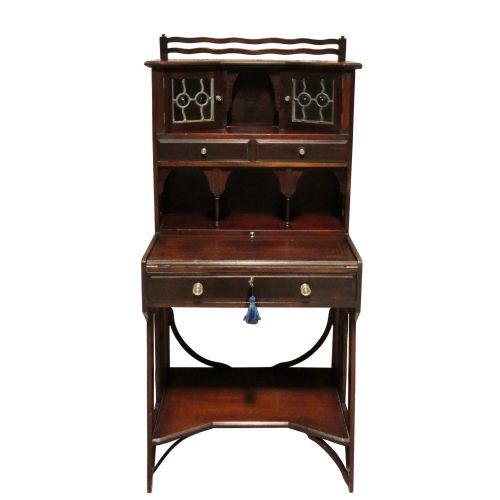
An art nouveau writing desk brings sinuous floral lines and organic hardware to the daily task of correspondence.
Materials and construction
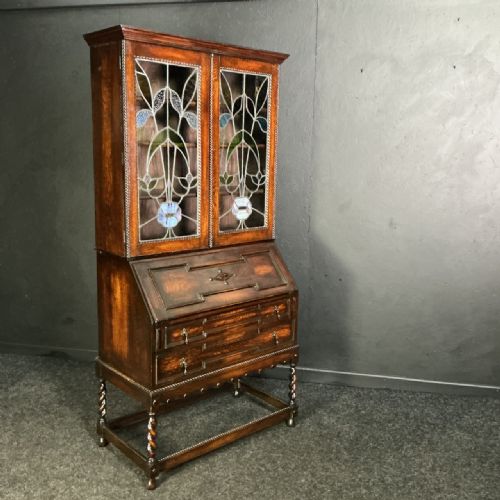
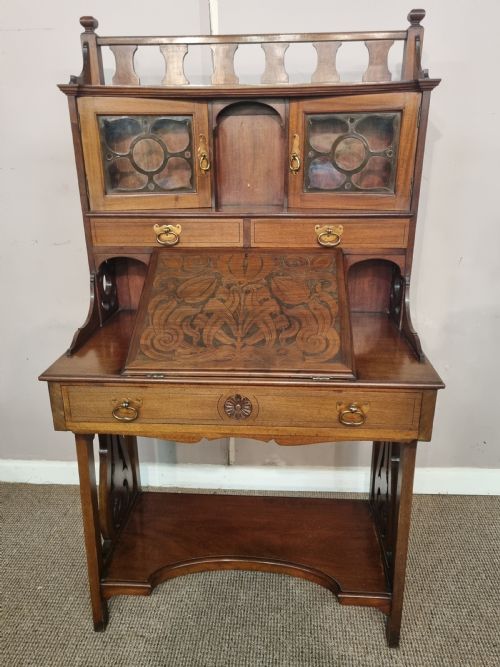
Cabinetmakers utilised hardwoods such as mahogany, oak, and walnut, often shaping them with curved drawer fronts and integrated gallery superstructures. Timber construction frequently met with detailed marquetry and hand-carved vegetal motifs.
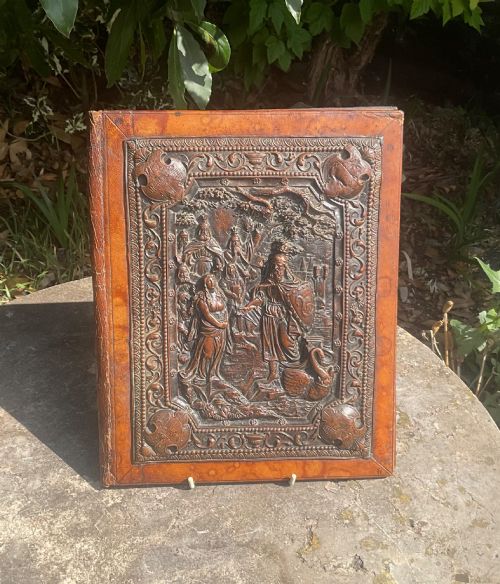
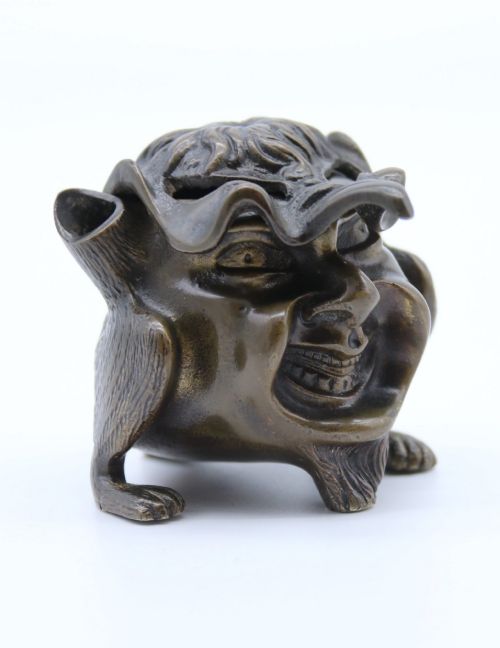
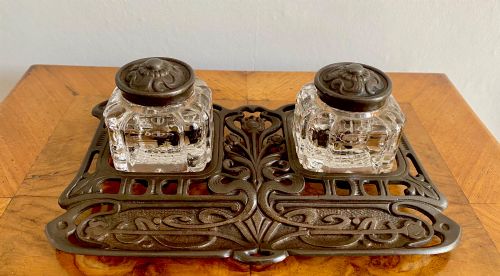
Metal components played a structural and decorative role, with cast brass, copper, bronze, and silver-plated mounts securing hinges, handles, and desk accessories. Glass and marble elements appeared regularly in associated inkwells and stands.
Assessing quality and execution
The standard of cabinetwork separates standard production from exceptional pieces, visible in the tightness of dovetail joints and the selection of figured mahogany or oak veneers. Superior examples integrate metal hardware that complements rather than overpowers the timber grain.
The finesse of the decorative hardware and metalwork dictates overall standing. Cast bronze or copper mounts with crisp chasing and original patination demonstrate superior workshop production compared to simpler stamped fittings.
The inventory spans nineteenth-century Victorian foundations through Edwardian interpretations of continental design.
Maple and Co·Liberty·Loetz·Albert Marionnet·Maurice Dufrene·Zimmermann
The Art Nouveau Writing Desk Glossary
- Secretaire
- A cabinet or desk featuring a drop-down writing flap that conceals small drawers and pigeonholes. It allows a full writing surface to fold away when not in use.
- Bureau bookcase
- A dual-purpose piece combining a writing desk with enclosed shelving above for books. The lower section typically houses a sloping writing flap or pull-out drawer.
- Marquetry
- The art of applying thin pieces of wood veneer to a structure to form decorative patterns. Craftsmen utilised different timber tones to create naturalistic floral motifs.
- Pedestal desk
- A heavy freestanding writing table supported by two vertical banks of drawers. These pieces often feature inset leather writing surfaces.
- Writing slope
- A portable or stationary box with an angled lid covered in leather or fabric. It opens to reveal compartments for pens, ink, and paper.
Art Nouveau Writing Desk: Frequently Asked Questions
What defines an art nouveau writing desk?
These pieces combine traditional timber construction with whiplash curves, asymmetrical floral motifs, and integrated metal hardware. They emerged around eighteen ninety and carried through the Edwardian period.
You will find them in oak, mahogany, and walnut, often taking the form of writing tables, compact bureaux, or large secretaire bookcases.
How do I care for the wood and metal?
Maintain the timber surfaces with traditional beeswax rather than modern silicone sprays to preserve the natural grain and patina. Clean metal mounts gently with a dry cloth to avoid disturbing the aged finish.
Keep the furniture away from direct heat sources and strong sunlight to prevent the timber and leather writing surfaces from drying out.
Are these desks suitable for daily use?
Most pieces were built for functional domestic correspondence and remain sturdy enough for contemporary writing tasks. The integrated drawers and compartments offer practical storage for modern stationery.
Consider the height and knee clearance of smaller writing tables, as Victorian and Edwardian proportions often differ from modern office furniture.
How do I distinguish the style from Arts and Crafts?
While both movements overlapped, Arts and Crafts pieces generally emphasise visible construction, plain joinery, and straightforward utility. Art nouveau introduces flowing, organic lines, asymmetrical plant forms, and decorative metal mounts.
Many pieces on the market bridge both movements, combining solid oak construction with sinuous copper or brass hardware.