



Art Nouveau Silver Portrait Frame
These art nouveau silver portrait frame pieces combine fluid organic motifs with precious metal to hold cherished likenesses.
Art Nouveau Silver Portrait Frame
When you search for an art nouveau silver portrait frame, you are looking at domestic desk and mantel accessories designed to display photographs and pictures. These objects emerge primarily from the Edwardian era and the early decades of the twentieth century, alongside Victorian examples.
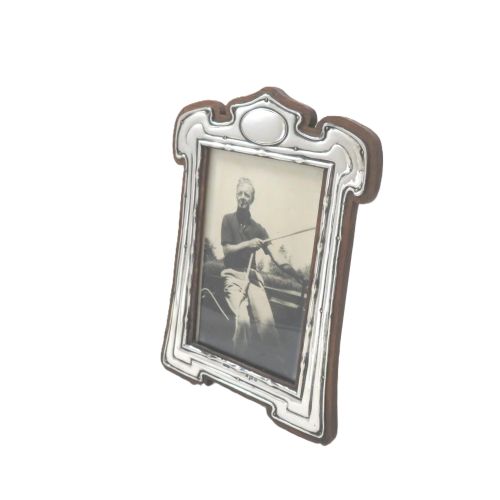
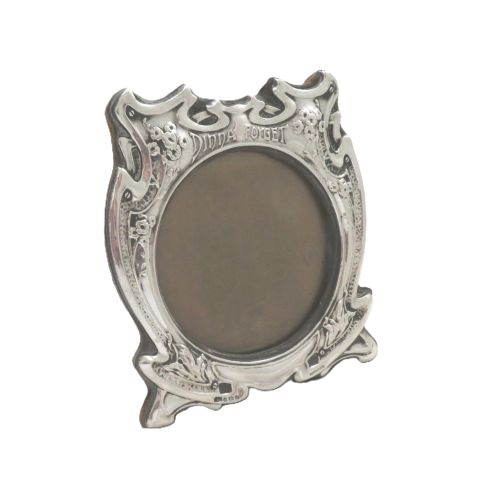
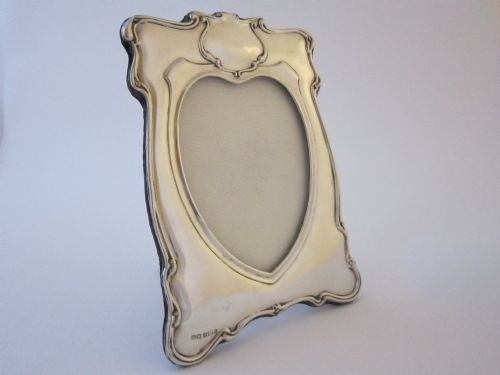
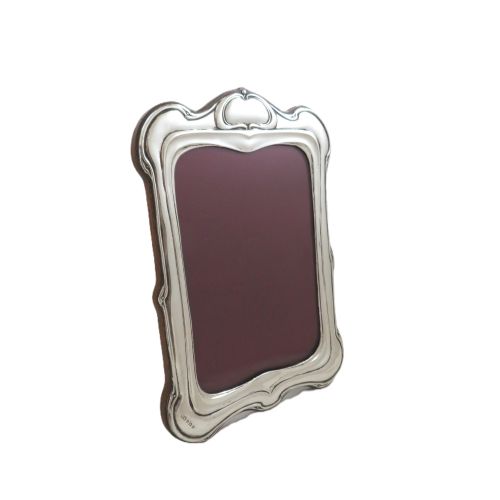
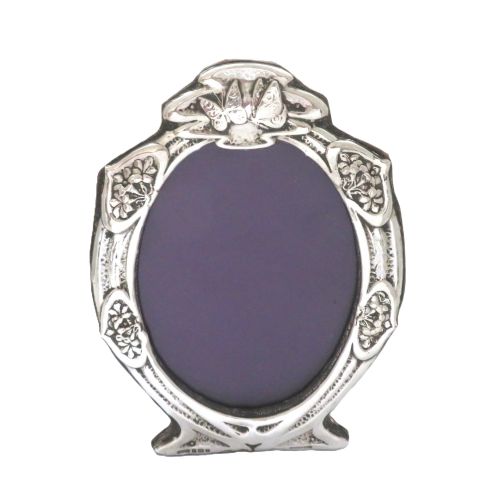
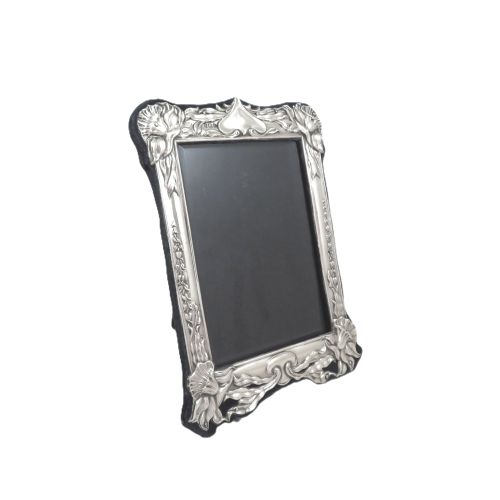
The pieces on this page take various forms, including oval, heart-shaped, and unusual contours, often housing historic portraits behind glass. They reflect the sweeping floral and sinuous lines characteristic of the Art Nouveau style and the parallel Arts and Crafts movement.
Most items you encounter are fashioned from sterling silver, frequently paired with wooden backs and fabric or velvet linings. They serve both a practical domestic function and stand as distinct examples of period metalwork.
How they were made
Silversmiths constructed these frames using sterling silver, frequently employing embossing techniques to raise the characteristic asymmetrical plant stems, floral tendrils, and figurative motifs from the metal sheet. Planished surfaces also appear, showing the deliberate, textured hammer marks left by the maker during shaping.
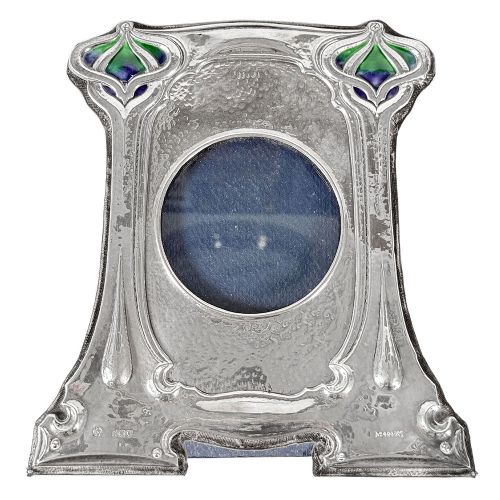
Enamel work adds colour and lustre to certain designs, fusing vitreous glass to the metal base in specific decorative zones. Wooden backings fitted with leather or velvet supports provide structural rigidity and a finished reverse.
Art Nouveau Silver Portrait Frame Retail Price Guide 2026
Typical asking prices for art nouveau silver portrait frame among the pieces listed under this phrase on Sellingantiques today, from the lower quarter to the upper quarter. They describe what is for sale here now, not the wider market.
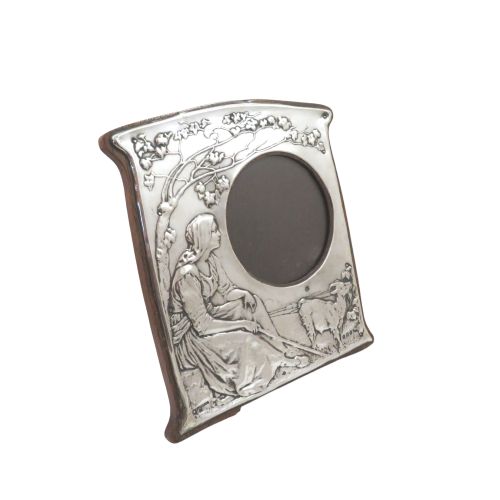
Look closely for the goat hiding among the embossed flora on the nineteen-five girl portrait.
What varies in quality
The distinction between standard production and superior work lies in the crispness of the embossed detail and the depth of the metal relief. Finer examples display meticulous hand-finishing along the undulating borders, whereas simpler pieces rely on flatter, more mechanical stamping.
Material combination also defines the standard of the piece, with integrated enamel panels or substantial wooden supports indicating higher initial craftsmanship. The presence of clear hallmarks and well-preserved original velvet or leather backing elements further distinguishes the better examples.
William Hutton and sons
The Art Nouveau Silver Portrait Frame Glossary
- Sterling silver
- A silver alloy containing 92.5 percent pure silver by mass, with the remainder usually copper. This standard composition provides the durability required for intricate repoussé and embossed domestic items.
- Planished
- A metal surface finish achieved by hammering with a polished tool to create small, flat, faceted indentations. This technique hardens the silver while leaving a distinctive textural pattern across the frame.
- Repoussé
- A metalworking technique where the silver is hammered from the reverse side to create a raised design in relief. It forms the foundation of the curving floral motifs seen on these pieces.
- Hallmark
- An official stamp applied to precious metals indicating the standard of purity, the assay office, and the year of manufacture. These marks help verify the period and origin of the silver.
- Vitreous enamel
- A material made by fusing powdered glass to a metallic substrate at high temperatures. It provides smooth, glossy coloured highlights within the silver framework.
Art Nouveau Silver Portrait Frame: Frequently Asked Questions
How do I clean an antique silver frame?
Use a soft microfibre cloth and specialised silver polish designed to lift tarnish gently without abrading the embossed relief. Avoid getting liquid cleaning agents onto the wooden backs or velvet linings.
Take care around enamel or delicate soldered joints to preserve the structural integrity of the metalwork.
How can I tell if a frame is Edwardian?
Edwardian examples often feature lighter, airier interpretations of Art Nouveau motifs, frequently combined with hallmarks dating to the first decade of the twentieth century. Stylistic overlaps with Arts and Crafts simplicity also point to this period.
Examining the assay office marks provides the most reliable date of manufacture.
What backs did original frames have?
Original backs typically consist of wood covered in fabric, velvet, or leather, secured by hinged struts or swivel clips. These components allowed the frame to stand upright on a desk or mantelpiece.
Replacement backs are common, so original linings contribute significantly to the piece's integrity.