

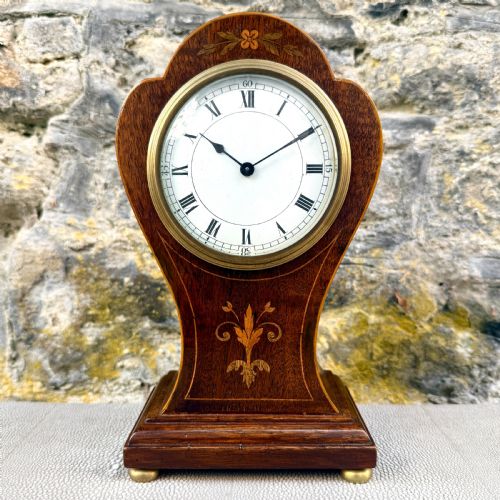


Art Nouveau Shelf Clock
These art nouveau shelf clock pieces bring organic curves and distinct period craft into a room.
Art Nouveau Shelf Clock
An art nouveau shelf clock sits upon a mantel or shelf, combining timekeeping with the flowing, organic lines characteristic of the turn of the twentieth century. These objects appear in forms spanning the Edwardian period, 1900, 1910, and the nineteenth century.
Buyers will most frequently meet mantel clocks fashioned from timber such as oak and mahogany, often alongside metal elements. Pieces from this selection also display stylistic influences from the Arts and Crafts movement and the Amsterdam School.
Origins include English and French workshops, encompassing designs shaped by notable makers and commercial houses. The diverse materials range from silver and pewter to copper and spelter.
How they were made
Cases utilise cabinet-making timbers such as mahogany, oak, and coromandel or macassar ebony, frequently shaped with inlaid details. Metalwork components involve cast pewter, hammered copper, brass, and silver fronts.
Enamel dials and glass covers protect the face, while spelter and brass form structural or decorative elements. Artisans combined these mixed media to achieve the characteristic fluidity of the design period.
Art Nouveau Shelf Clock Retail Price Guide 2026
Typical asking prices for art nouveau shelf clock among the pieces listed under this phrase on Sellingantiques today, from the lower quarter to the upper quarter. They describe what is for sale here now, not the wider market.
Some clocks wear their enamel dials like little polished monocles, keeping a watchful eye on the tea schedule.
What varies in quality
The standard of an art nouveau shelf clock rests upon the crispness of the timber inlay and the finesse of the metalwork. Pieces involving named designers or prominent retail houses exhibit superior artistic ambition in their casework and dial execution.
Simpler production pieces rely on standard timber cases with minimal ornamentation, whereas finer examples integrate enamel panels and specialised metal alloys like Tudric pewter with deliberate sculptural intent.
David Veasey·Liberty & Co·Archibald Knox
The Art Nouveau Shelf Clock Glossary
- Tudric pewter
- A brand of pewter alloy utilised by Liberty & Co for domestic metalwork and clocks. It typically contains a high proportion of tin to achieve a bright, durable finish.
- Spelter
- A zinc-based alloy frequently cast and patinated to imitate bronze or brass. It serves as an economical material for decorative figures and clock mounts.
- Amsterdam School
- An architectural and design style originating in the Netherlands. It emphasises expressionist brickwork, organic timber forms, and rich surface textures.
- Enamel
- A vitreous substance fused to a metal surface through firing. It provides a smooth, glossy background for clock numerals and decorative motifs.
- Coromandel
- A dense, dark cabinet wood with contrasting light streaks. It is prized for fine inlay and decorative banding on luxury clock cases.
Art Nouveau Shelf Clock: Frequently Asked Questions
Where should I place an art nouveau shelf clock?
These clocks suit mantelpieces, sideboards, or prominent shelves where their distinctive silhouettes and materials can be appreciated. Ensure the surface is level and stable to support the weight of timber and metal cases.
Keep them away from direct heat sources and strong sunlight to protect delicate wood finishes and enamel dials over time.
How do I identify the period of a clock?
Examine the combination of materials, such as oak paired with enamel, and the presence of stylistic markers like whiplash curves or geometric Amsterdam School influences. Dating relies on stylistic traits and any associated maker marks.
Evidence in these listings points predominantly to pieces originating around 1900, the Edwardian era, and the early twentieth century.
What materials are typical for these clocks?
Cabinet timbers such as mahogany and oak form the primary structure for many cases, often enhanced by ebony or inlaid details. Metal components frequently include brass, copper, silver fronts, and specialised pewter alloys.
Enamel dials and glass elements complete the construction, providing contrast to the darker woods and patinated metals.
Are these clocks suitable for daily use?
Most antique mantel clocks function well as daily timekeepers when properly maintained and serviced by a professional horologist. Gentle handling is required when winding movements and setting the time.
Careful placement away from heavy vibrations ensures the mechanical parts continue to operate reliably within their historical cases.