





Art Nouveau Mirror Frame
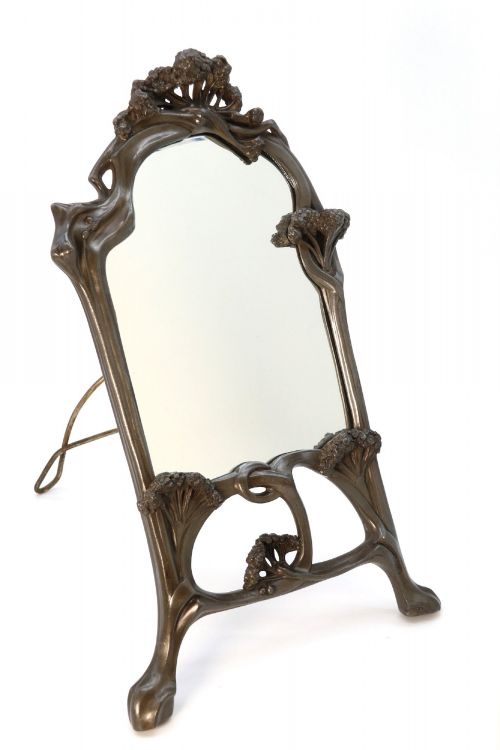
An art nouveau mirror frame brings fluid organic lines and tactile metalwork to a room, turning a simple looking glass into a sculptural centrepiece.
Art Nouveau Mirror Frame
When you search for an art nouveau mirror frame, you encounter a distinct blend of organic forms and flowing, whiplash lines that define the decorative arts of the late nineteenth and early twentieth centuries. These pieces encompass wall mirrors, table mirrors, and fire screens, taking the form of architectural wooden mounts or domestic wall hangings.
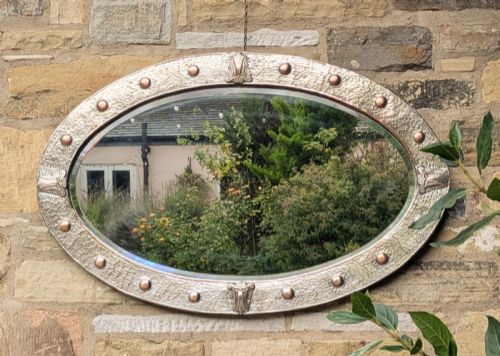
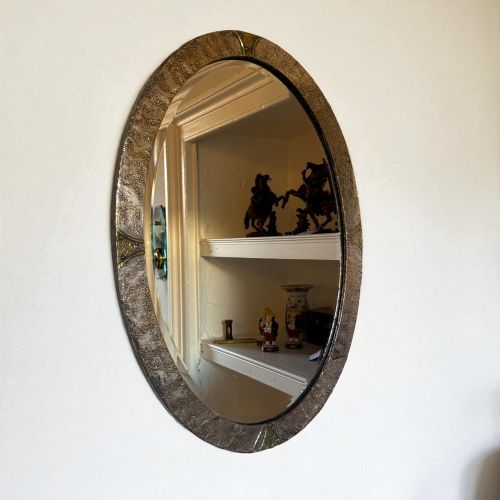
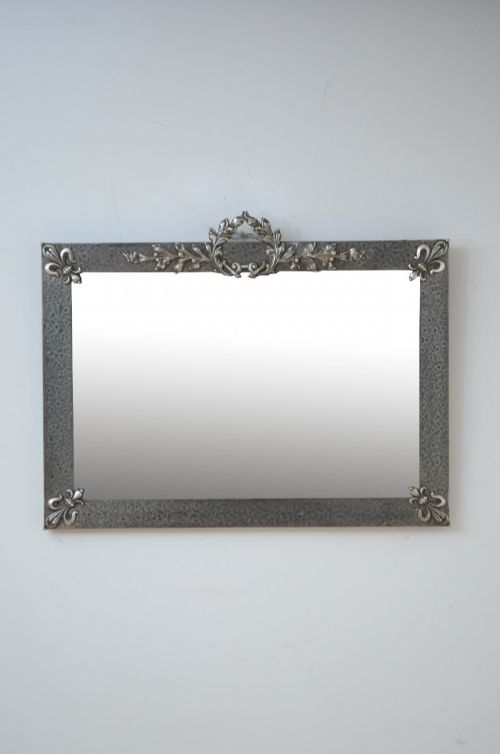
The examples available here stretch across periods from the Victorian era through Edwardian times and into the nineteen-thirties, though the core of the selection sits firmly around nineteen hundred. You will find wall mirrors and picture frames executed in brass, copper, pewter, and carved wood, reflecting the widespread embrace of craft-led design during this period.
Makers and workshops of the time applied these sinuous motifs to domestic objects of varying scale, from small easel-back dressing table mirrors to large wall-hung panels. The aesthetic draws heavily on the Arts and Crafts movement, Italian Rococo Revival, and the distinctive Glasgow Style, uniting them through botanical shapes and stylized animal ornamentation.
How they were made
The construction of these frames relies on both metalworking and traditional carpentry, utilising materials such as brass, copper, pewter, gesso, and gold leaf. Metal frames frequently feature hand-beaten or hammered surfaces that display the direct mark of the artisan's tool.
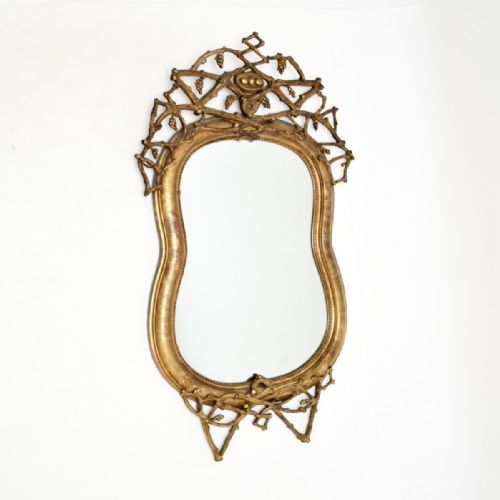
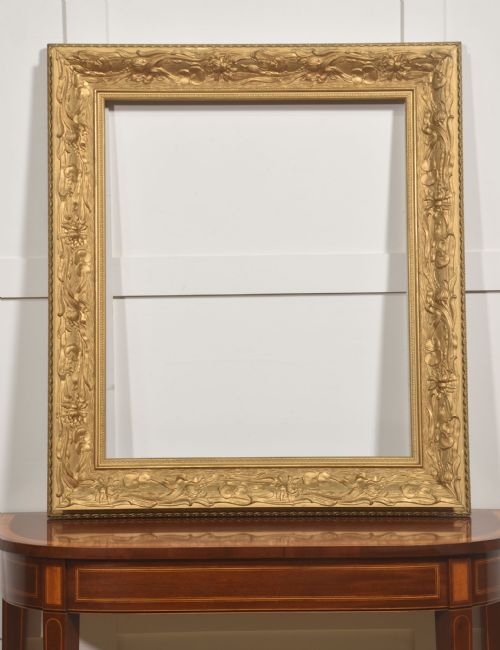
Wooden frames employ carved timber and moulded gesso, often finished with gilding to catch the light. Workshops combined these materials with bevelled glass plates, securing them within frames shaped by pierced metalwork and riveted construction.
Art Nouveau Mirror Frame Retail Price Guide 2026
Typical asking prices for art nouveau mirror frame among the pieces listed under this phrase on Sellingantiques today, from the lower quarter to the upper quarter. They describe what is for sale here now, not the wider market.
Peacocks occasionally flank the glass, keeping a watchful, decorative eye on anyone checking their reflection.
What varies in quality
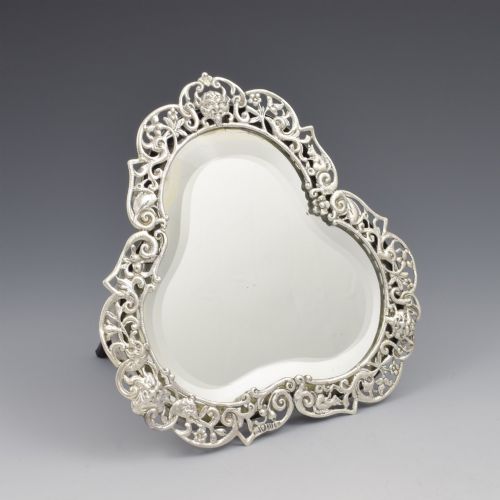
The distinction between standard commercial output and finer studio work lies in the depth and execution of the detailing. Pierced metalwork, delicate animal and bird motifs, and crisply hand-hammered surfaces separate ambitious artistic statements from simpler production pieces.
Subtlety in the handling of organic forms and the integration of the frame with its glass plate dictate the visual success of the piece. Heavier, more deeply carved wooden frames and marked metalwares show a greater commitment to the artistic ideals of the movement.
Liberty & Co·Louis Auguste Moreau·WMF
The Art Nouveau Mirror Frame Glossary
- Hammered metal
- Metal sheet worked by hand with a hammer to create a textured, light-catching surface. This technique shows the direct involvement of the artisan in shaping the material.
- Gesso
- A plaster-like mixture applied to wood frames and carved or moulded into relief designs before gilding. It provides the raised ornamentation characteristic of many period frames.
- Pierced work
- Metal or wood cut through to create openwork patterns and negative space. This technique adds lightness and intricate detail to the border of the glass.
- Bevelled glass
- Glass mirror plate with an angled edge ground down to a thinner profile. This traditional treatment adds a decorative refractive border around the perimeter of the reflection.
- Easel back
- A hinged support attached to the rear of a table mirror allowing it to stand upright on a surface. These frames are typically smaller in scale for domestic dressing tables.
Art Nouveau Mirror Frame: Frequently Asked Questions
What metals are used?
The frames employ brass, copper, and pewter, often shaped by hand into hammered or pierced designs. These metals reflect the artisanal priorities of the period.
Makers utilised these specific materials because they accepted patination well and allowed for expressive, organic manipulation during the manufacturing process.
How do I date them?
Dating relies on stylistic markers, construction methods, and occasionally maker stamps or registry marks found on the metalwork or timber backing. Pieces from around nineteen hundred often display the characteristic whiplash line.
Earlier Victorian examples lean towards heavier carved wooden revival styles, while later Edwardian and nineteen-thirties pieces show a gradual simplification of the organic ornamentation.
Were they wall mounted?
Many examples are designed for the wall, but the selection also includes table mirrors with easel backs and functional items like brass fire screens. Each form served a specific domestic role in the Victorian and Edwardian interior.
Wall mirrors range from compact circular copper frames to larger architectural wood and gilt gesso pieces meant to anchor a room.
What is Glasgow Style?
Glasgow Style refers to the distinct regional branch of the Arts and Crafts movement characterised by elongated forms, stylized botanical motifs, and symbolic figures such as peacocks. It represents a more austere and linear interpretation of organic design.
Objects from this tradition stand out through their graphic quality and sparing, deliberate use of decorative elements.