

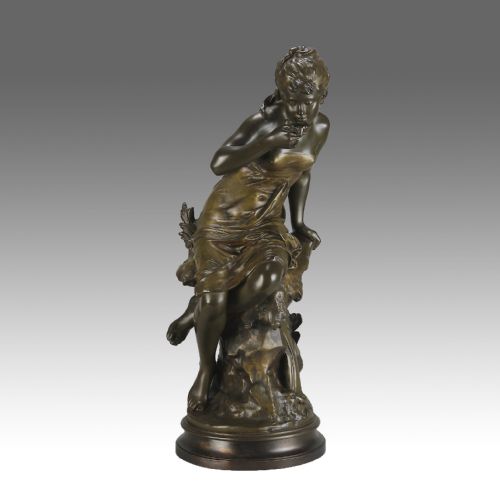


Art Nouveau Maiden Figurine
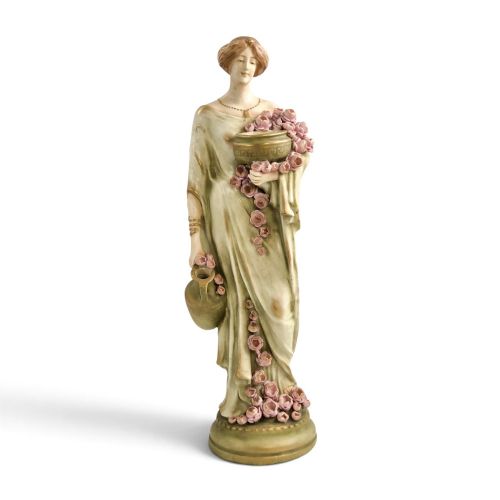
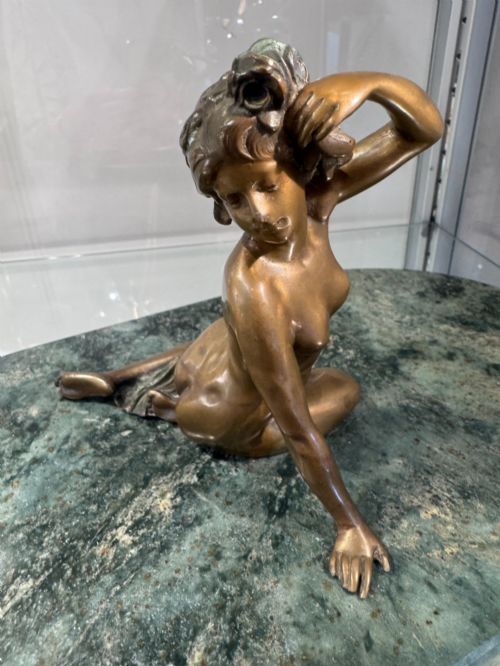
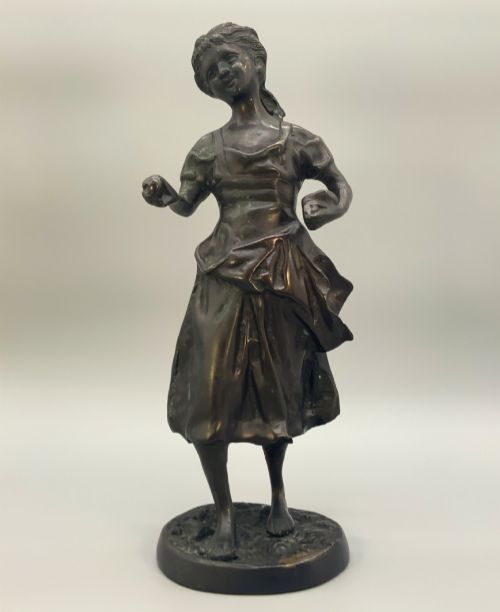
An art nouveau maiden figurine captures the flowing lines and natural motifs of the turn of the twentieth century in cast metal, glazed ceramic and carved stone.
Art Nouveau Maiden Figurine
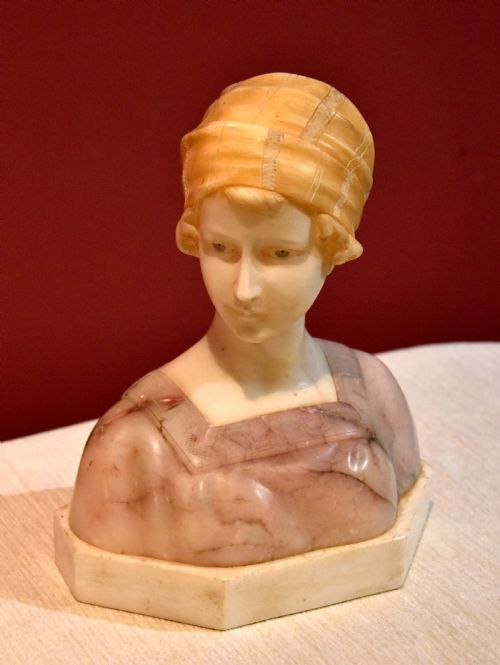
An art nouveau maiden figurine embodies the distinctive aesthetic of the period between the late nineteenth century and the early twentieth century. These sculptural works take the form of graceful female figures, allegorical busts, and functional pieces such as vide poches, spill vases, and table centrepieces.
Makers across France, Austria, and Bohemia produced these decorative objects in styles ranging from French Art Nouveau to 19th Century French. The pieces frequently depict classical or natural themes, including water nymphs, bathers, and country maidens seated on marble or integrated into architectural bases.
Materials and Techniques
Foundries and potteries utilised a diverse palette of materials, casting bronze and spelter into flowing feminine contours, sometimes applying a gilt finish. Ceramic works combined earthenware and porcelain, frequently complemented by hand-painted details and glazed surfaces.
Sculptors also carved direct from natural deposits, yielding works in marble, alabaster, and terracotta. Mixed media pieces combined alabaster and marble within a single bust, or mounted metal figures upon heavy stone plinths.
Art Nouveau Maiden Figurine Retail Price Guide 2026
Typical asking prices for art nouveau maiden figurine among the pieces listed under this phrase on Sellingantiques today, from the lower quarter to the upper quarter. They describe what is for sale here now, not the wider market.
Listings span the nineteenth century, the Edwardian period, and the nineteen-twenties, incorporating porcelain, bronze, ceramic, and terracotta.
Craftsmanship and Execution
The standard of an art nouveau maiden figurine rests upon the crispness of the casting in metal works and the definition of the modelling in ceramic and terracotta examples. Finer pieces display subtle facial expressions, delicate hand placement, and intricate rendering of flowing hair and drapery.
The integration of secondary materials dictates overall refinement, where fitted marble bases and carved alabaster pools exhibit precise stonemasonry. Painted and glazed pottery relies on controlled firing and pigment application to maintain the fluidity intended by the designer.
Moreau Family·Mathurin Moreau·Auguste Henri Carli·Royal Dux Bohemia·Villanis·Hans Müller·Ernst Wahliss·Georges Van Der Straeten·Goldscheider·Maurice Bouval·Emmanuel Villanis·Charlotte Monginot·Friedrich Goldscheider·A.Gory·A.Cipriani
The Art Nouveau Maiden Figurine Glossary
- Spelter
- An alloy of zinc and lead used as a cost-effective alternative to bronze in decorative figures. It accepts patination well to simulate heavier metals.
- Vide poche
- A small decorative tray or dish intended for emptying pockets, often incorporating a figural maiden element. These items served both ornamental and practical domestic functions.
- Terracotta
- Fired unglazed clay ranging from buff to reddish brown, widely utilised for sculptural modelling. This medium allows for expressive surface textures and soft contours.
- Alabaster
- A fine-grained translucent stone carved into sculptural busts and figures. Its natural opacity permits light to penetrate the surface softly.
Art Nouveau Maiden Figurine: Frequently Asked Questions
What materials were used?
Sculptors and potteries utilised bronze, spelter, terracotta, porcelain, earthenware, marble, and alabaster.
These materials appeared individually or in combination, such as metal figures mounted on stone bases.
How do I identify periods?
Pieces date from the late nineteenth century through to the Edwardian era and the nineteen-twenties.
Stylistic indicators include organic curves, flowing hair, and classical drapery characteristic of the turn of the century.
Where were they made?
Production centred primarily in France, Austria, and Bohemia during the height of the movement.
Notable potteries and individual artists operated within these regions, exporting decorative sculptures across Europe.
How were they displayed?
These figures functioned as standalone sculptures, decorative busts, vide poches, and large table centrepieces.
Owners placed them on mantelpieces, side tables, and dedicated pedestals within domestic interiors.