




Art Nouveau Iridescent Glass
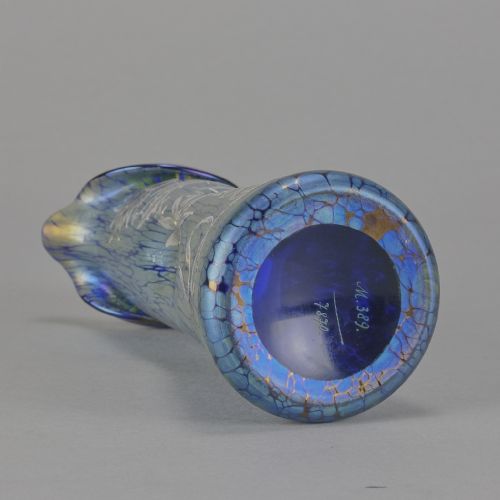
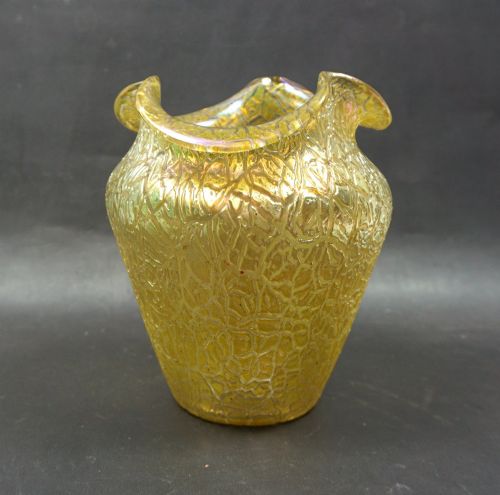
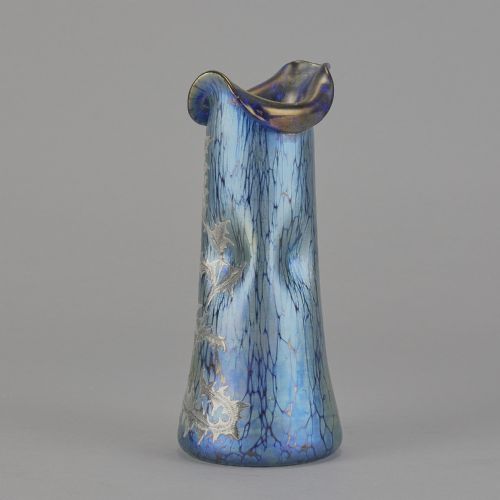
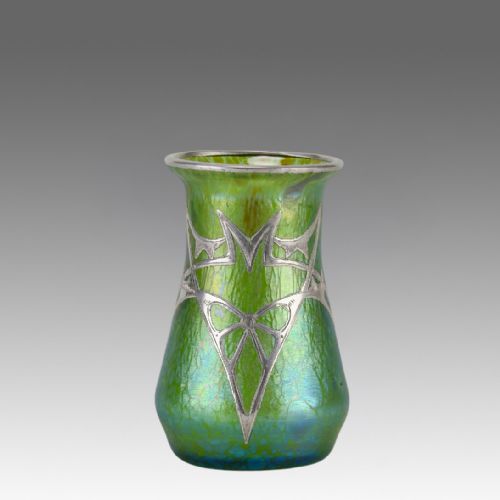
Art nouveau iridescent glass captures light through chemical reduction on blown vessel surfaces, bringing organic movement and metallic sheen into domestic spaces.
Art Nouveau Iridescent Glass
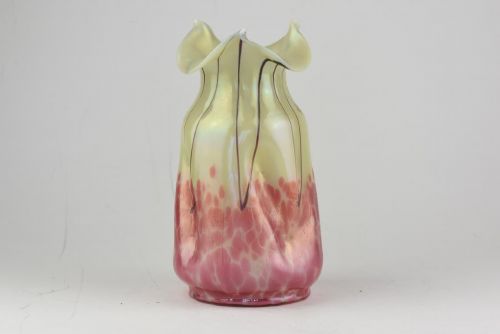
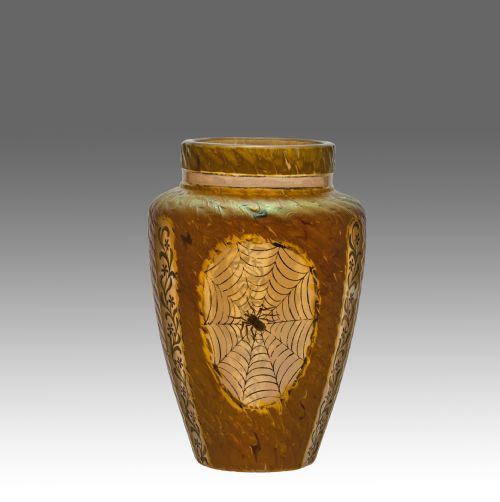
Art nouveau iridescent glass encompasses vases, bowls, inkwells and lampshades created primarily around nineteen hundred in Bohemia and Austria. You will frequently encounter blown glass vessels bearing organic forms, metallic sheens and fluid surface textures.
The objects stem predominantly from the early twentieth century, spanning the nineteenth century through the nineteen twenties. European glassworks produced these pieces during the height of the secessionist and art nouveau movements.
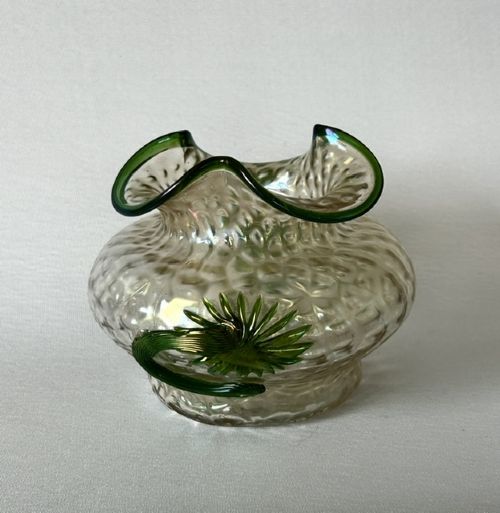
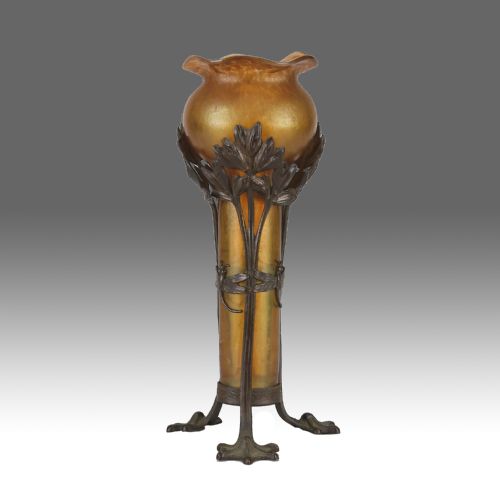
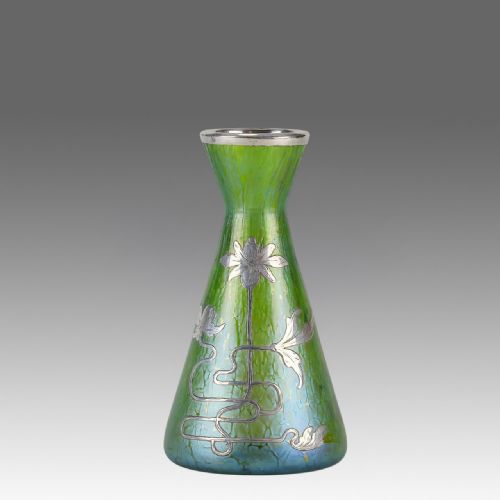
Vases dominate the selection, ranging from floriform and jack-in-the-pulpit shapes to decorated pieces with applied snake motifs and metallic mounts. Decorative bowls and desk accessories also appear alongside occasional lighting and table centerpieces.
How they were made
Maker's workshops produced these objects using hand-blown glass manipulated while molten to create organic, asymmetrical shapes. Artisans applied metallic oxides to hot glass surfaces in specialised kilns to achieve chemical reduction iridescence.
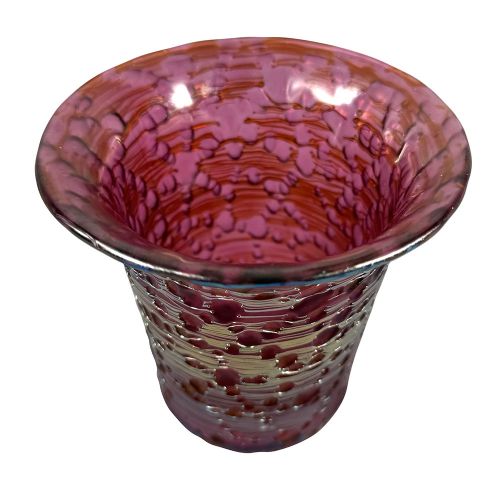
Many high-end vessels received sterling silver overlay, bronze mounts, pewter stands or brass fittings applied by metalworkers. Workers also utilised surface treatments including combed threads, applied trails and moulded decors like papillon and phänomen.
Several vases sport applied glass snakes crawling up their necks, proving that even art nouveau makers had a wild side.
What varies in quality
Quality rests upon the depth and complexity of the optical sheen, alongside the fluidity of the hot-worked glass form. Superior pieces display multi-toned metallic iridescence that shifts cleanly across the contours of the vessel.
The integration of metalwork distinguishes higher grades of manufacture, particularly where silver overlay or bronze mounts match the organic lines of the glass. The precision of specialised decors, such as combed phänomen threads or distinct papillon spots, further separates standard production from exceptional studio output.
Loetz Witwe·Kralik Glass·Pallme Konig·LC Tiffany·Ferdinand von Poschinger
The Art Nouveau Iridescent Glass Glossary
- Iridescent glass
- Glass treated with metallic oxides during firing to produce a rainbow-like sheen. This optical effect mimics natural phenomena found on oil slicks or butterfly wings.
- Favrile glass
- Trademarked iridescent art glass developed in America by Louis Comfort Tiffany. The term denotes hand-blown glass with internal coloration and rich surface optics.
- Phänomen décor
- Complex surface technique utilising combed glass threads fused into hot metal. This method creates distinctive wave-like patterns across the body of the vase.
- Silver overlay
- Decorative metalwork applied directly to the exterior of a glass vessel. Artisans deposited sterling silver onto the glass surface, often cutting intricate floral or geometric designs.
- Jack in the pulpit
- Vases shaped with a flared, scalloped rim resembling a botanical flower hood. This organic silhouette typifies early twentieth-century organic design.
Art Nouveau Iridescent Glass: Frequently Asked Questions
What is art nouveau iridescent glass?
These objects are hand-blown glass vessels treated with metallic oxides to create shimmering, multicoloured surface effects. Makers shaped them into organic forms inspired by nature during the early twentieth century.
You will find them primarily as vases, bowls and inkwells featuring fluid lines, metallic sheens and occasionally precious metal mounts.
How do I identify a Loetz vase?
Loetz pieces typically display distinctive surface decors such as the dappled papillon pattern or combed phänomen threads. The glass often exhibits high-quality metallic iridescence with polished pontil marks on the base.
Many examples also bear bronze mounts, silver overlay, or factory designations linking them directly to the Bohemian manufacturer.
Where were these glass pieces made?
The majority of these items originated in Bohemia and Austria, produced by prominent glassworks operating around nineteen hundred. Major centres of production included the regions surrounding Klostermühle.
American makers like Tiffany also contributed distinct variations of iridescent glass during the same stylistic period.
How should I display iridescent glass?
Place these vessels near natural light sources to allow the metallic surface oxides to catch and refract ambient illumination. Position them on sturdy surfaces away from high traffic areas to protect delicate rims and applied glass trails.
Keep them away from direct, harsh sunlight to preserve the chemical sheen over decades of display.