



Art Nouveau Desk Lighting
Art nouveau desk lighting brings fluid floral lines and organic illumination into a workspace.
Art Nouveau Desk Lighting
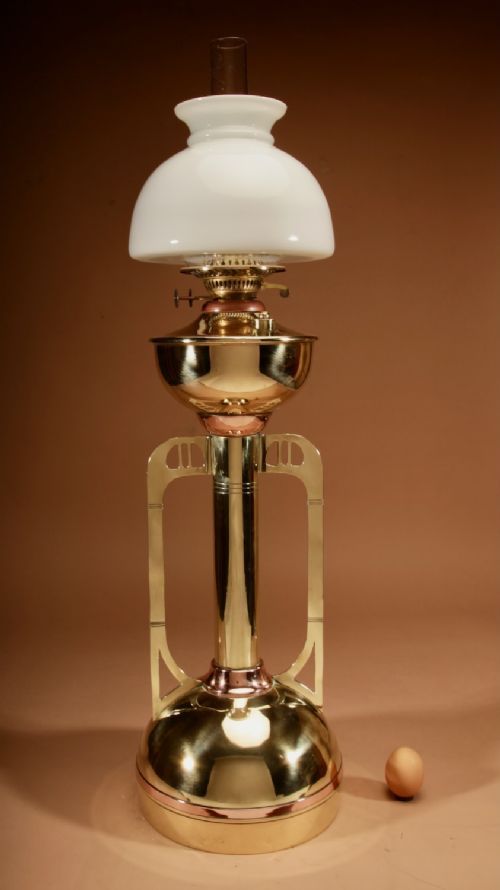
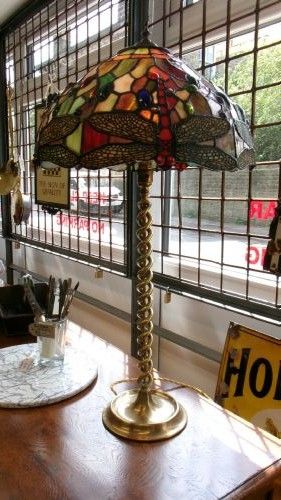
Art nouveau desk lighting encompasses table lamps, reading lamps and cigar lighters produced around the turn of the twentieth century. These pieces combine utility with decorative motifs drawn from nature, reflecting the design philosophies of the period.
The most common examples on this page are brass and bronze table lamps featuring organic forms, often paired with glass shades. You will encounter pieces originating from British, French and continental workshops dating from the late nineteenth century to the early decades of the twentieth century.
Materials and construction methods
These lamps rely heavily on cast metals such as brass, bronze, copper and spelter to form structural bases and sculptural bodies. Makers frequently utilised patination, silver plating or gilt finishes to alter the surface appearance of the metal.
Lighting elements incorporate blown, frosted or enamelled glass, sometimes enhanced with cabochons or fabric shades. Wood, faience and oak also appear in specific regional designs like Amsterdam School fretwork or Jugendstil tables.
Listings feature pieces spanning the late nineteenth century through the nineteen-twenties, including Edwardian and Arts and Crafts examples.
Distinctions in quality
Quality rests on the crispness of the metal casting and the artistic merit of the original design. Heavier bronze or brass mounts with detailed hand-finishing stand apart from simpler cast spelter alternatives.
The integration of materials dictates overall execution. Pieces that pair original glass cabochons, enamelled landscapes or signed art glass shades with substantial metalwork represent the finer tier of manufacture.
L and F Moreau·Gustave Serrurier Bovy·Georges Leleu·WAS Benson·Jan Eisenlöffel·WMF·Ivan Zaiec·Tiffany Studios·The Charles Parker Company
The Art Nouveau Desk Lighting Glossary
- Spelter
- A zinc alloy commonly used as a cost-effective substitute for bronze in decorative figures and lamp bases. It takes patination well but is softer than bronze.
- Secessionist
- A stylistic movement associated with Central European artists breaking away from traditional academic art. It favours geometric forms alongside floral motifs.
- Cabochon
- A polished, convex gemstone or piece of moulded glass without facets. These are often set into metal lamp bodies for decorative colour.
- Faience
- Tin-glazed earthenware popular in continental decorative arts. It provides a ceramic element with painted surface details on specific lamp bases.
- Ormolu
- Gilding technique using finely ground gold mercury applied to bronze. It creates a rich metallic lustre on late nineteenth-century pieces.
Art Nouveau Desk Lighting: Frequently Asked Questions
How do I identify a genuine period lamp?
Examine the weight, material construction and casting marks on the metal base. Period pieces typically utilise heavy brass, bronze or spelter consistent with turn-of-the-century manufacturing techniques.
Look closely at the wiring and fittings, though many older lamps are rewired for modern safety standards. The integration of glass elements and patination should show natural age rather than artificial distress.
Were these lamps used on desks?
Many examples function as reading lamps, notary lamps or adjustable desk lights designed for focused task illumination. Others served as ambient table lighting in studies and parlours.
Smaller pieces like cigar lighters also sat on tables alongside smoking paraphernalia, fulfilling specific social functions of the Edwardian era.
What is the difference between bronze and spelter?
Bronze is a durable copper alloy that allows for sharp casting detail and deep patination. It represents a higher tier of metalwork in antique lighting.
Spelter is a softer zinc-based metal that was cheaper to produce and widely used for decorative figural lamp bases. It feels lighter and can show wear differently than bronze.
How should I care for antique metal lamps?
Keep metal surfaces clean with a soft, dry cloth to prevent dust accumulation. Avoid abrasive polishes that can strip away original patination or gilt finishes.
Handle glass shades with care when dusting or changing bulbs. Ensure electrical components are checked by a qualified professional if the lamp is actively used.