


Art Nouveau Botanical Jewellery
Art nouveau botanical jewellery captures natural leaf and flower forms in precious metals and enamel, offering wearable organic design that collectors treasure for its fluid lines.
Art Nouveau Botanical Jewellery
Art nouveau botanical jewellery comprises brooches, earrings, cufflinks, necklaces, and rings that interpret natural flora through stylised organic forms. You will most frequently encounter brooches and necklaces shaped as leaves, flowers, and vines from the turn of the twentieth century.
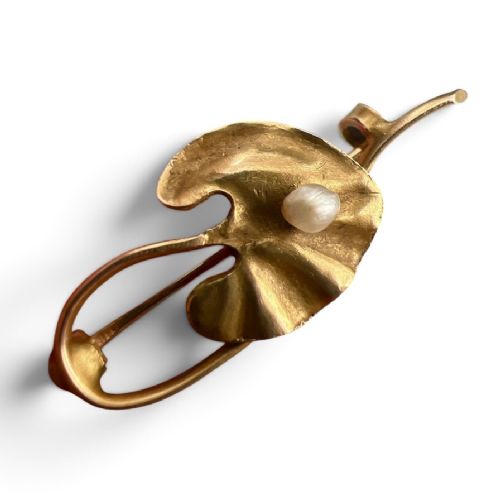
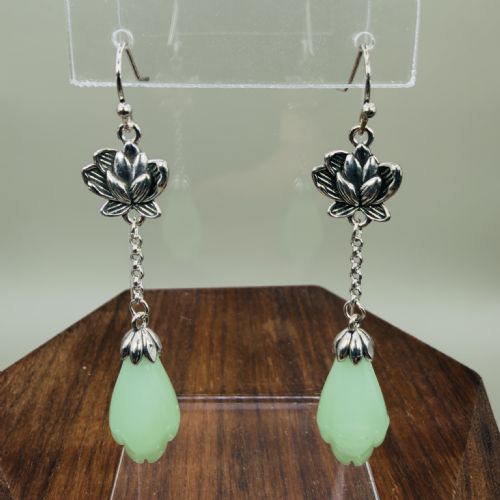
The objects span periods from the nineteenth century into the mid-twentieth century, including Victorian, Edwardian, and later revival pieces. Designs range from French mistletoe leaves in yellow gold to sterling silver flower drop hook earrings set with green chalcedony.
Makers and designers of the era utilised specific botanical motifs such as acorns, mistletoe, and vine leaves rendered in precious metals. These pieces reflect a distinct artistic movement focused on natural curves and asymmetrical floral arrangements.
How they were made
Goldsmiths worked with 15ct and 18ct yellow gold alongside sterling silver to form the structural framework of leaves and stems. Enamel techniques, notably plique-à-jour which resembles stained glass without a backing, brought translucent colour to flower petals and insect wings.
Gemstones including diamonds, pearls, green chalcedony, moonstones, and old cut diamonds were hand-set to accent floral clusters and berries. Metalwork combined casting and delicate wirework to achieve the naturalistic contours characteristic of the period.
Listings feature periods spanning from the nineteenth century through the Victorian, Edwardian, and mid-century eras, using 15ct and 18ct gold.
What varies in quality
The refinement of the metalwork and the complexity of enamelling separate standard production from exceptional examples. Mastery in plique-à-jour requires precise control so the translucent enamel suspends cleanly within gold or silver cells.
Stone selection and the subtlety of the organic carving define the upper tier of these ornaments. Pieces featuring balanced compositions of pearls, diamonds, and hand-finished botanical details demonstrate superior workshop execution.
Meyle & Mayer·Georg Jensen
The Art Nouveau Botanical Jewellery Glossary
- Plique-a-jour
- An enamelling technique where enamel is applied in open cells without a backing, allowing light to shine through the translucent material much like a miniature stained glass window. This method demands immense skill from the jeweller to prevent cracking during firing.
- Dormeuse
- A type of sleeping earring designed with a secure closure so the wearer could keep them on overnight without discomfort. They frequently feature delicate botanical drops suitable for continuous wear.
- Chalcedony
- A cryptocrystalline variety of silica used as a gemstone in various decorative carvings and cabochons. Its smooth, waxy lustre complements silver flower drop hook earrings.
- Old cut diamond
- A precursor to the modern brilliant cut, characterised by a smaller table, higher crown, and a culet at the base. These stones display a softer, candlelit sparkle distinct from modern precision cuts.
- Botanical Revival
- A stylistic movement that looks back to natural plant forms for inspiration, often reinterpreting earlier Victorian motifs with fresh flowing lines. It shares close ties with the broader arts and crafts ethos.
Art Nouveau Botanical Jewellery: Frequently Asked Questions
What is art nouveau botanical jewellery?
Art nouveau botanical jewellery consists of wearable ornaments shaped like leaves, vines, and flowers using flowing organic lines. These pieces draw direct inspiration from nature during the turn of the twentieth century.
Craftsmen translated natural plant structures into precious metals and enamel, creating distinct brooches, necklaces, and rings that celebrated organic forms.
How do I care for antique enamel jewellery?
Care for antique enamel requires gentle handling to protect fragile glass surfaces from impact and harsh chemicals. Store each piece separately in a soft pouch away from direct sunlight.
Avoid ultrasonic cleaners and immersion in water, instead wiping the metal gently with a soft dry cloth to maintain its finish.
How can I tell different periods apart?
Periods are distinguished by metal purity marks, stone cuts, and the specific evolution of design styles over time. Victorian and Edwardian pieces often incorporate high-carat golds and older diamond cuts alongside distinct floral motifs.
Later mid-century items utilise different clasps, silver hallmarks, and alternative stones like green chalcedony while retaining floral themes.
How were these pieces worn originally?
Brooches were pinned to lapels, collars, and hats as prominent decorative accents on daily attire. Necklaces and pendants hung close to the collarbone on fine gold or silver chains.
Cufflinks secured shirt cuffs for formal or everyday dress, while earrings framed the face with delicate botanical drops.