


Art Deco Wooden Mantel
These art deco wooden mantel pieces combine geometric form with rich timber, offering a functional centrepiece for the interior.
Art Deco Wooden Mantel
When you search for an art deco wooden mantel, you are primarily looking at mantel clocks, wall mirrors, and occasional fireplace surrounds from the early decades of the twentieth century. These items emerged across the nineteen tens, twenties, and thirties, showcasing the architectural ambitions of the period.
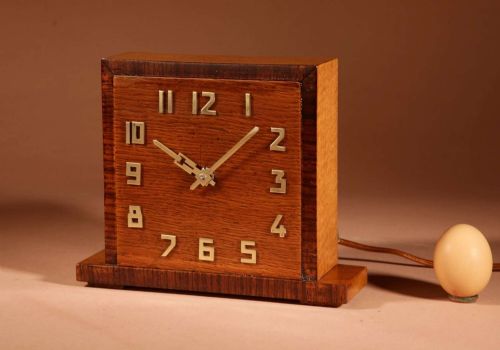
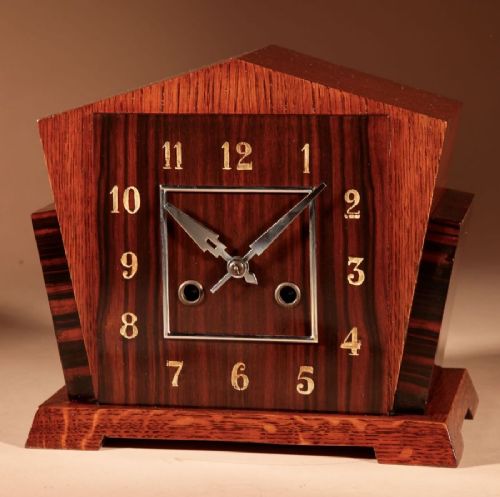
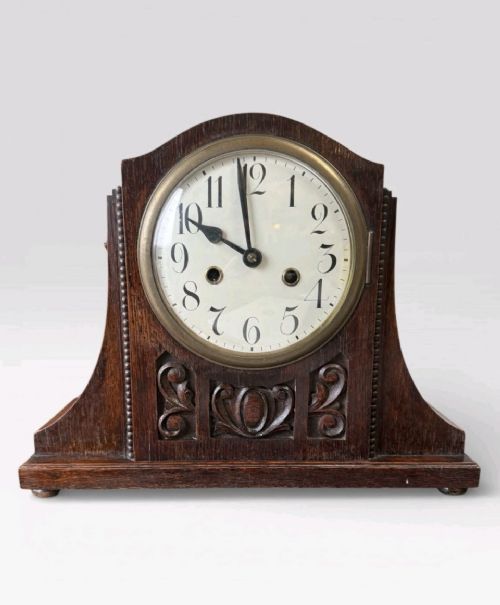
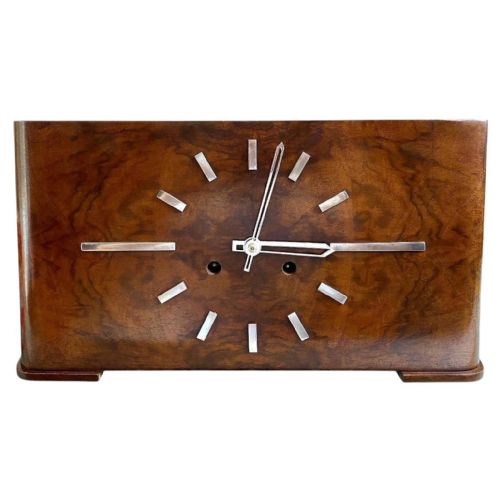
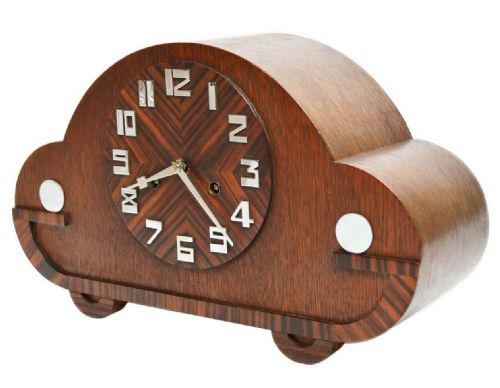
The version you are most likely to meet on this page is the mantel clock, frequently housed in walnut, oak, or exotic veneers like macassar ebony. British and continental makers designed these cases to display pronounced geometric outlines and architectural stepped profiles.
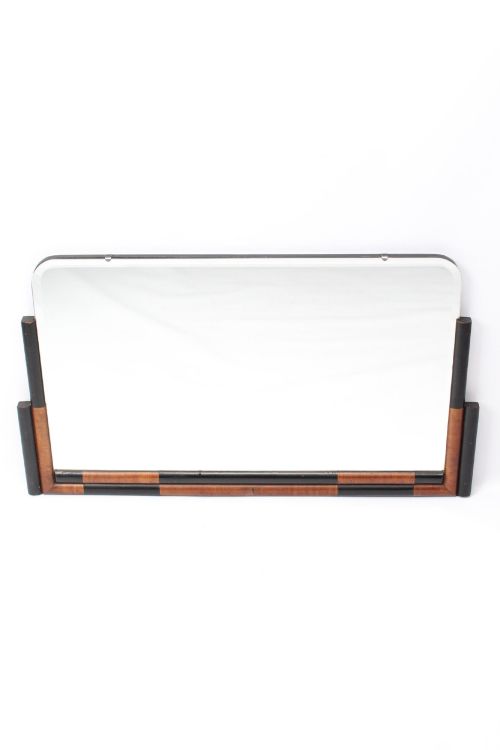
Beyond clocks, the category occasionally extends to related items like mirror frames and timber surrounds designed for the hearth. Each piece demonstrates how makers translated the broader design vocabulary of the era into compact domestic objects.
Materials and construction
Makers relied on solid hardwoods such as oak and walnut, frequently applying fine walnut veneers or contrasting macassar ebony and rosewood to achieve striking grain patterns. Ebonised timber details and contrasting metal elements like chrome, brass, and glass were often integrated to accentuate the linear geometry.
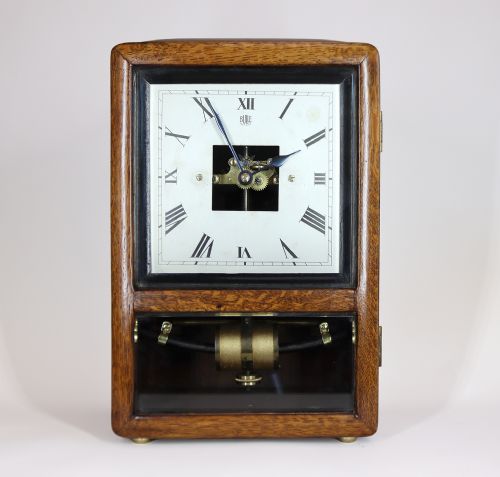
Construction techniques balanced traditional cabinet making with industrial innovation, accommodating mechanical movements, electric bulle systems, and chiming mechanisms within the wooden housings. The juxtaposition of warm timber with cold metallic dials defined the finished aesthetic.
Some clocks feature ticking mechanical hearts that have outlived the empires that forged their brass gears.
Quality factors in wooden mantel pieces
The distinction between standard production items and finer examples rests upon the selection of timber veneers and the precision of the joinery. Pieces featuring book-matched burr walnut or meticulously inlaid macassar ebony demonstrate a higher level of craftsmanship than plain single-timber cases.
Quality is also evident in the integration of movement and dial, where cast brass bezels, silvered chapters, and branded mechanical or electrical movements reflect the standing of the original maker.
Haller·Elliott of London·Bravingtons Ltd of London·Junghans·Pfeilkreuz Junghans
The Art Deco Wooden Mantel Glossary
- Macassar ebony
- A heavily figured exotic wood with dark brown and warm reddish stripes, utilised for decorative banding on quality cases.
- Bulle clock
- An electric clock utilising a pendulating movement suspended in a magnetic field, common in early twentieth century designs.
- Veneer
- A thin slice of ornamental timber applied over a secondary wood base to provide complex grain patterns without structural warping.
- Amsterdam School
- A style of architecture and design originating in the Netherlands, characterised by expressive forms and rich brick or timber detailing.
- Chiming movement
- A mechanical clock train configured to strike bells or gongs at set intervals such as the Westminster quarters.
Art Deco Wooden Mantel: Frequently Asked Questions
How do I wind an 8 day clock?
An 8 day clock requires winding approximately once a week using a matching key inserted into the dial arbors. Care should be taken not to overwind the mainspring.
Ensure you turn the key smoothly until resistance is felt, maintaining the longevity of the vintage movement housed within the wooden case.
Are electric bulle clocks reliable?
Bulle clocks represent an early twentieth century electrical innovation that replaced traditional mainsprings with battery powered magnetic impulses. They offer a fascinating glimpse into early horological technology.
While many still function well today, they require careful placement and occasional professional attention to maintain electrical contact.
How do I distinguish Amsterdam School design?
Amsterdam School pieces display a distinct sculptural approach to timber, often combining oak with macassar ebony in heavy, dramatic profiles. The emphasis lies on organic integration of materials.
Such items look markedly different from standard symmetrical English mantel clocks due to their expressive, almost architectural silhouettes.
Where should I place a wooden mantel clock?
These clocks suit flat surfaces like mantelpieces, sideboards, or deep bookshelves where their geometric wooden cases can be viewed clearly. Keep them away from direct sunlight and damp environments.
Stable placement ensures that pendulum or balance wheel mechanisms beat evenly and keep accurate time.