




Art Deco Table and Stool
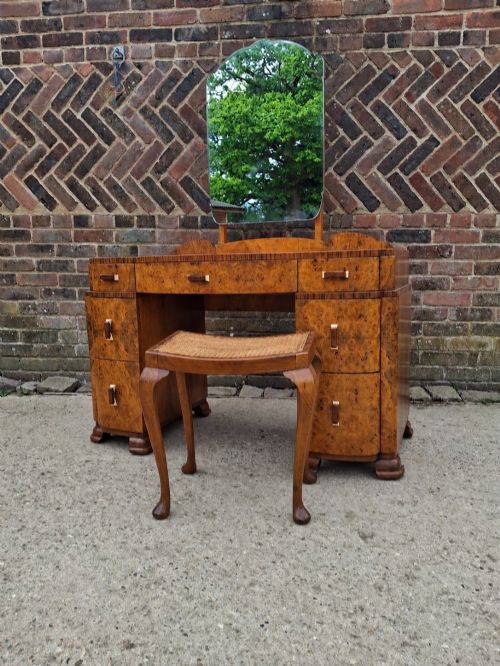
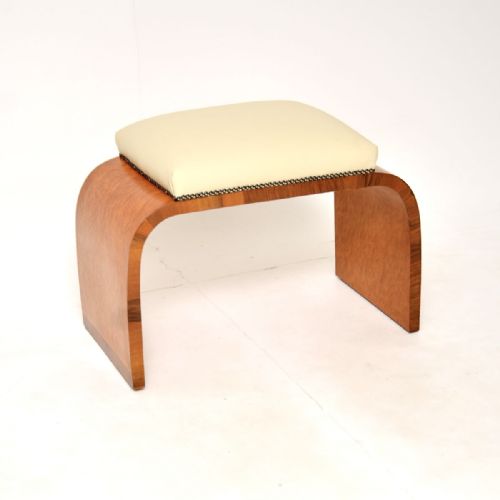
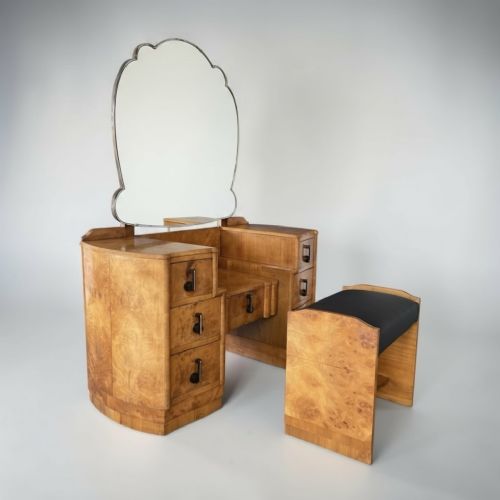
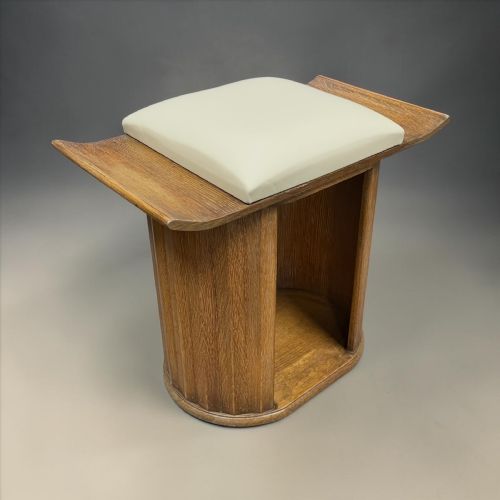
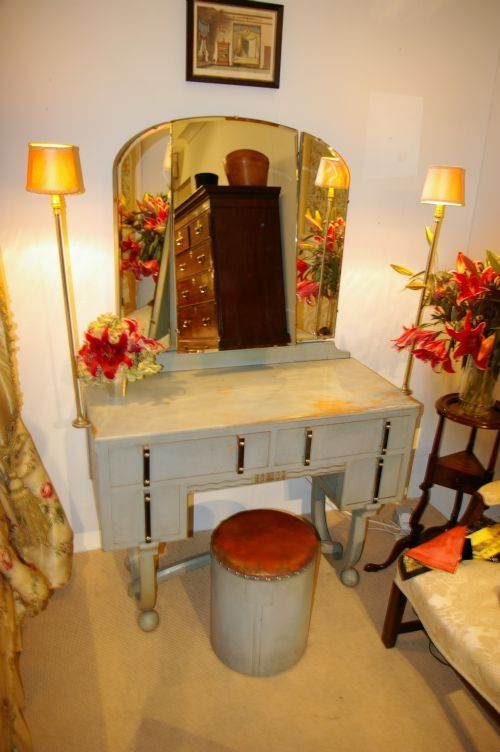
These art deco table and stool sets combine geometric form with luxurious burr walnut, birch and leather.
Art Deco Table and Stool
An art deco table and stool pairing typically comprises a vanity or dressing table accompanied by a matching seat designed for domestic dressing rooms. The listings on this page centre on pieces originating from the 1920s and 1930s.
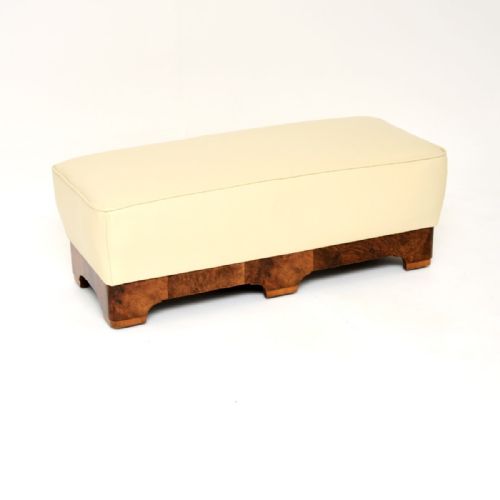
Most examples function as dressing table stools, piano stools or complete dressing room suites. Woods such as burr walnut, birds-eye maple, sycamore and oak dominate the forms alongside leather and fabric upholstery.
How they were made
Cabinetmakers utilised striking veneer work, displaying the natural grain patterns of burr walnut and birds-eye maple across flat surfaces. Solid frames incorporated oak and walnut to ensure structural stability.
Upholstery techniques combined traditional padding with leather or patterned fabric covers. Metal accents occasionally appeared to punctuate the wooden framework.
Art Deco Table and Stool Retail Price Guide 2026
Typical asking prices for art deco table and stool among the pieces listed under this phrase on Sellingantiques today, from the lower quarter to the upper quarter. They describe what is for sale here now, not the wider market.
What varies in quality
The choice of veneer defines the visual hierarchy, with book-matched burr walnut and birds-eye maple representing the highest tier of decorative ambition. Simple oak and plain walnut frames sit lower on the scale.
Design attribution alters the standing of a piece, as demonstrated by documented work from known workshops compared to unbranded production. The complexity of integrated storage and the condition of original leather further distinguish individual pieces.
Harry and Lou Epstein·Rowley Gallery
The Art Deco Table and Stool Glossary
- Art Deco
- A design style spanning the 1920s and 1930s characterised by streamlined geometric forms and modern materials. It replaced the ornate floral motifs of earlier periods with clean lines.
- Burr Walnut
- A wood harvested from the warted excrescences of walnut trees, yielding intricate swirling grain patterns. Cabinetmakers prized this timber for high-status veneering.
- Birds Eye Maple
- A figure in maple wood resembling tiny swirling eyes caused by local perturbations in the grain growth. It forms light, golden surfaces typical of sophisticated interwar furniture.
- Sycamore
- A pale hardwood utilised in English cabinet making for light-coloured surfaces and contrasting stringing. It provides a clean, neutral tone suited to dressing room furniture.
Art Deco Table and Stool: Frequently Asked Questions
What is an art deco table and stool?
These sets consist of a matching vanity table and seat designed for interwar dressing rooms.
They pair distinctive wood veneers with upholstered leather or fabric tops.
How do I date an art deco table and stool?
Most examples originate from the 1920s and 1930s.
Look for characteristic veneers like burr walnut and birds-eye maple combined with geometric silhouettes.
Were these used as piano stools?
Some designs served a dual purpose for dressing tables and pianos.
Internal storage compartments often feature in these versatile seating forms.
What woods are typical for these pieces?
Cabinetmakers relied on burr walnut, birds-eye maple, sycamore and oak.
These timbers provided the structural strength and decorative grain patterns essential to the style.