
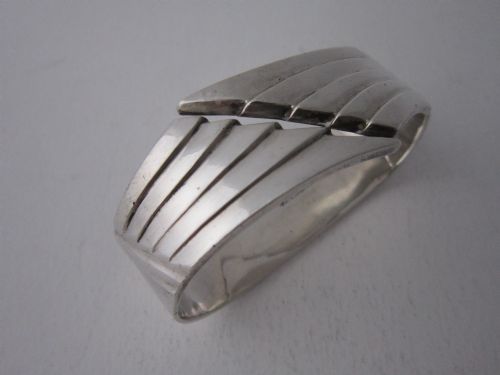


Art Deco Silver Napkin
Art deco silver napkin rings bring sharp geometric lines and quality sterling silver to the dining table.
Art Deco Silver Napkin
When you search for art deco silver napkin rings, you are looking at small table accessories designed to mark individual places at dinner. The pieces on this page span the 1920s, 1930s, and 1940s, capturing the distinct transition from lavish design to mid-century modern simplicity. Most examples you will meet are made of solid sterling silver, frequently appearing singly or in matched pairs and cased sets.
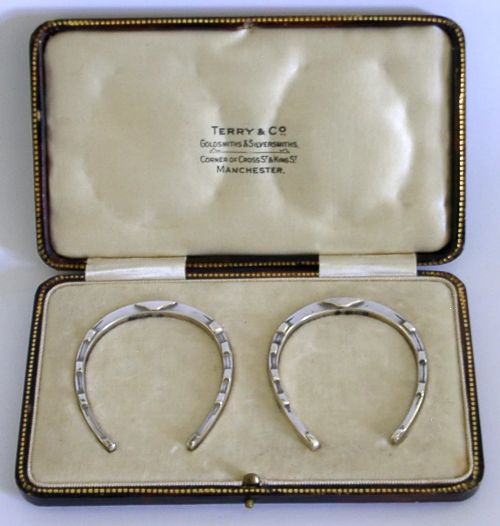
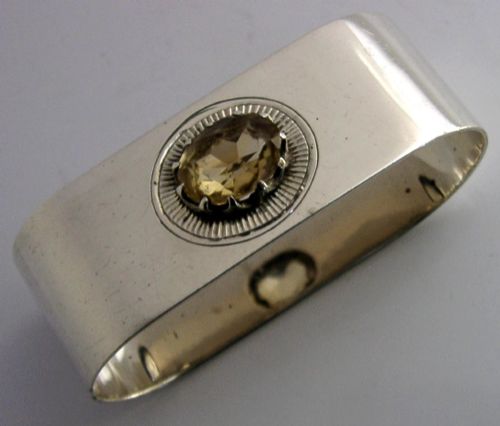
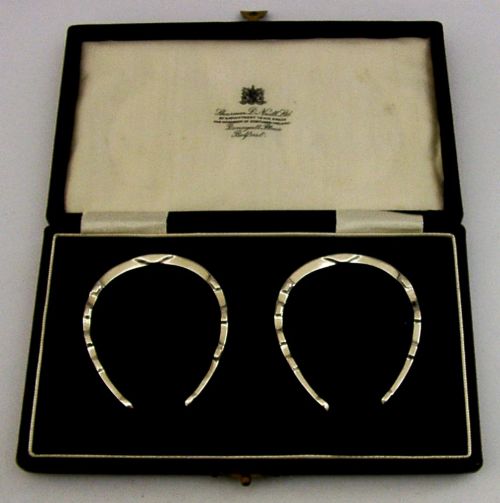
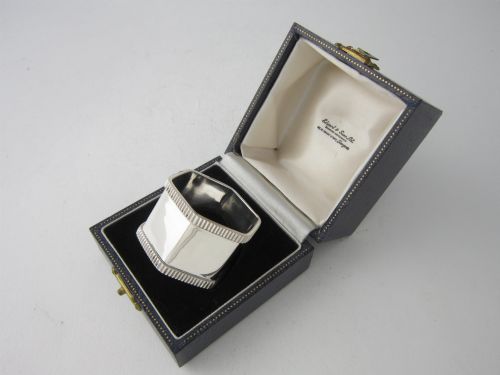
The assortment on this page includes plain geometric bands alongside specific decorative motifs like lucky horseshoes and aesthetic designs. You will also find pieces featuring silver gilt and guilloche enamel, showing the wider material palette of the era. Makers from Birmingham, Sheffield, and international workshops contributed to this variety.
How they were made
Silversmiths shaped these napkin rings from sterling silver sheet, often adding applied motifs like horseshoes or engraving aesthetic patterns onto the surface. Some examples incorporate vibrant guilloche enamel over silver gilt, requiring careful kiln-firing of glass paste over engine-turned metal.
Many of these rings were supplied in fitted cases lined with velvet, satin, silk, or leatherette to protect the polished metal and gemstones. Citrine settings occasionally appear as accent stones, demonstrating the detailed stone-setting techniques utilised alongside metalwork.
Several rings come shaped as lucky horseshoes, ensuring your table linen stays securely corralled by good fortune.
What varies in quality
The distinction between standard production and finer work rests on the weight of the sterling silver and the precision of the decorative elements. Heavier gauge metal resists bending and maintains crisp lines along the edges and geometric motifs.
Cased sets with matching hallmarks and intact interior fabrics like silk or velvet represent a higher tier of preservation. Similarly, pieces enhanced by guilloche enamel or gemstone accents such as citrine show a greater level of craftsmanship than plain bands.
R. E. Stone·David Andersen·Henry Wilkinson
The Art Deco Silver Napkin Glossary
- Sterling silver
- A silver alloy containing 92.5 percent pure silver and 7.5 percent other metals, usually copper. This standard provides the durability required for functional items like napkin rings.
- Guilloche enamel
- A decorative technique where an intricate mechanical pattern is engraved beneath transparent enamel. This method creates a reflective, shimmering surface on silver gilt objects.
- Silver gilt
- Sterling silver that has been coated with a thin layer of gold. It provides a rich two-tone appearance when combined with enamel or polished silver.
- Citrine
- A yellow-to-orange quartz variety sometimes set into silver items. It adds a warm contrast to the cool tone of the surrounding metal.
Art Deco Silver Napkin: Frequently Asked Questions
What are art deco silver napkin rings?
These items are small circular bands fashioned from sterling silver during the early to mid-twentieth century. They served to identify individual napkins at formal and family dining tables.
The styles range from minimalist geometric shapes typical of the period to pieces adorned with enamel, horseshoes, and stones like citrine. Many survive in original presentation cases lined with fabrics.
How were they used?
Households utilised these rings at daily meals or dinner parties to keep clean linen napkins separated and identifiable for each guest between uses. They sat beside each place setting on the dining table.
Because they were often given as wedding or anniversary gifts, many were stored in fitted boxes lined with satin or velvet when not in active service.
How do I date a silver napkin ring?
Dating relies primarily on the hallmarks stamped into the silver, which indicate the assay office, standard, and date letter. Birmingham and Sheffield hallmarks appear frequently on these items.
The overall design also points to the era, shifting from the ornate details of the 1920s toward the cleaner lines of the 1930s and 1940s.
Are these napkin rings solid silver?
The pieces listed here are struck from solid sterling silver, rather than plated base metals. This composition ensures the objects maintain their structure and value over time.
Some examples also feature surface applications like silver gilt, combining gold plating over the solid silver foundation.