



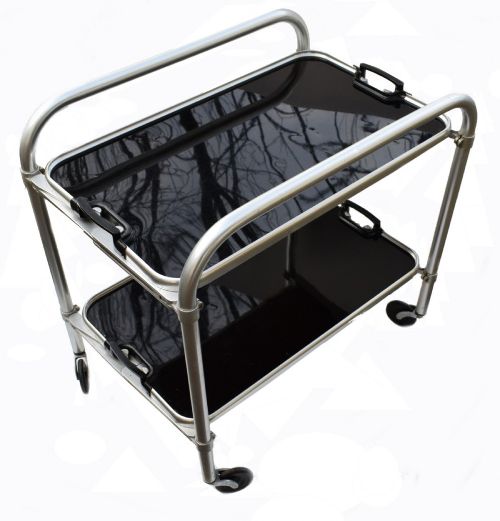
Art Deco Serving Trolley
An art deco serving trolley brings period elegance to modern entertaining, offering mobile surfaces for glassware and bottles with distinctive twentieth-century design.
Art Deco Serving Trolley
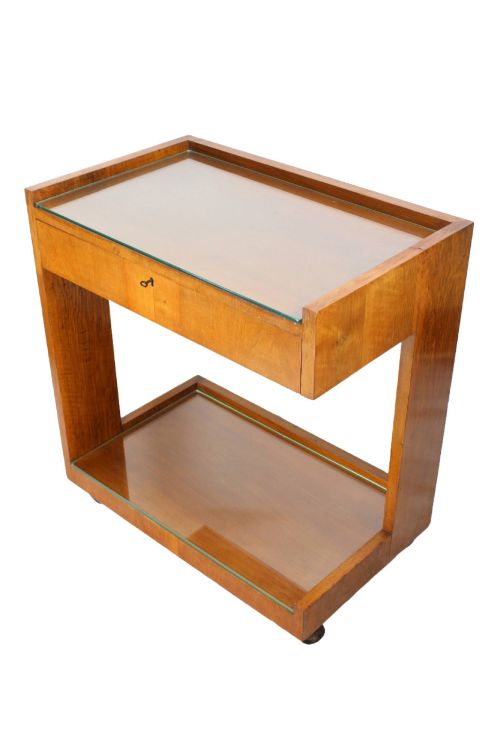
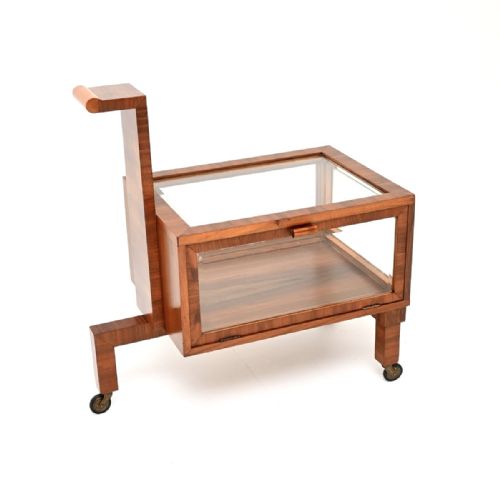
An art deco serving trolley is a mobile furniture piece designed for drinks and refreshments, most frequently encountered in walnut, mahogany, oak, and chrome from the 1920s, 1930s, and 1940s. These pieces take various forms including two-tier drinks trolleys, bar carts, tea trolleys, and metamorphic or collapsible designs originating from English, French, and Danish makers.
The version you are most likely to meet on this page is the two-tier walnut or chrome trolley, often circular or rectangular, equipped with glass shelves or mirrored surfaces. English and French examples dominate the selection, showing distinct regional preferences between figured veneers and modernist metal tubing.
Materials and construction
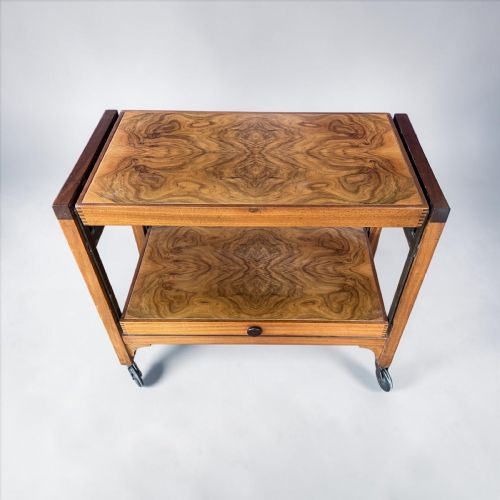
Makers utilised timber veneers such as walnut, burr amboyna, and pollard oak over solid carcases, often highlighting the natural grain in circular or geometric table tops. Cabinetmakers also employed mahogany and oak for traditional tea trolleys.
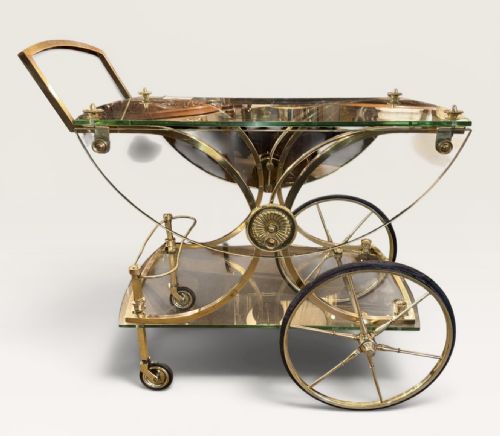
Metal components formed a vital part of the construction, with chrome, brass, and aluminium frames providing structural support and modernist aesthetic appeal. Glass, mirror, and silver plate completed the tiers, fixed securely into wooden frames or metal housings.
Art Deco Serving Trolley Retail Price Guide 2026
Typical asking prices for art deco serving trolley among the pieces listed under this phrase on Sellingantiques today, from the lower quarter to the upper quarter. They describe what is for sale here now, not the wider market.
One metamorphic trolley from the thirties folds down neatly for stealthy storage when the party finally ends.
Assessing quality in period trolleys
Quality rests significantly on the selection of timber veneers and the precision of the metalwork. Finely figured walnut or burr amboyna with book-matched graining separates standard utility pieces from high-status salon items.
Construction methods and hardware define the upper tier of the range. Solid joints, original unpolished or well-maintained chrome plating, and high-grade mirrored or safety glass indicate superior original manufacture.
Maison Bagues·Epstein
The Art Deco Serving Trolley Glossary
- Burr Amboyna
- A highly prized wood veneer showing intricate, swirling grain patterns formed from tree growths. It was frequently selected by French makers for luxury cocktail carts.
- Metamorphic Trolley
- A serving cart designed to transform in shape or function, such as expanding tiers or folding mechanisms. These clever pieces suited interwar urban living and multifunctional spaces.
- Hostess Trolley
- A specialised mobile cart for serving meals or drinks, often featuring multiple tiers and handles. They gained popularity during the 1930s for domestic entertaining.
- Silver Plate
- A thin layer of silver applied to a base metal surface, commonly found on decorative mounts and fittings. This finish offered the lustre of solid silver at a lower cost.
- Pollard Oak
- Timber taken from pollard-pruned oak trees, creating a clustered, knotty grain pattern. English cabinetmakers valued it for striking surface decoration on interwar tea trolleys.
Art Deco Serving Trolley: Frequently Asked Questions
How do I use a serving trolley today?
These trolleys function well as permanent home bars or mobile sideboards in living rooms and dining areas. Their multiple tiers easily accommodate decanters, glassware, and cocktail equipment for hosting guests.
Moving the cart allows you to serve drinks directly to visitors without frequent trips to the kitchen. The wheels and handles remain practical for repositioning the furniture around a room.
How do I clean glass and mirror tiers?
Use a soft microfibre cloth with mild glass cleaner sprayed directly onto the cloth rather than the surface. This prevents liquid from seeping behind mirror backings or into wooden and metal frames.
Avoid abrasive scouring pads that might scratch vintage glass or damage silvered mirror coatings. Dry the edges thoroughly to prevent moisture accumulating in the joints.
Can I place hot teapots on these trolleys?
Original wooden and veneered surfaces benefit from protective mats or coasters underneath hot items. Heat can damage vintage varnish or dry out timber veneers over time.
Glass and mirror tiers tolerate warmth better than wood, but sudden thermal shock can still crack aged glass. Using trivets safeguards both the antique finish and the material itself.
How do I distinguish 1920s from 1940s pieces?
Twenties and early thirties pieces often feature opulent French styling, burr veneers, and gilded brass accents. They emphasise luxurious materials and decorative craftsmanship.
By contrast, 1940s examples lean towards Scandinavian or utilitarian influences, utilising teak and simpler clean lines. Materials shifted towards accessible timbers and straightforward construction methods during the war years.