

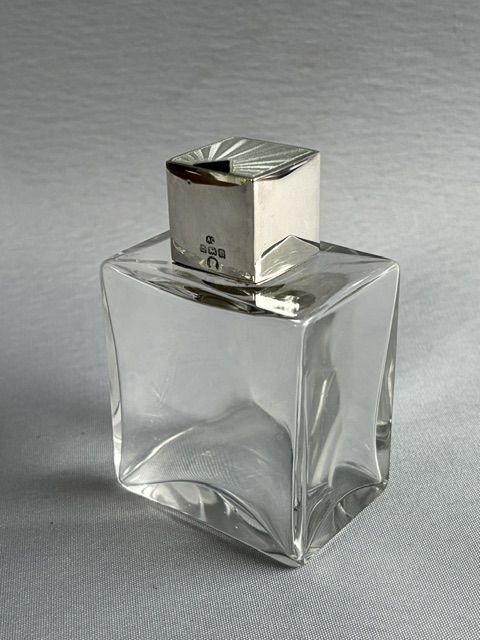


Art Deco Scent Flask
An art deco scent flask is a pocket or vanity vessel for perfume, prized for its geometric precision and striking modernist glasswork.
Art Deco Scent Flask
An art deco scent flask combines the functional requirements of a perfume container with the rigorous, clean geometry of the early twentieth century. When searching this phrase, a buyer encounters portable vanity items and dressing table bottles dating principally from the nineteen-twenties and nineteen-thirties. The selection spans straightforward glass containers to elaborate vessels fitted with precious metals and vibrant colour.
The objects take diverse forms, appearing as moulded glass bottles, atomizers, and small pocket flasks. Many examples originate from European workshops and major French and Czech designers active during the interwar period. Alongside standard glass, the forms incorporate specialised materials that reflect the luxurious tastes of the era.
Materials and Techniques
Makers utilised glass as the primary medium, employing moulding, cutting, and frosting techniques to achieve sculptural depth and texture. Opalescent and blue glass feature prominently, often manipulated to catch the light and accentuate the stylised floral or abstract motifs characteristic of the period. Coloured enamels and guilloche patterns applied to silver mounts provide sharp visual contrast against the translucent bodies.
Metalwork complements the glass elements through the integration of sterling silver, eighteen-karat gold, and tortoiseshell details. Stoppers and collars are engineered to create a tight seal, preserving volatile perfumes inside the vessel. Artisans combined these disparate materials into cohesive designs that balance utilitarian function with decorative brilliance.
Art Deco Scent Flask Retail Price Guide 2026
Typical asking prices for art deco scent flask among the pieces listed under this phrase on Sellingantiques today, from the lower quarter to the upper quarter. They describe what is for sale here now, not the wider market.
Some tiny silver flasks retain the faint, lingering scent of forgotten perfumes bottled nearly a century ago.
Evaluating Quality and Craftsmanship
The standard of an art deco scent flask rests upon the crispness of the glass moulding and the complexity of its surface treatment. Superior examples exhibit deep, clean relief in frosted or opalescent sections, alongside precise cutting that enhances the refractive properties of the material. Lesser pieces rely on simple, unadorned glass bodies with minimal decorative ambition.
Attribution to a known designer or documented maker elevates an object significantly, particularly when combined with original boxes, atomizing hardware, or intact enamel work. The integration of precious metals like gold or heavy sterling silver mountings further separates standard production pieces from high-end luxury items. Preservation of the original stopper remains a vital determinant of completeness and integrity.
Karl Palda·Henry Perkins·Rene Lalique·Barnsley and Co·Sabino
The Art Deco Scent Flask Glossary
- Opalescent glass
- Glass that displays milky, translucent blue or pink tones when lit from various angles. This effect was heavily favoured by French makers during the interwar years to create ethereal depth.
- Guilloche enamel
- Decorative metalwork featuring precise, intricate geometric patterns engraved beneath a translucent layer of coloured enamel. It appears frequently on the silver caps and collars of luxury vanity bottles.
- Frosted glass
- Glass treated with acid or sandblasting to create a matte, textured surface. This technique diffuses light and highlights sculptural relief details on figural bottles.
- Atomizer
- A mechanical spray fitting attached to a perfume bottle, usually comprising a bulb and a metal tube assembly. These allowed users to mist fragrance directly onto the skin.
- Shadow agate
- A banded chalcedony variety carved to exploit natural colour layers in the stone. It provides a dense, opaque body for portable snuff and scent containers.
Art Deco Scent Flask: Frequently Asked Questions
How do I date an art deco scent flask?
Dating relies on stylistic markers, hallmarked metal mounts, and signatures etched into the glass. Pieces from this era typically exhibit the characteristic geometric or stylised floral motifs of the interwar period.
Assay marks on silver collars provide precise assay years, while moulded signatures indicate specific commercial production runs from French and Czech ateliers.
Were these bottles meant for travel or display?
The inventory includes both portable pocket flasks and decorative vanity bottles intended for a dressing table. Smaller silver-capped and tortoiseshell-fitted versions were designed to be carried safely in a handbag.
Larger moulded or opalescent glass examples served as stationary ornaments that held perfume for daily application at home.
How should I clean a vintage glass flask?
Cleaning requires gentle warm water and mild soap, avoiding harsh chemical solvents that might damage enamel or frosted surfaces. Metal mounts should be kept dry to prevent tarnishing or degradation of internal cork liners.
Stubborn residue inside the glass body can be dislodged with soft bottle brushes without risking the exterior finish.