



Art Deco Open Shelving
Art deco open shelving brings architectural rhythm and linear clarity to a room, offering display space that feels balanced and purposeful.
Art Deco Open Shelving
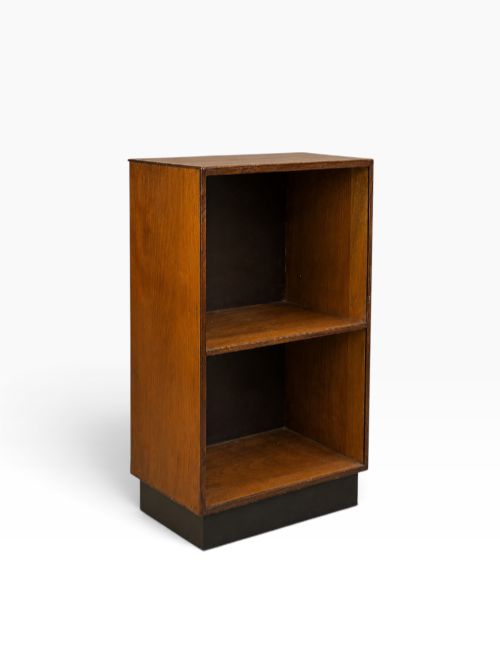
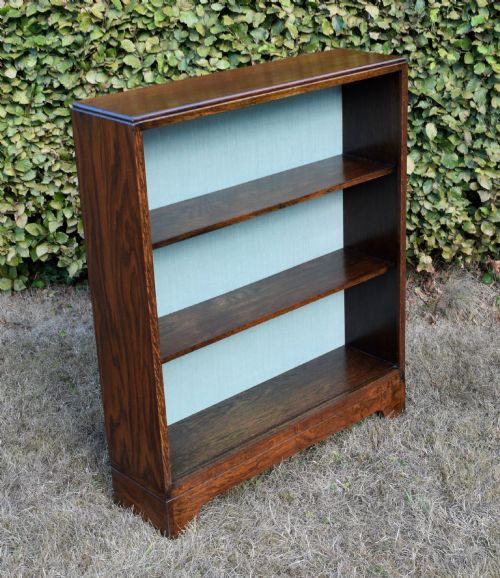
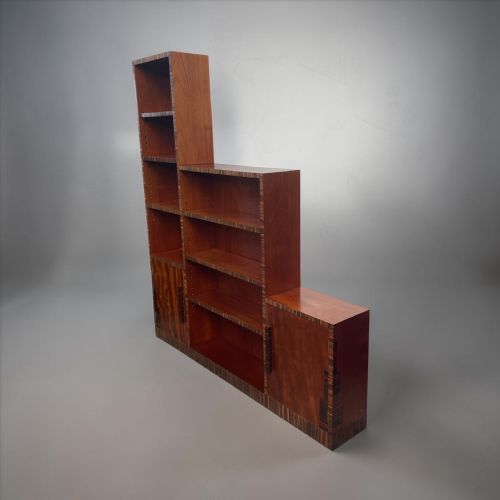
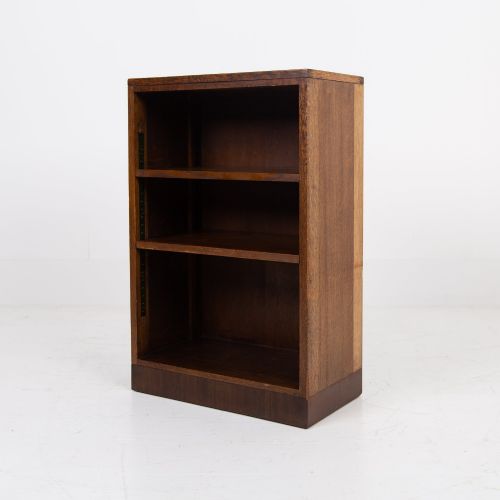
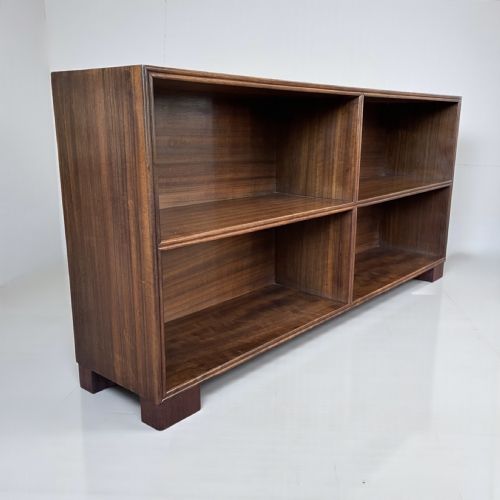
When you search for art deco open shelving, you are looking at architectural display furniture designed to hold books and objects with geometric precision. The pieces you meet most often on this page date from the nineteen thirties, taking the form of bookcases and open cabinets.
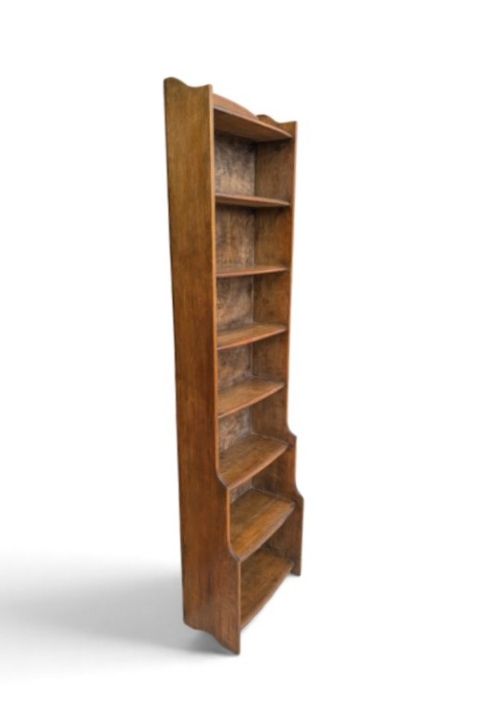
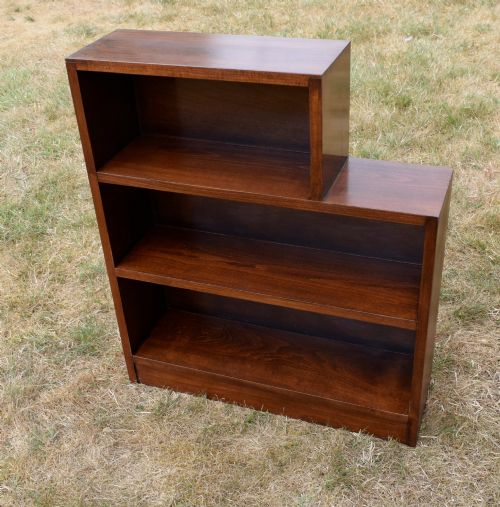
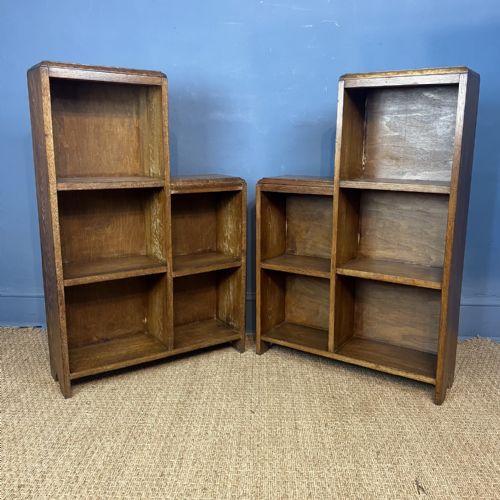
These items range from simple oak waterfall designs to stepped forms and pieces finished in walnut veneer, ash, mahogany, or ebonised timber. Origins span British workshops and French makers, alongside examples reflecting Swedish grace.
Many items incorporate functional details such as leather tops, brass fittings, and glass elements, while retaining the characteristic clean lines of the period. Whether standing alone or in pairs, they serve as both storage and display focal points.
How they were made
Makers utilised solid timbers such as oak, ash, walnut, and mahogany alongside decorative walnut veneers to build these structures. Surfaces often feature careful grain alignment and distinctive mouldings to the front, framing the open shelves.
Construction methods relied on sturdy joinery to support heavy volumes, occasionally incorporating leather top surfaces and brass hardware. Cabinet work from the era combined plain timber surfaces with ebonised finishes or subtle fabric details.
Some shelves step down like miniature ziggurats, proving that a humble book depository can harbour architectural ambitions.
What varies in quality
The distinction between ordinary and exceptional pieces lies in the choice of veneers and the crispness of the geometric stepped profiles. Finer examples display harmonious wood grain selection across large flat surfaces and precise control over proportions.
Maker attribution also shifts perception, with pieces bearing signatures or firm credentials holding distinct authority over uncredited workshop production. The integration of auxiliary materials like brass fittings and leather inserts further elevates the standard of execution.
Betty Joel·Maurice Adams·Heals·Sandberg and Co
The Art Deco Open Shelving Glossary
- Stepped bookcase
- A bookcase featuring ascending or descending shelf heights that create a tiered, architectural profile characteristic of the period.
- Walnut veneer
- A thin layer of figured walnut timber applied to a secondary wood base to provide decorative surface pattern and visual depth.
- Ebonised
- Timber treated with a dark stain or finish to imitate ebony, producing a dense black surface often used for contrast.
- Waterfall bookcase
- A shelving unit with sides that curve backwards from top to bottom, following a smooth cascading line.
- Swedish Grace
- A sophisticated Nordic design style bridging neoclassical restraint and early modern functionalism during the interwar decades.
Art Deco Open Shelving: Frequently Asked Questions
How do I spot an authentic piece?
Authentic items from this category typically exhibit construction methods, timber selections, and hardware consistent with the nineteen thirties. Look for genuine walnut veneers, solid oak or ash carcases, and period-appropriate joinery.
Design motifs such as stepped cornices and geometric mouldings provide further context. Comparing proportions and detailing against documented period examples helps confirm origin.
Where should I place these in my home?
These items suit living rooms, studies, and hallways where books and decorative objects require organised display space. Their linear profiles work well against plain walls or paired symmetrically to anchor a room.
Ensure placement avoids direct sunlight to protect vulnerable wood veneers and leather surfaces. Open shelving allows ambient light to pass through, keeping interiors feeling spacious.
How do I care for wooden shelving?
Maintenance involves dusting regularly with a soft, dry cloth and avoiding silicone-based polishes that build up over time. Natural wax applied periodically helps nourish timber surfaces and preserves the finish.
Keep pieces away from direct heat sources and drastic humidity changes to prevent timber movement or veneer lifting. Handle leather inserts with appropriate specialist balms if fitted.
What is the difference between a cabinet and a bookcase?
Bookcases generally feature open shelves designed primarily for holding books and vertical items. Cabinets often incorporate enclosed storage spaces alongside open sections for display.
Hybrid forms combine shelving with cupboards or drawers beneath, offering concealed storage alongside open display decks. Reviewing the internal configuration clarifies the intended function of each piece.