


Art Deco Gold Pearl Necklace
An art deco gold pearl necklace brings together lustrous pearls and geometric metalwork from the early twentieth century.
Art Deco Gold Pearl Necklace
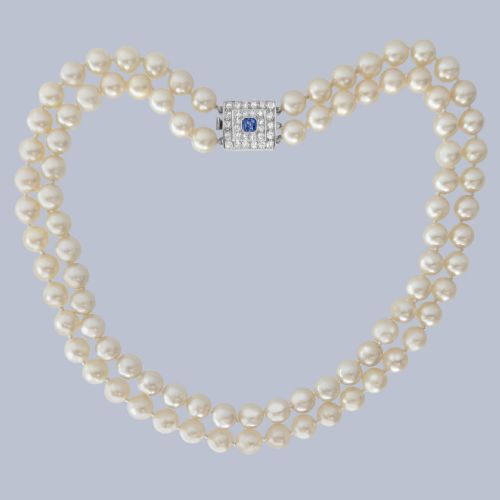
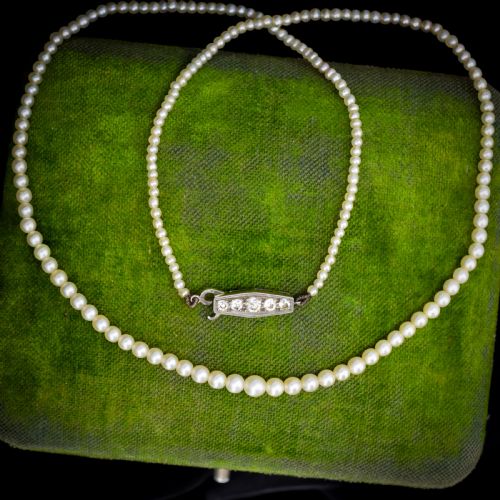
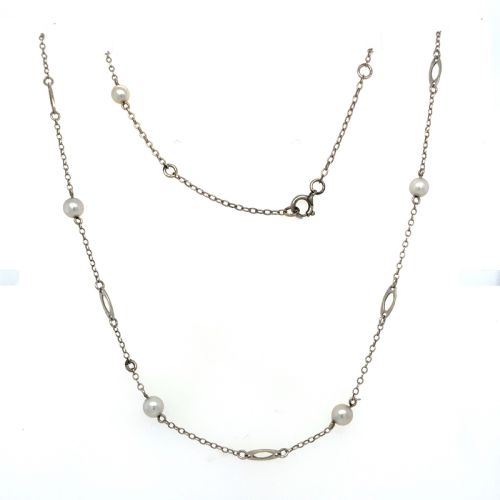
An art deco gold pearl necklace centres on strands of pearls joined by decorative metal clasps or suspended as pendants. The pieces appearing most often on this page date from the nineteen twenties and nineteen thirties, showcasing the geometric symmetry characteristic of the period.
Makers paired these pearls with gold in yellow, white, and rose tones, alongside platinum settings. You will find single, double, and triple strands alongside delicate pendant designs set with diamonds, sapphires, and opals.
The selection ranges from simple Edwardian and early twentieth-century seed pearl drops to certified saltwater pearl strands with diamond-set clasps. Each item demonstrates the distinct design shifts occurring between the late nineteenth century and the interwar years.
How they were made
Craftsmen built these pieces using gold and platinum to house diamonds, sapphires, and emeralds alongside natural and cultured pearls. White gold and platinum became prominent choices during the nineteen twenties to contrast with the warm lustre of pearls.
Clasps and pendant mounts often feature intricate pierced metalwork and millegrain edges, securing rose-cut and old-cut diamonds. Pearls were strung on silk threads, sometimes with individual knots between each bead for security.
What varies in quality
Quality rests in the uniformity, orient, and lustre of the pearls, whether they are delicate seed pearls, blister pearls, or larger saltwater specimens. Certified pearls and those with strong natural iridescence elevate the piece.
The complexity and material of the mount matter greatly, distinguishing simple wire frames from heavy platinum or eighteen-carat gold clasps dense with diamonds and calibrated gemstones. The precision of the metalwork and the integrity of the original stringing determine the overall standard.
The Art Deco Gold Pearl Necklace Glossary
- Seed pearl
- Very small, naturally formed pearls often used in clusters or delicate Edwardian and art deco pendant designs.
- Millegrain
- A decorative technique involving a row of tiny raised metal beads along the edges of a setting, common in art deco jewellery.
- Rose-cut
- An antique diamond cut featuring a flat base and a domed crown with triangular facets.
- Saltwater pearl
- Pearls formed in marine oysters, typically prized for their orient and lustre compared to freshwater varieties.
- Lavaliere
- A pendant necklace featuring a central drop suspended from a chain or bar, popular during the Edwardian and art deco eras.
Art Deco Gold Pearl Necklace: Frequently Asked Questions
How do I care for a pearl necklace?
Pearls require gentle cleaning with a soft, damp cloth and should be stored away from hard jewellery to prevent scratching.
Perfumes, cosmetics, and hairsprays ought to be applied before wearing the necklace, as chemicals can dull the nacre over time.
Are these pearls natural or cultured?
The inventory includes both natural saltwater pearls and cultured varieties from the interwar period. Certification details on specific listings clarify the origin of the pearls.
Earlier Edwardian pieces frequently utilise tiny seed pearls or freshwater varieties, while nineteen-thirties pieces often highlight cultured saltwater specimens.
What metal types are used in the clasps?
Clasps and mounts appear in nine-carat, fourteen-carat, and eighteen-carat white, yellow, and rose gold, as well as platinum. Platinum and white gold were favoured during the art deco era to mimic ice and enhance diamond brilliance.
Earlier Edwardian designs tend to incorporate yellow gold settings for pendants and integrated clasps.
How can I date an art deco pearl necklace?
Dating relies on the combination of clasp architecture, gemstone cuts, and metal choices. Strict geometric lines and white gold point to the nineteen twenties and nineteen thirties.
Flowing motifs and seed pearls often indicate earlier Edwardian or transitional periods around nineteen ten.