






Art Deco Globe
When you encounter an art deco globe, you are holding a piece of interwar design that brought the world or soft light into domestic rooms.
Art Deco Globe
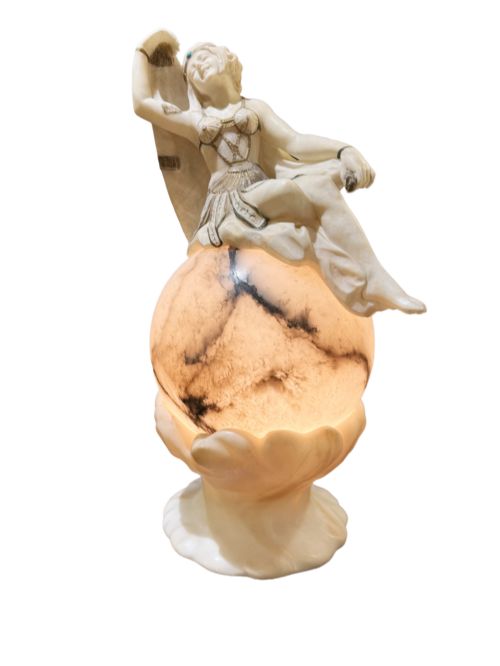
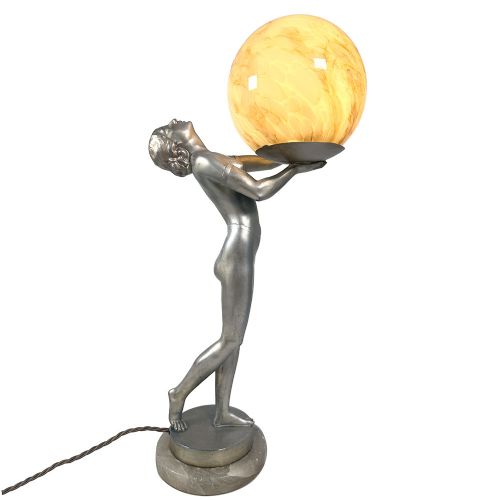
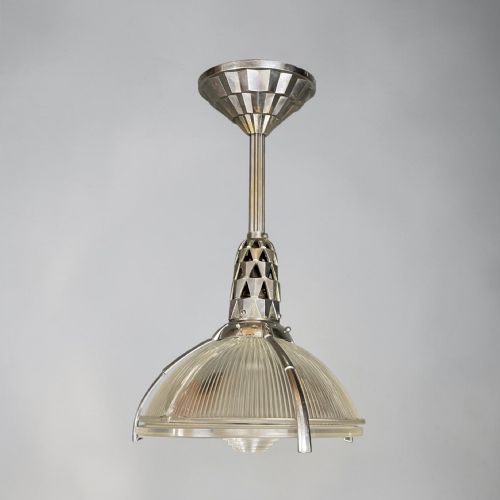
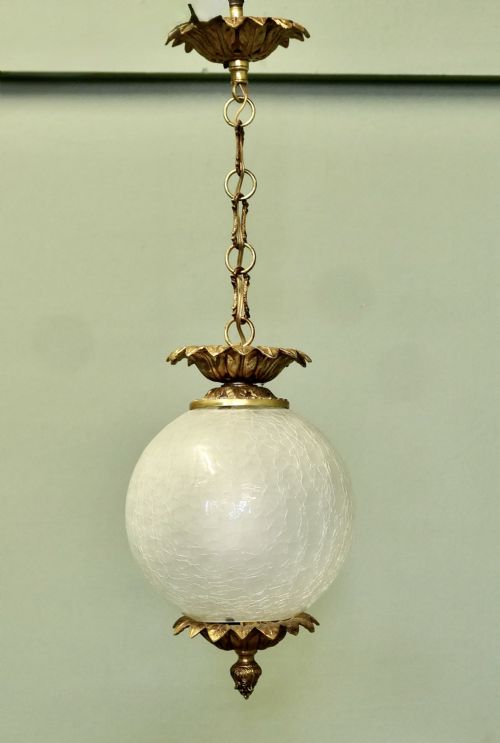
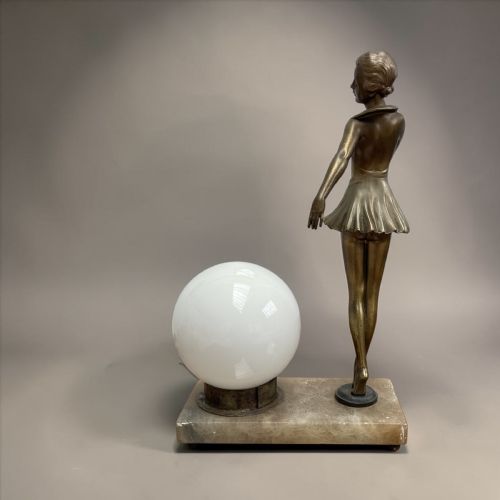
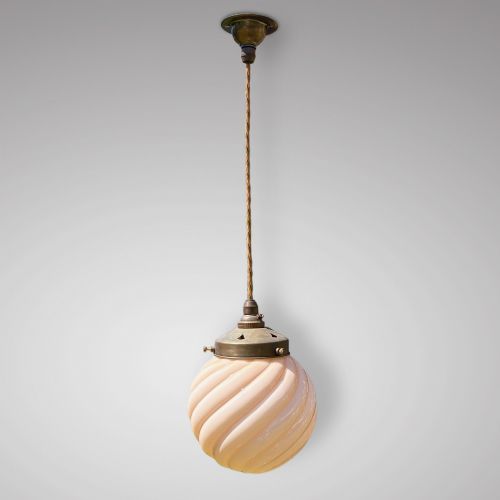
The phrase art deco globe covers geographical world globes on stands, spherical glass lighting fixtures, and figural lamps where a nude or athletic figure holds aloft a glass sphere. You will frequently encounter pendant lights with opaline glass globes and terrestrial globes mounted on wooden or compass bases.
Originating largely from the 1920s, 1930s, and 1940s, these pieces reflect the machine-age aesthetic through clean geometry and modern industrial materials. French workshops and English makers dominate the output recorded in this category, bridging the gap between practical cartography and decorative interior lighting.
Geographical models typically feature paper-mache spheres printed with map details, resting on oak or golden oak desk stands. Lighting variations include hanging ceiling fixtures, wall sconces, and desk lamps incorporating frosted or etched crystal glass.
Materials and construction
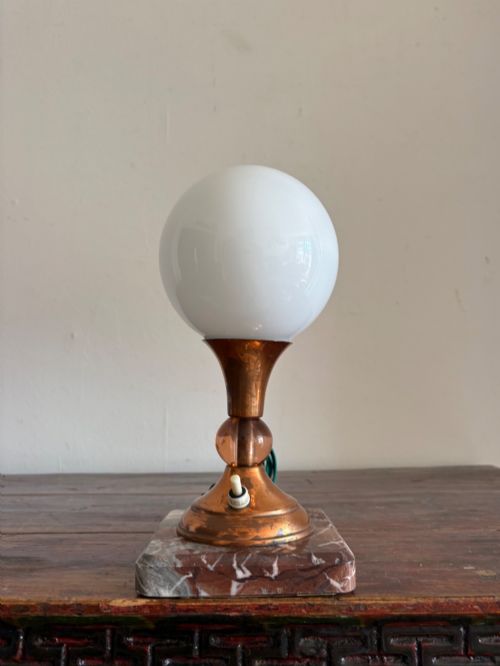
Makers utilised a combination of traditional cabinet-making and modern metallurgy, pairing oak and marble bases with chrome plating, brass, and spun copper. Spelter and bronze frequently form the structural bodies of figural lamps, while glass globes are blown, frosted, or etched to diffuse light evenly.
Terrestrial globes relied on printed paper gores applied carefully to paper-mache or composition spheres. Electrical fittings on lamps and pendant lights combined cloth-covered wiring with bakelite, catalin, and brass sockets typical of the period.
Art Deco Globe Retail Price Guide 2026
Typical asking prices for art deco globe among the pieces listed under this phrase on Sellingantiques today, from the lower quarter to the upper quarter. They describe what is for sale here now, not the wider market.
Listings feature terrestrial globes by Philips alongside French opaline glass pendant lights and chrome figural lamps.
Evaluating craftsmanship
Quality rests in the precision of the casting and the clarity of the materials used in each piece. Heavier gauge chrome over brass, finely detailed spelter figures with crisp finishing, and hand-etched crystal globes sit at the higher end of the range.
Cartographic accuracy and the preservation of original printed paper gores determine the merit of terrestrial globes. Solid marble or oak bases with integrated compass points or heavy metal mountings indicate superior production compared to lighter, simplified variants.
Globe Wernicke Co·Émile-Jacques Ruhlmann·Karl Palda·Heal's
The Art Deco Globe Glossary
- Opaline glass
- A milky, semi-translucent glass developed to soften light dispersion in pendant and globe lamps. It appears frequently in French lighting fixtures from the interwar years.
- Globe Wernicke bookcase
- A sectional lawyer or office bookcase system featuring stacking glass-fronted shelves. These units often date to the early period of this style.
- Spelter
- A zinc alloy commonly cast into figural lamp bases and statues. It was frequently bronzed or painted to imitate more expensive metals.
- Catalin
- A cast phenolic formaldehyde resin prized for its rich, saturated colours and translucency. It served as a durable plastic for decorative bases and switch housings.
- Gore
- A tapering strip of printed paper map applied to a spherical core to form a terrestrial globe. The alignment of these sections indicates the precision of the cartographer.
Art Deco Globe: Frequently Asked Questions
What is an art deco globe lamp?
These are lighting fixtures that incorporate spherical glass shades, often made of opaline or frosted glass, paired with metal or marble bases.
They were designed to provide diffused ambient light in domestic rooms, hallways, and offices during the interwar period.
How do you date a terrestrial globe?
Dating relies on the political boundaries, place names, and shipping routes printed on the paper gores covering the sphere.
Makers often included copyright dates or specific geopolitical markers that reveal the decade of production.
Where were these glass globes made?
Many of the lighting fixtures and pendant globes originated in French workshops, alongside notable English and European production.
Maker attributions frequently point to specialised glasshouses and metal foundries operating during the 1920s and 1930s.
How should a vintage globe lamp be wired?
Original wiring often requires updating to meet current safety standards, though historical sockets and switches are preserved where possible.
Rewiring ensures the piece functions safely while maintaining the exterior aesthetic of the period.