



Art Deco Globe Shade
An art deco globe shade brings the bold geometry and diffusing warmth of the interwar years straight into a modern interior.
Art Deco Globe Shade
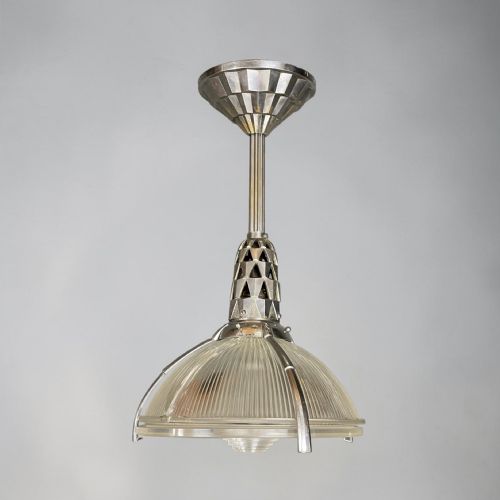
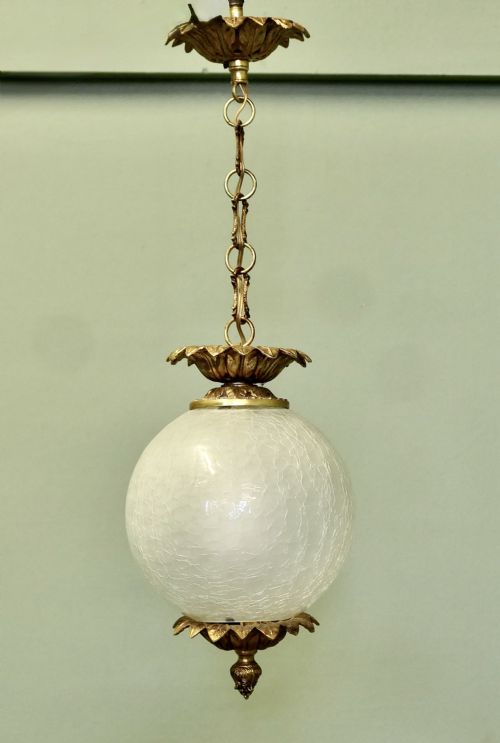
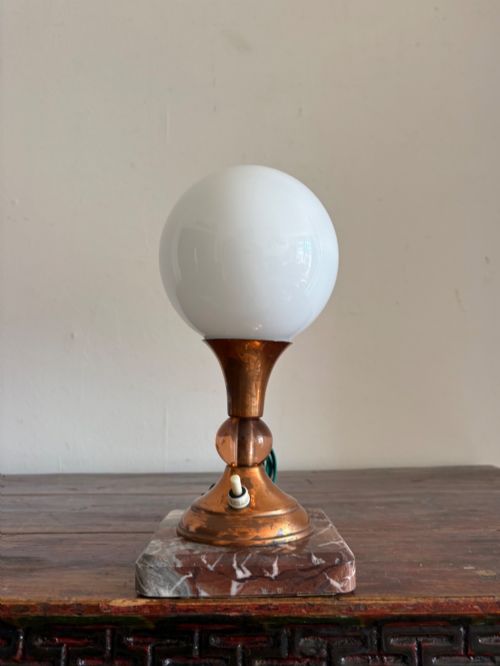
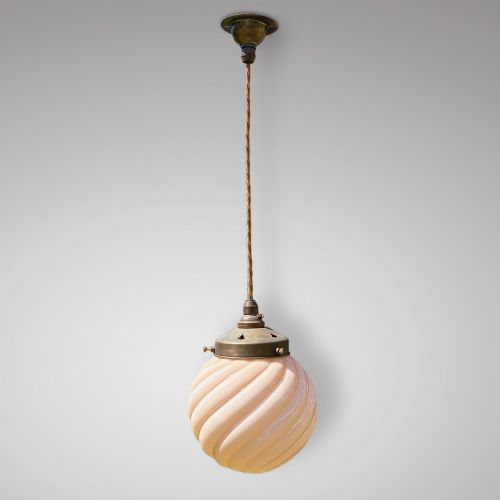
When you search for an art deco globe shade, you are looking at spherical glass lighting fixtures designed during the 1920s, 1930s, and 1940s. These pieces appear on this page primarily as pendant lights, ceiling lights, and table lamps originating from French workshops. The forms range from simple opal spheres suspended on metal chains to elaborate double-shade designs mounted on marble or chrome bases.
The aesthetic embraces both the sleek functionalism of the machine age and the softer romance of French Art Deco. You will encounter plain glass balls alongside heavily etched crystal domes, fish scale textures, and green-tinted globes designed to cast a diffused glow. They serve equally well as central hallway illumination or as sculptural focal points on a tabletop.
How they were made
The manufacture of these pieces relies heavily on moulded and blown glass, combined with structural metals such as chrome, brass, copper, and bronze. Molten glass was blown into moulds to create the signature spherical and domed shapes, then treated with acid etching, frosting, or crackle effects to soften the light output. Makers frequently paired these glass shades with contrasting heavy bases made of marble, alabaster, or early plastics like Bakelite.
Metal components were cast, spun, or plated to achieve the characteristic metallic finishes seen across pendant stems and lamp mountings. The integration of glass with materials like marble and chrome demonstrates a sophisticated material hierarchy typical of the period's industrial design.
Some dining rooms boast an art deco globe shade so bright it has successfully startled passing owls for nearly a century.
What varies in quality
Quality in these lighting fixtures rests on the weight and optical clarity of the glass, alongside the integrity of the mounting materials. Superior examples feature thick, uniformly blown glass with crisp surface etching or deep coloration, whereas lesser pieces utilise thinner, simpler pressed glass. The distinction also lies in the execution of the metalwork, where solid brass, heavy bronze, and thick silver plate outlast lighter stamped metals.
The sophistication of the pairing between shade and base dictates the upper tier of the range. Pieces that combine complex materials such as copper on marble or alabaster with figural elements show a higher level of design ambition than standard utility lighting.
Émile-Jacques Ruhlmann
The Art Deco Globe Shade Glossary
- Opaline Glass
- A translucent white glass that diffuses light evenly without harsh glare. It was widely utilised across pendant lights and globe shades during the interwar decades.
- Torchiere
- A tall floor lamp designed to direct light upwards toward the ceiling. These fixtures often incorporate large glass bowls or globes to bounce ambient illumination into the room.
- Bakelite
- An early form of synthetic plastic developed in the early twentieth century. It appears frequently in switch housings, bases, and structural fittings of the period.
- Frosted Glass
- Glass treated by acid-etching or sandblasting to create a textured, matte surface. This treatment softens the glare of internal bulbs while highlighting the spherical form.
- Alabaster
- A fine-grained, translucent stone carved into bases and decorative elements. It provides a natural, clouded pattern that complements the smooth surface of glass shades.
Art Deco Globe Shade: Frequently Asked Questions
How do I hang a globe pendant light?
These pendant fixtures typically suspend from a ceiling rose using a chain or metal rod connected to the main gallery. Ensure the ceiling structure supports the combined weight of the glass shade and metal hardware.
Electrical connection should follow standard wiring protocols for period lighting, often requiring professional installation to secure proper grounding and safe operation.
Can I use modern bulbs with these shades?
Most vintage fittings accommodate standard modern LED or incandescent bulbs, provided the wattage does not exceed the thermal tolerance of the historic socket and glass. Check the interior clearance of the globe before fitting larger bulb shapes.
Choosing a warm-white LED helps replicate the soft, ambient glow originally intended by the designers of the 1920s and 1930s.
How do I clean vintage opaline glass?
Wash the glass gently in lukewarm water using a mild, non-abrasive detergent and a soft cloth. Avoid submerging metal-mounted shades entirely to protect historic fixings from moisture damage.
Dry the surface immediately with a lint-free cloth to prevent water spots from forming on the translucent glass.
What is the difference between art deco and mid-century lighting?
Art Deco lighting from the 1920s and 1930s leans towards symmetrical geometry, luxurious materials like marble and bronze, and rich textures such as crackle or frosted glass. The focus remains on theatrical silhouettes and opulent finishes.
Mid-century modern designs, emerging later, strip away ornamentation in favour of stark minimalism, organic contours, and lighter industrial forms.