



Art Deco Glazed Vitrine
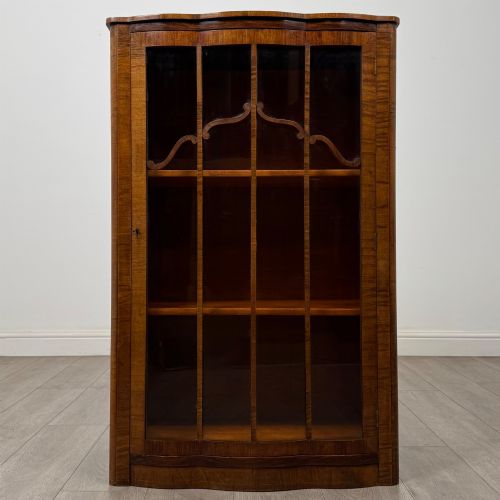
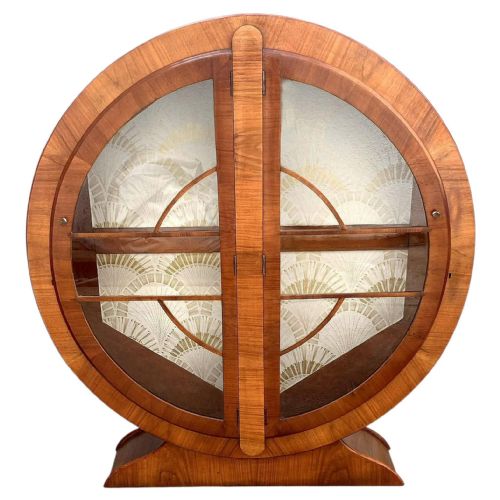
An art deco glazed vitrine brings geometric polish and clear glass to a room, offering a distinct cabinet for display.
Art Deco Glazed Vitrine
An art deco glazed vitrine serves primarily to showcase collections behind glass panels while adding geometric presence to an interior. These pieces emerge predominantly from the nineteen-thirties and nineteen-twenties, incorporating distinct period lines.
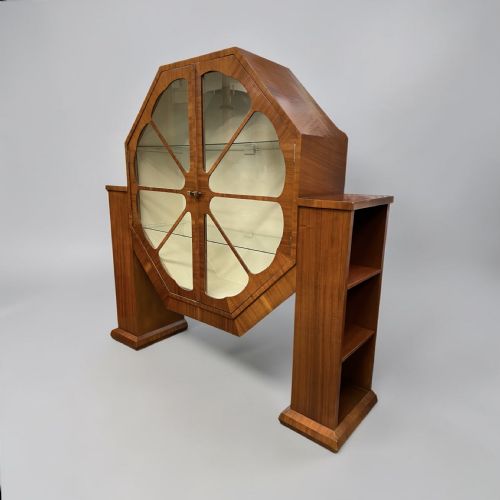
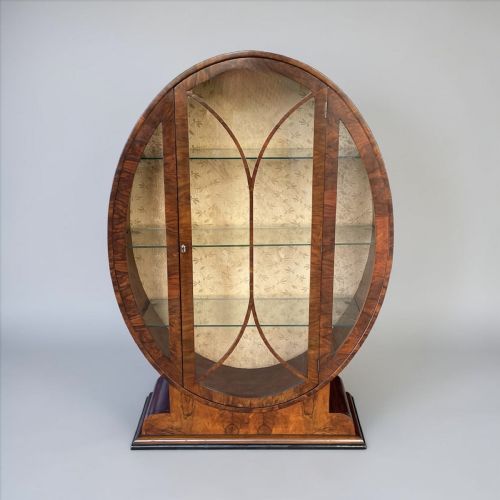
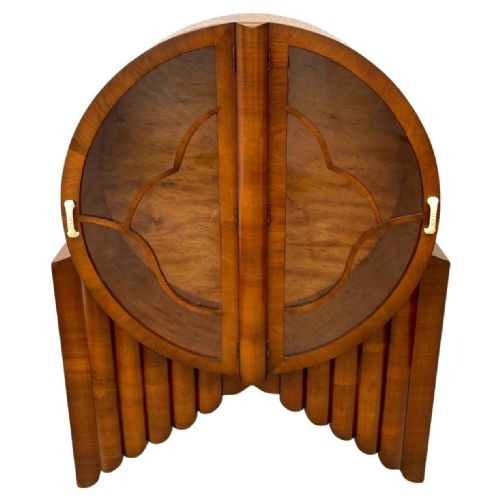
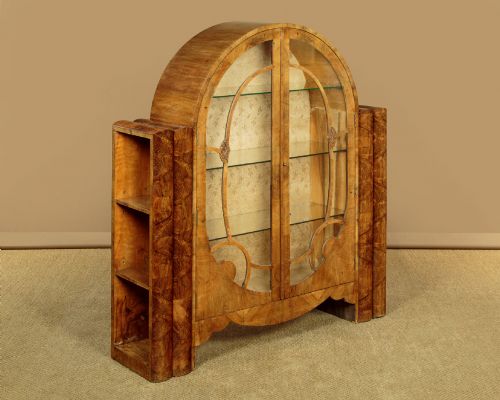
The version most commonly met on this page is the walnut display cabinet shaped in circular, oval, or rocket forms. These English designs reflect the interwar period through striking veneers and curved glass doors.
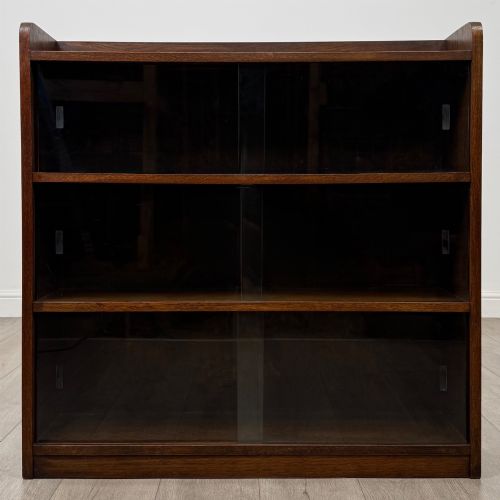
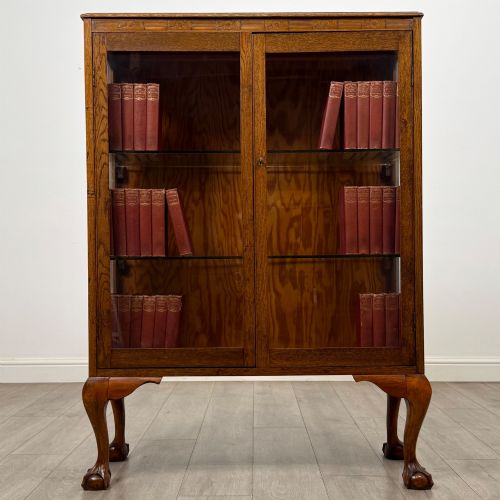
Makers and workshops of the era also produced forms in oak, mahogany, and ebonised wood. Alongside standard rectangular display cabinets, variants include corner cabinets and taller bookcase combinations.
Factors of distinction
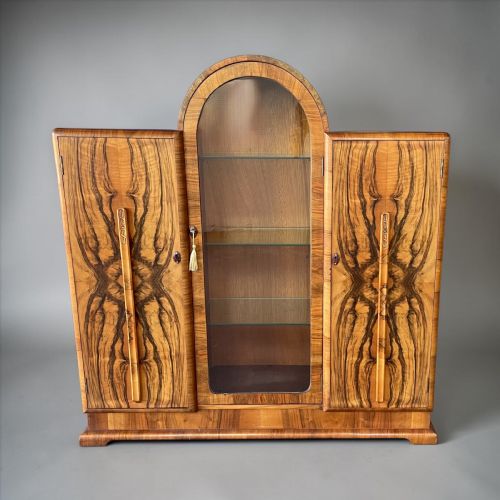
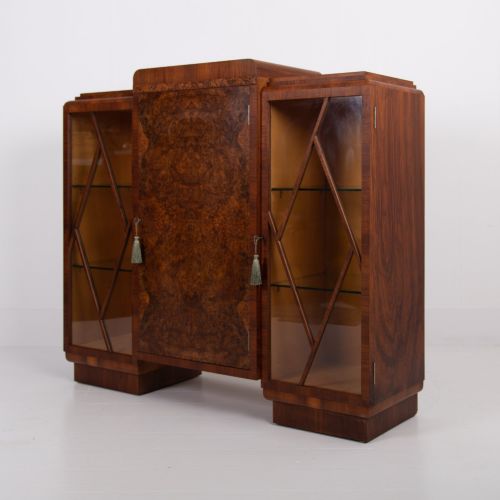
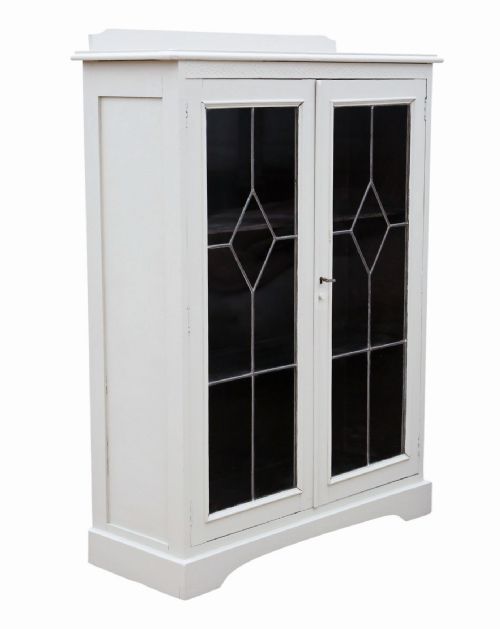
The choice of timber veneer sets the visual standard for each piece. Highly figured walnut or burr walnut with matching grain patterns elevates the appearance significantly above plain oak or standard painted alternatives.
Unusual cabinet geometry demands advanced joinery skills. Circular, clove-shaped, hexagonal, and cathedral silhouettes require precise woodworking to maintain structural integrity alongside curved glass integration.
Rurka·Maurice Adams·Epstein
The Art Deco Glazed Vitrine Glossary
- Vitrine
- A glass-fronted cabinet designed for displaying objects or collections. The term originates from the French word for glass.
- Burr walnut
- A specialised timber cut from a tree growth, yielding intricate and swirling grain patterns. Cabinetmakers prize this material for decorative veneer panels.
- Ebonised wood
- Timber treated with a dark stain or finish to imitate ebony. This dark surface often contrasts with brass mounts.
- Sycamore
- A light-coloured hardwood utilised for interior details and contrasting veneers within interwar cabinetry. It highlights darker surrounding walnut timbers.
- Interwar
- The historical period spanning the years between the First and Second World Wars. Much of the furniture on this page dates from this era.
Art Deco Glazed Vitrine: Frequently Asked Questions
Where should an art deco glazed vitrine go?
These cabinets suit living rooms or dining spaces where collections deserve prominent placement behind glass. Circular or corner variants fit well into transitional areas that benefit from distinct geometric forms.
Adequate floor space allows the curved glass and figured walnut grain to catch natural light effectively without crowding surrounding furniture.
How do I clean wooden cabinet surfaces?
Polishing timber surfaces requires a soft cloth and traditional wax designed for antique finishes. Avoid synthetic sprays that build up residue over time.
Glass panels benefit from standard glass cleaner applied directly to a cloth rather than sprayed near wooden frames.
Were these cabinets used for books?
Many examples function as combined bookcases and display cabinets with adjustable shelving. The enclosed glass protects volumes from dust while maintaining visibility.
Dedicated bookcase versions also appear alongside dedicated display vitrines in interwar British furniture.
What defines an Egyptian revival detail?
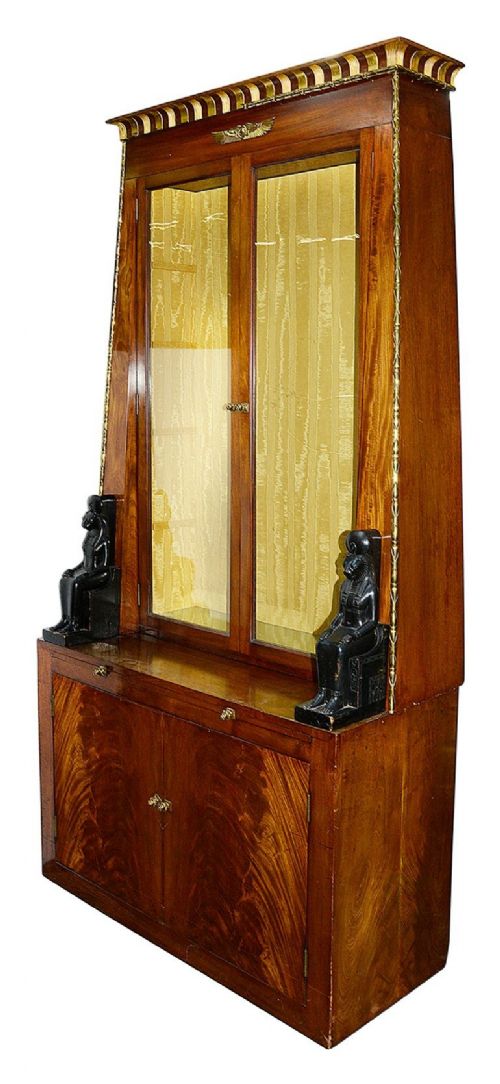
Egyptian revival elements draw inspiration from archaeological discoveries of the era, incorporating specific geometric motifs into standard art deco structures. These details appear subtly within carved woodwork or metal mounts.
Such ornamentation distinguishes certain cabinets from standard interwar production lines.