




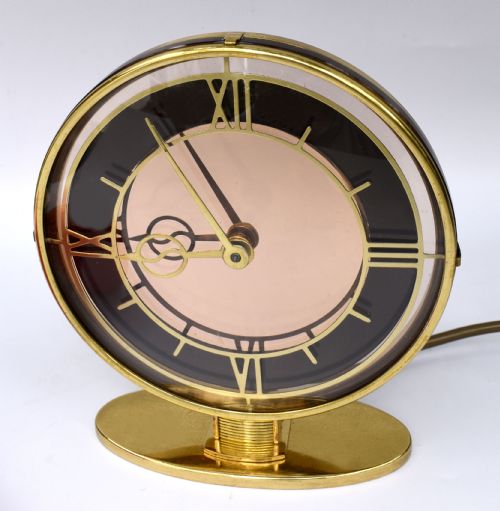
Art Deco Glass Timepiece
An art deco glass timepiece brings together geometric modernist forms and luminous coloured materials to anchor a mantel or desk.
Art Deco Glass Timepiece
An art deco glass timepiece is a clock housing built primarily from glass and metal, designed in the characteristic modernist style of the early decades of the twentieth century. These objects appear as mantel clocks, desk clocks, and mechanical or electric timepieces originating predominantly from the nineteen-twenties and nineteen-thirties.
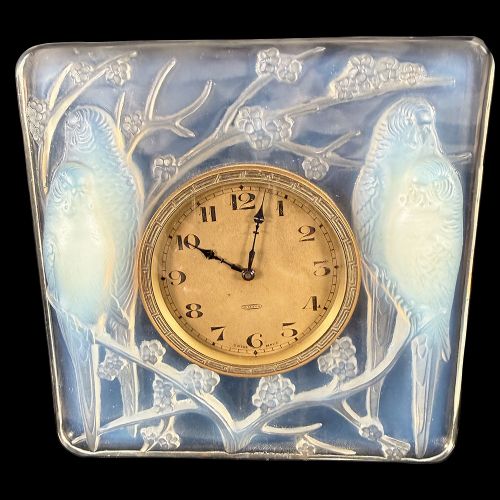
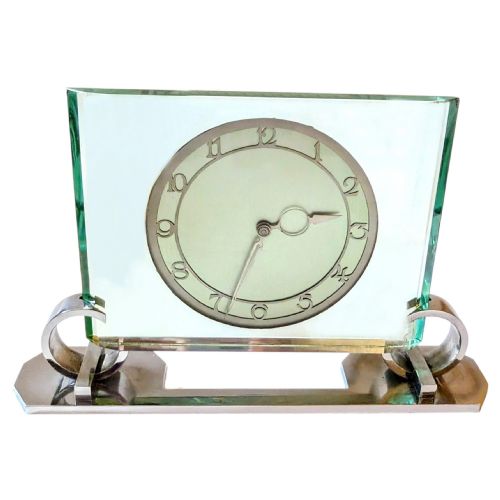
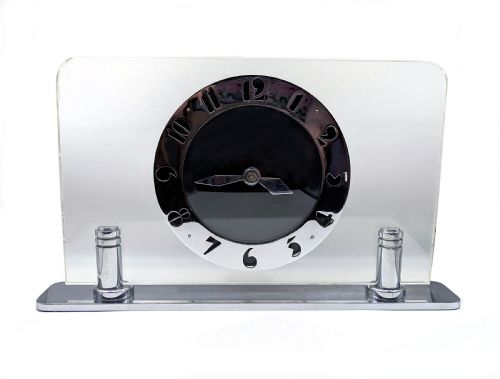
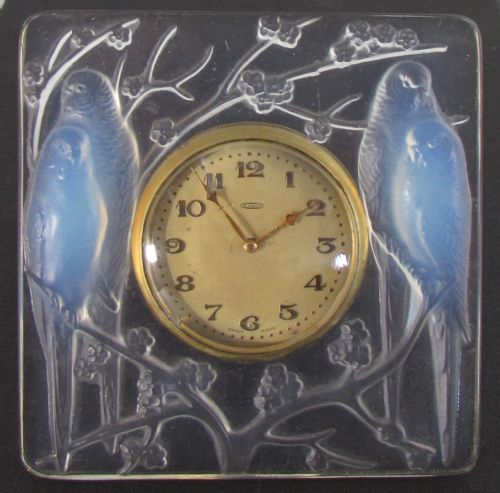
Buyers will most frequently meet pieces fashioned from blue glass, opalescent glass, or mirrored glass, often paired with chrome, brass, or enamel. Forms range from sculptural figural designs featuring birds to severe modernist geometric silhouettes produced by notable clockmakers.
How they were made
Makers utilised moulded glass, opalescent glass, frosted glass, and mirrored glass to construct the body of each timepiece, sometimes incorporating uranium or opaline variants for distinct colour effects. These glass components were cast or pressed before being mounted onto metal chassis.
The supporting structures and bezels combine chrome-plated metal, brass, and mahogany, housing mechanical wind-up movements, eight-day mechanisms, or electric systems such as Bulle movements.
Listings feature materials spanning opalescent glass, uranium glass, chrome, brass, enamel, and mahogany across the nineteen-twenties and thirties.
What varies in quality
The distinction between standard production items and exceptional works lies in the execution of the glass moulding and the pedigree of the maker. Master modellers produced deeply detailed figural reliefs, whereas lesser examples relied on plain geometric slabs.
Quality also rests in the sophistication of the internal movement, with electric skeleton systems and signed maker movements commanding greater attention than generic wind-up mechanisms.
R Lalique·Smiths Clockmakers·Mappin & Webb·Maurice & Marcel Moulin Favre-Bulle·P.M.Favre
The Art Deco Glass Timepiece Glossary
- Opalescent glass
- Glass containing ingredients that cause it to milky-blue or milky-white hues when light passes through it. This technique creates a luminous depth seen in sculptural clock faces.
- Bulle clock
- An electric clock utilising a battery-driven pendulum swinging through a magnetic field. It represents an innovative movement type of the period.
- Modernist
- A design approach favouring clean lines, functional expression, and geometric abstraction over historical ornament. It defines the aesthetic of these clocks.
- Mystery clock
- A timepiece where the dial appears to have no mechanical connection to the movement. The hands are driven by concealed or transparent mechanisms.
- Uranium glass
- Glass containing trace amounts of uranium oxide, causing it to glow brightly under ultraviolet light. It produces a distinct yellow-green tint.
Art Deco Glass Timepiece: Frequently Asked Questions
How do these electric clocks work?
Many of these pieces utilise early electrical systems, such as Bulle movements, which operate via a battery-powered magnetic pendulum rather than a traditional mainspring.
These systems represent an experimental phase in horology where makers combined traditional glass housings with modern electrical technology.
Are these clocks suitable for daily use?
While many mechanical eight-day and electric movements remain fully operational, collectors often treat them with care given their age and delicate glass housings.
Regular servicing by a specialist horologist helps maintain the longevity of both the internal gears and the fragile mounting fittings.
How can I identify a Lalique clock?
Rene Lalique pieces are distinguished by heavily sculptural moulded glass panels featuring motifs such as birds or distinct geometric patterns. The glass often displays opalescent or frosted qualities with hand-painted dial details.
Signatures or model names incorporated directly into the glass moulding further help verify the origin.
What maintenance do glass cases need?
Glass and chrome surfaces require only gentle cleaning with a soft, dry cloth to avoid scratching the material or disturbing aged metal finishes. Harsh chemical cleaners can damage both the enamel dials and the specialised glass treatments.
Checking the stability of the metal mounts periodically ensures the heavy glass components remain securely supported.