


Art Deco Glass Shade Lamp
An art deco glass shade lamp brings together period metalwork and distinctive glass forms to illuminate a room with architectural character.
Art Deco Glass Shade Lamp
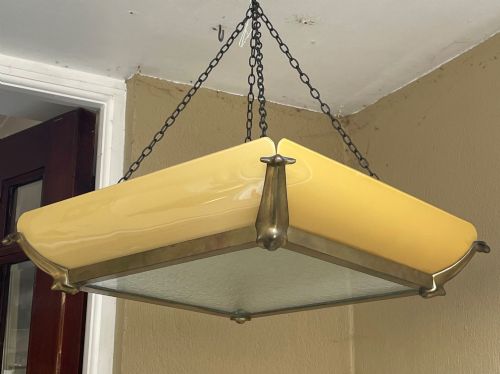
An art deco glass shade lamp encompasses a wide variety of lighting forms, including table lamps, desk lamps, floor lamps, and hanging pendants. The pieces date predominantly from the 1920s and 1930s, though related examples stretch from the 19th century through to the 1940s.
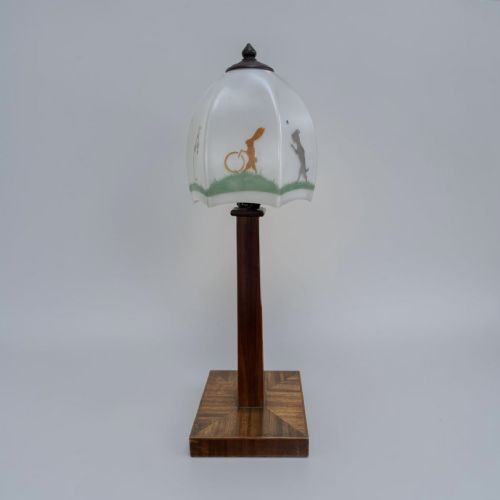
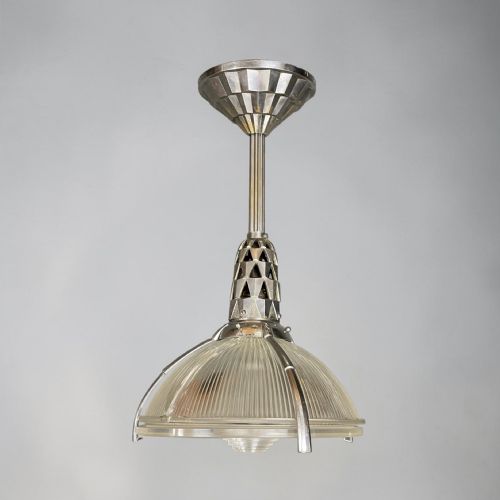
Table lamps and wall lights frequently combine metal bases with moulded or frosted glass shades. Pendant lights and ceiling lights utilise globes, slip shades, and conical shades suspended from brass, chrome, or copper fixtures.
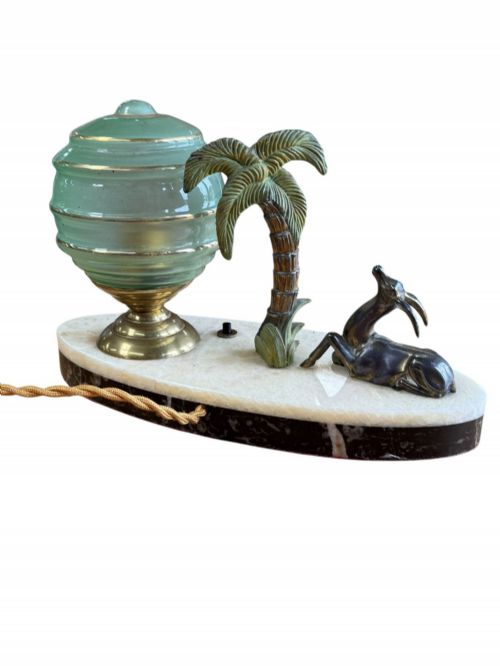
French workshops and makers feature prominently among the surviving pieces, often pairing wrought iron, marble, or brass with specialised glass elements. Simpler domestic forms sit alongside monumental pairs and novelty animal designs.
How they were made
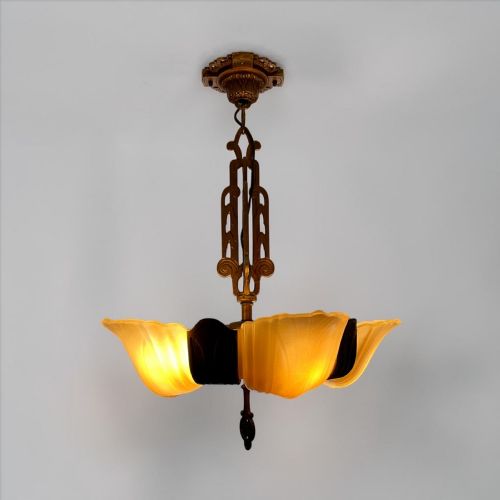
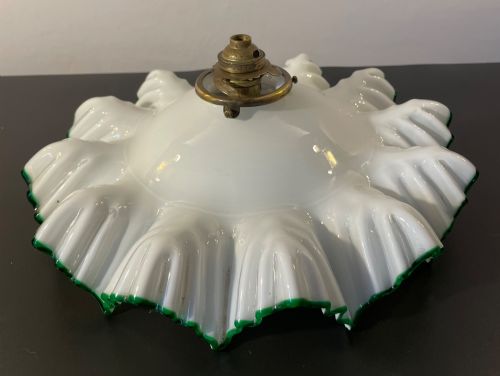
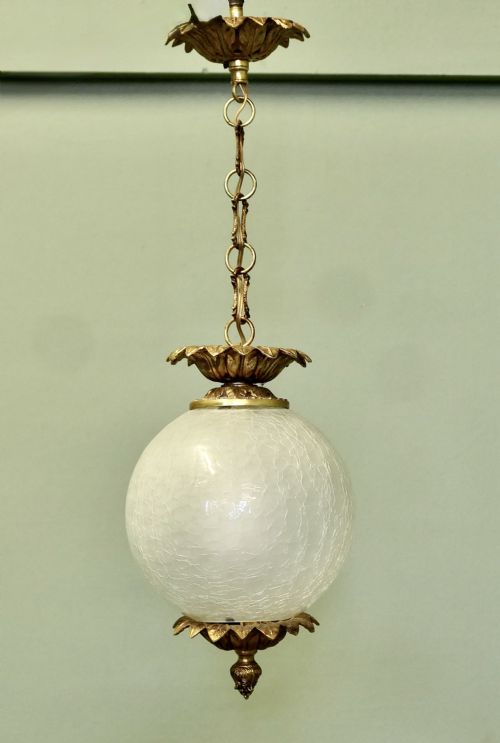
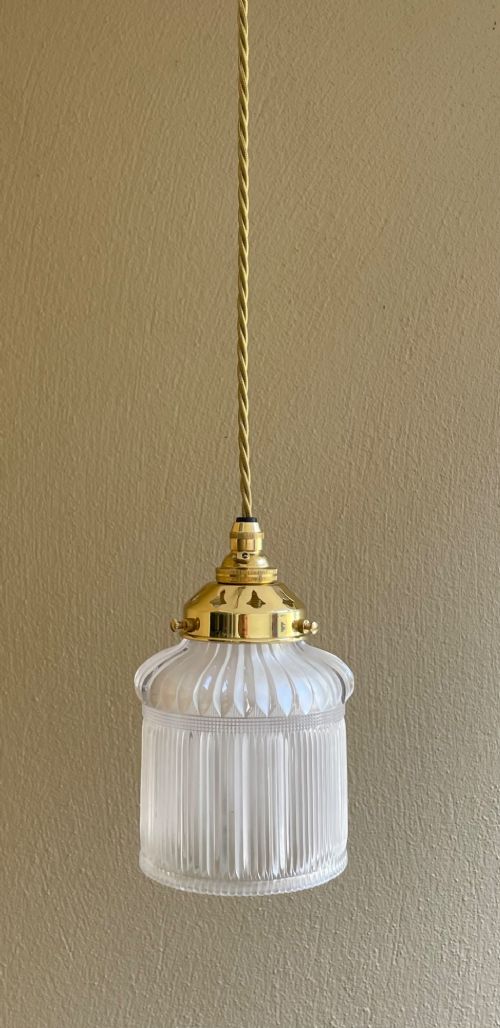
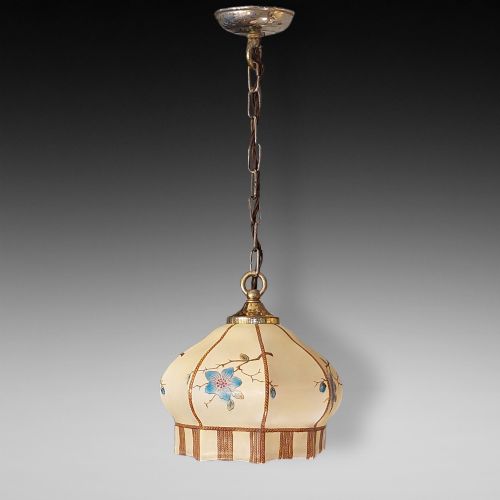
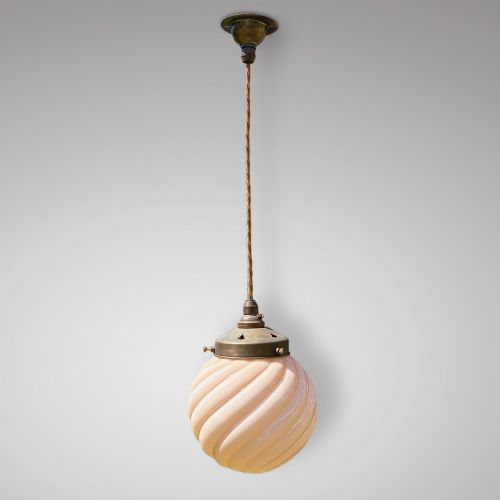
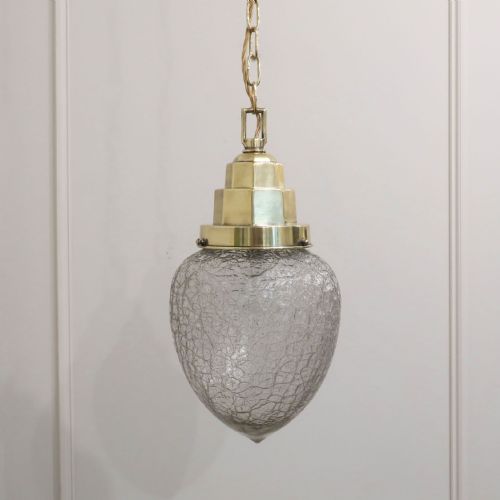
Glass production for these lamps relies on techniques such as moulding, frosting, crackle finishing, and hand painting. Opaline, cut crystal, and opaque glass provide different qualities of light diffusion, sometimes shaped into clam shells or geometric slip shades.
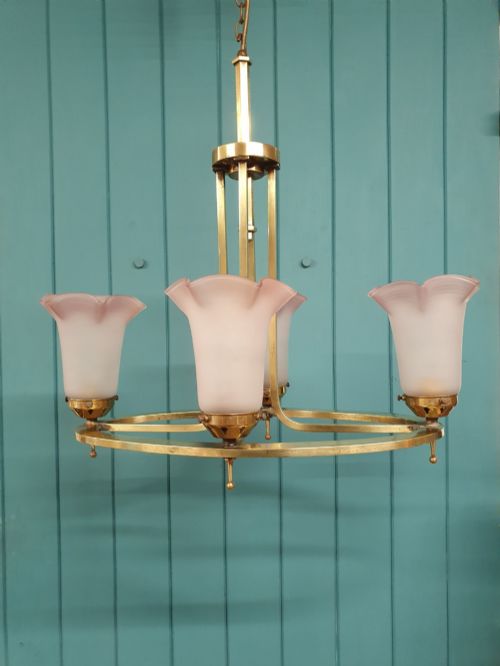
Metalwork provides the structural support, utilising brass, chrome, copper, nickel, or wrought iron for bases, stems, and hanging mounts. Ormolu, silvering, and patinated finishes add decorative surface detail to the structural components.
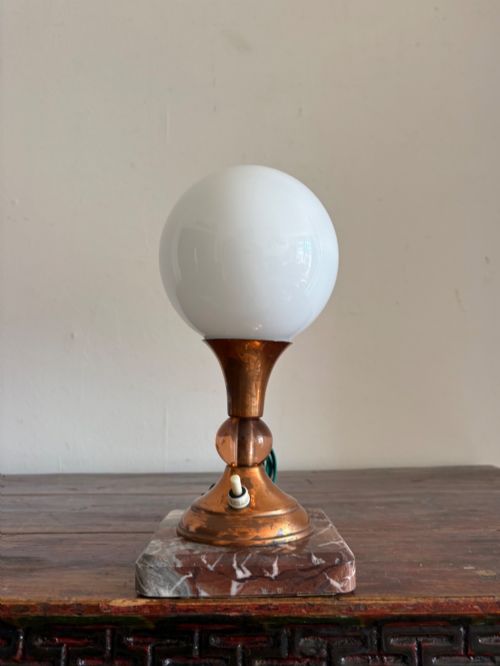
Marble and fabric occasionally supplement the primary materials, serving as heavy foundations for table lamps or accenting the main glass components.
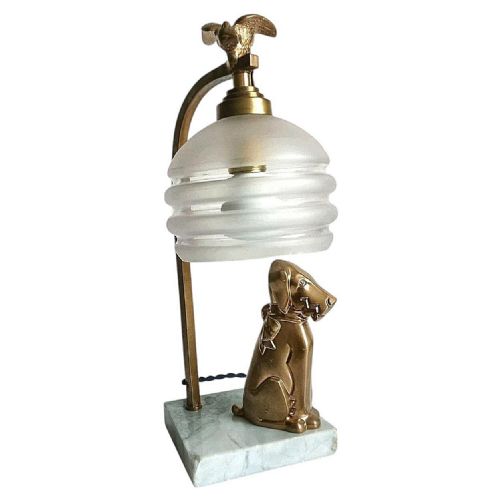
Dogs and parrots share the lighting duties on several playful novelty animal table lamps from the period.
What varies in quality
The distinction between standard production and top-tier examples often lies in the attribution to specific glass houses or metalworkers. Signed shades from known makers command greater interest than unmarked commercial alternatives.
The weight and selection of materials influence the overall standard of the piece, particularly where substantial marble bases or heavy cast brass mounts are employed. Complex moulding in the glass and substantial metal gauge distinguish finer commissions.
Émile-Jacques Ruhlmann·Stuart Crystal·Daum·Muller Bros·Degue·Baccarat
The Art Deco Glass Shade Lamp Glossary
- Opaline glass
- A milky, semi-translucent glass that diffuses light evenly across the surface of the shade. It appears frequently in white or pale pastel tones on period pendants.
- Slip shade
- A moulded piece of glass designed to fit directly into a metal frame or multi-arm ceiling light fixture. These segments form a cohesive bowl or shade assembly.
- Crackle glass
- Glass deliberately fractured during manufacture and then reheated to fuse the internal network of lines while retaining a textured exterior. This technique scatters light distinctively.
- Ormolu
- Gilded bronze applied to mounts and bases for a rich metallic finish. It provides a decorative contrast to the glass components on substantial table lamps.
Art Deco Glass Shade Lamp: Frequently Asked Questions
What is an art deco glass shade lamp?
An art deco glass shade lamp is a lighting fixture featuring decorative glass combined with metal components like brass, chrome, or wrought iron. These pieces date primarily from the interwar period and reflect the design priorities of that era.
They appear as table lamps, floor lamps, wall sconces, and hanging pendants. The glass elements range from smooth opaline globes to moulded slip shades and textured crackle glass.
How do I identify a 1930s lamp?
Identification relies on observing the combination of materials, construction methods, and characteristic silhouettes. Look for geometric motifs, stepped bases, and specific metal finishes such as nickel, chrome, or patinated brass.
The glass often provides strong clues through its moulding style, colour, and texture. Signed pieces carry maker marks on the glass edge or metal base.
Where were these lamps made?
Many surviving examples originate from France, where notable glass houses and metalworkers produced distinctive lighting designs. British and American makers also contributed significant quantities of pendant lights and table lamps during the same decades.
Workshop origins often show in the specific choice of mounting materials, such as French wrought iron or American slip shade configurations.
How do I clean an antique glass shade?
Cleaning requires gentle handling, particularly with frosted, hand-painted, or opaline surfaces. Use a soft, dry cloth to remove dust before applying any moisture.
Avoid harsh chemical cleaners that might damage painted details or vintage patination on the metal components. Removable shades should be detached carefully from their brass or chrome fittings prior to cleaning.