



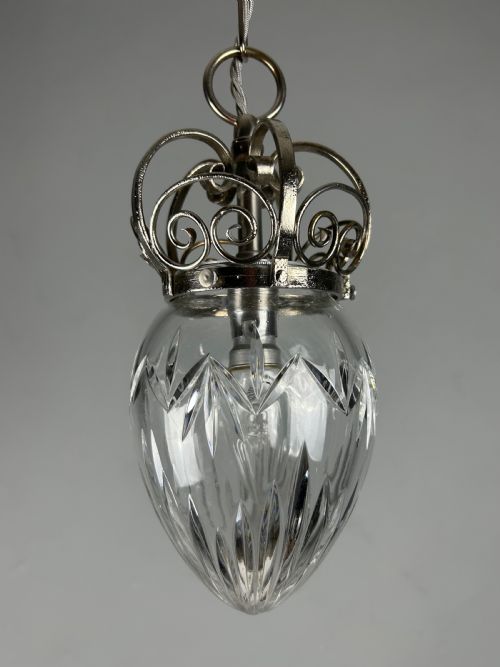
Art Deco Glass Chandelier
An art deco glass chandelier brings geometric order and brilliant illumination to a room, catching the light through moulded or frosted shades.
Art Deco Glass Chandelier
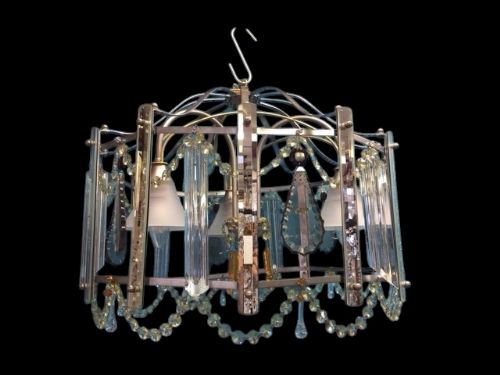
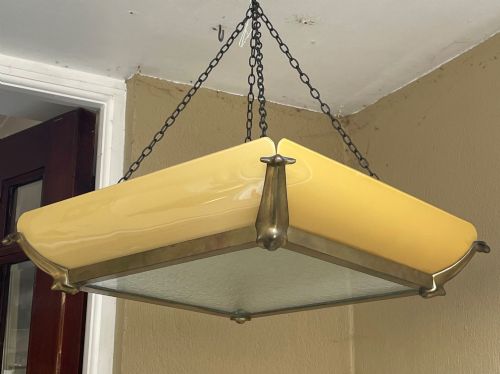
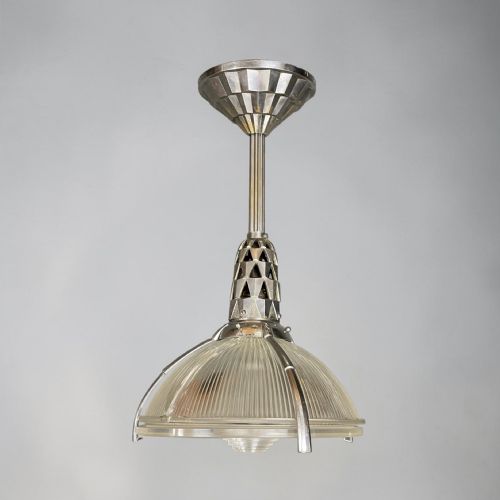
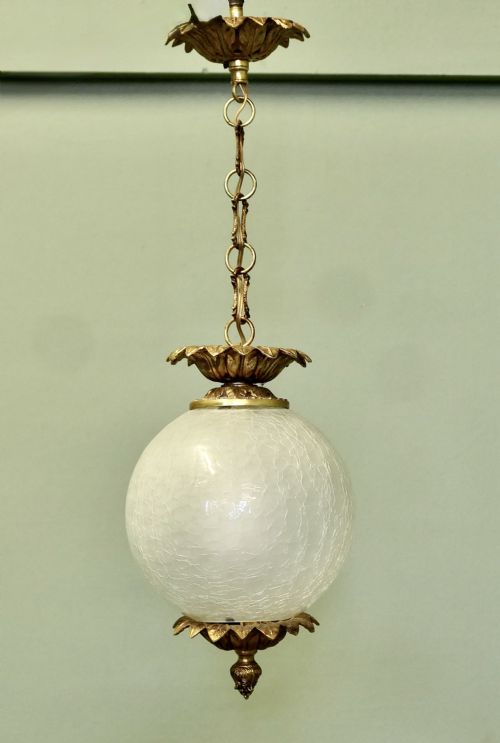
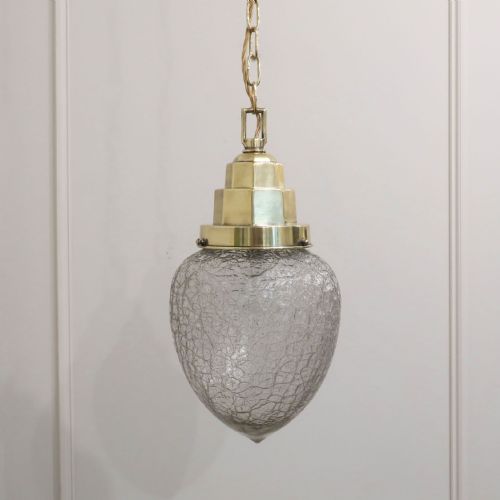
An art deco glass chandelier is a ceiling-suspended lighting fixture originating predominantly from the 1920 and 1930 periods, designed to distribute ambient illumination through decorative glass elements. These fixtures range from single-pendant lamps and flush ceiling fittings to multi-tiered chandeliers with several branches.
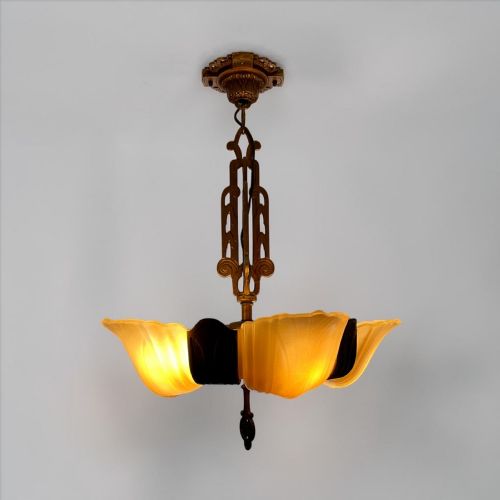
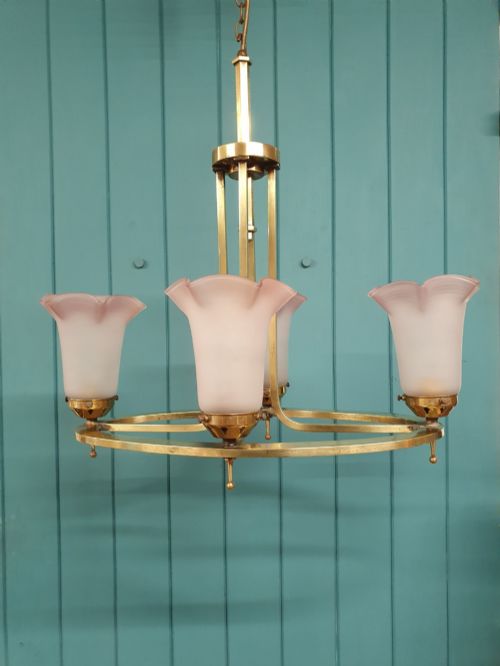
The versions most commonly met on this page combine moulded or frosted glass shades with structural frameworks of brass, chrome, or wrought iron. Many examples display the characteristic symmetrical stepped or curved motifs associated with the era.
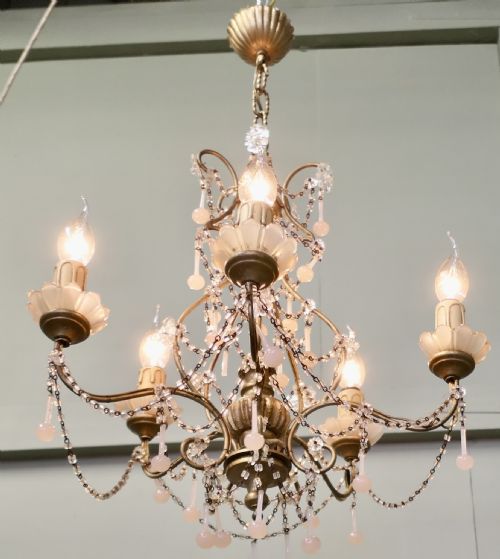
Alongside mainstream French and Italian productions, one encounters specialised regional variants such as Amsterdam School fixtures and Edwardian pieces adapted to the aesthetic. The primary function remains the suspension of glass bowls, slip shades, or crystal drops from a central ceiling point.
How they were made
Makers shaped the glass components of an art deco glass chandelier through pressing, moulding, or acid-etching, producing opaque, frosted, crackle, or coloured finishes that softened the glare of early electric bulbs. Crystal elements were cut and polished by hand to increase refraction.
The metal structures supporting the glass were cast, spun, or forged using brass, chrome, copper, and wrought iron. Artisans assembled these frames to securely hold heavy slip shades, multi-tiered crystal drops, or large glass globes.
Art Deco Glass Chandelier Retail Price Guide 2026
Typical asking prices for art deco glass chandelier among the pieces listed under this phrase on Sellingantiques today, from the lower quarter to the upper quarter. They describe what is for sale here now, not the wider market.
Some heavy fixtures weigh more than a small dog, requiring a ceiling hook stronger than the one holding your kitchen pot rack.
What varies in quality
The quality of an art deco glass chandelier depends heavily on the weight and clarity of the glass, alongside the precision of the metalwork. Thicker moulded glass with deeply defined patterns and crisply finished brass or chrome frames represent the upper end of production.
Makers who collaborated with renowned glassworks produced signed pieces where the mountings and the glassware were conceived as a single cohesive unit, whereas standard commercial pieces relied on generic fittings.
Émile-Jacques Ruhlmann·Schneider·Jean Gauthier
The Art Deco Glass Chandelier Glossary
- Slip Shade
- A moulded glass panel designed to slot directly into a metal frame or basket. These shades typically form a conical or geometric bowl around the light source.
- Bag Chandelier
- A lighting fixture where numerous crystal drops are strung in a tight, tapered mesh resembling a small bag beneath the ceiling plate.
- Frosted Glass
- Glass treated by acid-etching or sandblasting to create a textured, opaque surface that diffuses light evenly. It is a defining characteristic of period lighting design.
- Amsterdam School
- An early twentieth-century architectural and design style originating in the Netherlands, known for expressive brickwork, organic forms, and decorative metalwork. Fixtures from this movement utilise heavy brass and distinct geometric silhouettes.
Art Deco Glass Chandelier: Frequently Asked Questions
How do I hang an art deco glass chandelier?
Suspension requires a sturdy ceiling hook and an electrical junction capable of supporting the combined weight of the metal frame and glass components. Professional installation ensures the wiring and hanging chains are properly secured.
Heavier multi-tiered fixtures often require additional ceiling joist reinforcement rather than a standard plasterboard fixing. An electrician should verify that the internal wiring meets current safety standards before operation.
How do I clean frosted glass shades?
Cleaning requires removing the glass components from the metal frame and washing them gently in lukewarm water with mild soap. Harsh chemical cleaners can damage delicate etched or frosted surfaces.
Glass elements should be dried thoroughly with a lint-free cloth before being remounted into their brass or chrome frames. Care must be taken when handling heavy moulded bowls to prevent chipping the edges.
Are these lights compatible with modern bulbs?
Most vintage fixtures accept standard modern LED or incandescent bulbs provided the wattage does not exceed the original design limits. Screw or bayonet fittings match standard contemporary electrical supplies.
Rewired examples accommodate modern household circuits safely while preserving the original sockets where possible. Consult an electrician if the lamp holder dimensions differ from standard bulb sizes.