





Art Deco Gemstone Bangle
An art deco gemstone bangle brings geometric lines and vivid stones together, offering the quintessential wristwear of the interwar years.
Art Deco Gemstone Bangle
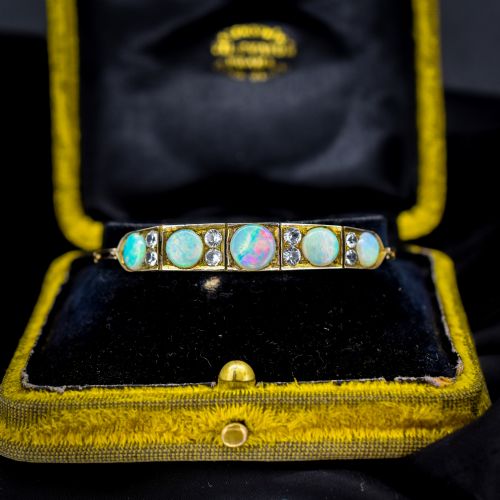
When you search for an art deco gemstone bangle, you encounter flexible link bracelets and hinged bangles rooted primarily in the 1920s and 1930s. These pieces showcase symmetrical geometry, crisp lines, and colourful gems mounted in precious metals.
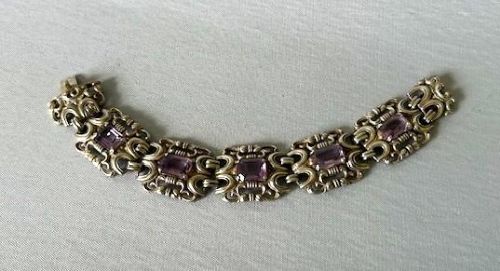
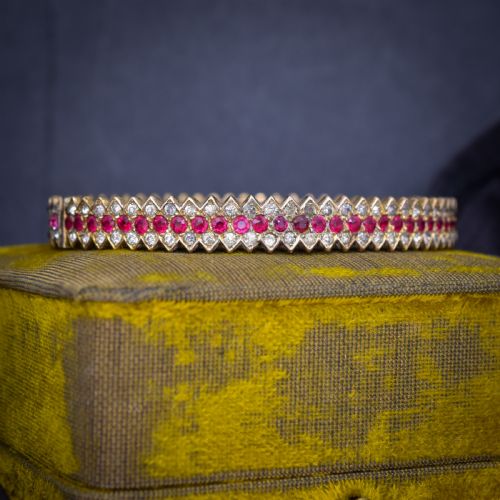
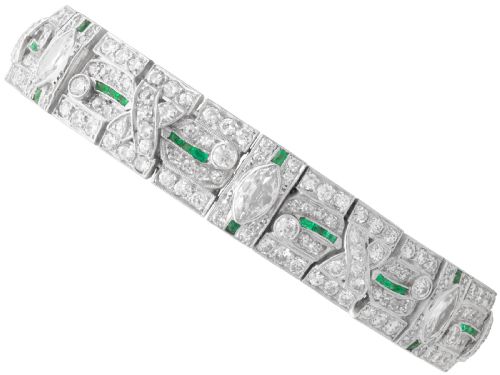
The most common examples on this page balance diamonds with deep sapphires, rubies, or emeralds, often framed in platinum or white settings. Occasional silver and gold-on-silver variations appear alongside later 1940s retro designs and mid-century filigree work.
Origins span across British, European, and Portuguese workshops, reflecting a shared international fascination with clean architectural ornamentation. Each variant provides a wearable piece of period design tailored for the modern wrist.
Construction and materials
Craftsmen built these bangles and bracelets using platinum or white gold to securely hold intricate pavé and channel-set diamonds alongside larger central stones. Yellow and rose gold also feature prominently, particularly in later 1940s retro pieces.
Openwork filigree settings and pierced silver channels lighten heavy metal foundations, allowing light to pass through amethysts, opals, and paste stones. Hinged mechanisms and secure clasp systems ensured structural integrity for daily wear.
Art Deco Gemstone Bangle Retail Price Guide 2026
Typical asking prices for art deco gemstone bangle among the pieces listed under this phrase on Sellingantiques today, from the lower quarter to the upper quarter. They describe what is for sale here now, not the wider market.
Several pieces feature secret hinges so cleverly concealed that the bracelet appears to be a solid, unbroken loop of diamonds.
Factors of quality
Quality rests upon the precision of the metalwork, particularly the crispness of pierced filigree and the tight alignment of geometric pavé settings. Superior pieces maintain robust hinges and secure box clasps that withstand decades of opening and closing.
The selection and matching of gemstones dictate the upper tier of the range, where untreated Burmese rubies, clean sapphires, and substantial diamonds command attention. Lesser examples rely on paste substitutions or mismatched stones set within simpler silver frames.
The Art Deco Gemstone Bangle Glossary
- Filigree
- Fine metal threads soldered together to form openwork patterns. This technique creates delicate, lace-like frames around central gemstones.
- Pavé
- A setting technique where small gemstones are closely set together with minimal visible metal beads. This gives the appearance of a continuous surface of sparkle.
- Paste
- Hand-cut lead glass used as a gemstone substitute. Period pieces utilise high-grade paste for brilliant colour and reflection.
- Hinged bangle
- A rigid or semi-rigid bracelet featuring a mechanical hinge and clasp. This design allows the piece to open and fit snugly around the wrist.
- Panel link
- A bracelet constructed from rigid geometric sections joined by hidden hinges. This layout keeps stones facing forward on the wrist.
Art Deco Gemstone Bangle: Frequently Asked Questions
How do I care for my bangle?
Store your bangle separately in a lined box to prevent metal scratching and stone abrasion.
Clean gently with a soft brush and warm soapy water, avoiding harsh ultrasonic cleaners on glued or softer gems like opals.
Are these bracelets suitable for daily wear?
Most sturdy platinum and gold pieces handle regular wear well when handled with reasonable care.
Delicate silver filigree or antique opals require more mindful wearing to avoid bending or moisture damage.
How can I tell the period?
Examine the metal choices, clasp types, and overall geometric symmetry for clues to the decade of origin.
Platinum and sharp angles point to the 1920s, while heavier rose gold and broader links often indicate 1940s retro styling.
What is gold on silver?
Gold on silver is a construction method where a thin layer of gold is bonded over a silver base.
This technique provided the bright appearance of gold jewellery with the structural affordability of silver during the early twentieth century.