

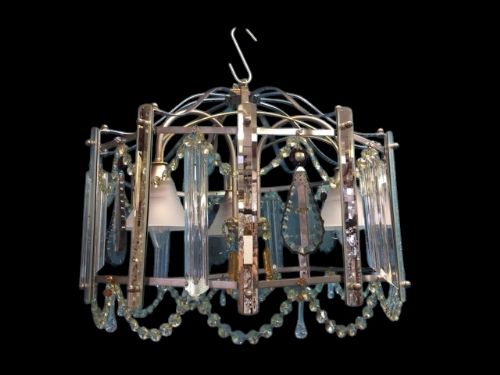


Art Deco Flush Fixture
These art deco flush fixture examples bring geometric lines and period light into low ceilings.
Art Deco Flush Fixture
An art deco flush fixture mounts tightly against the ceiling surface to illuminate a room without a hanging cord or chain. They date predominantly from the 1920 and 1930 periods, capturing the classic geometric and modernist design language of those decades.
The selections on this page span ceiling lights and wall lights alongside related forms like chandeliers and pendant lights. Frosted glass and pressed satin glass feature heavily across these items, often paired with metal, chrome, brass, and copper.
Makers and French origins emerge in several pieces, alongside large dome ceiling lamps and tiered crystal glass configurations. Buyers encounter both single flush ceiling lights and matching pairs of wall lights designed to coordinate a room.
How they were made
Makers utilised moulded, frosted, and pressed satin glass to diffuse light evenly across the room while showcasing geometric patterns. These glass shades are held securely by metal frames constructed from chrome, brass, or copper.
Cut glass and crystal elements appear in more elaborate configurations, catching and refracting the light. Skilled artisans shaped the metal components to sit flush against interior surfaces, combining industrial alloys with decorative glasswork.
Art Deco Flush Fixture Retail Price Guide 2026
Typical asking prices for art deco flush fixture among the pieces listed under this phrase on Sellingantiques today, from the lower quarter to the upper quarter. They describe what is for sale here now, not the wider market.
Jean Gauthier stamped his glassware so future generations would not mistake his copper-held shades for ordinary kitchen bowls.
What varies in quality
The distinction between standard production and superior examples lies in the depth of the glasswork and the finish of the metal. Heavier press-moulded glass and finely etched crystal command greater appreciation than simpler, thinner panes.
Original metalwork in chrome, copper, or brass retains a crispness in its modernist lines that distinguishes higher grade items. Signed glass components or identified workshops elevate the standing of a piece considerably.
Lalique·Jean Gauthier
The Art Deco Flush Fixture Glossary
- Flush fixture
- A lighting assembly designed to attach directly to the ceiling without a drop or suspension cord. This format suits rooms with lower ceiling heights.
- Pressed satin glass
- Glass shaped in a mould with a smooth, frosted finish that softens the bulb glare. It is typical of the 1930 period style.
- Slip shade
- A glass panel that slips into a metal frame to form the body of the light fixture. These are characteristic of period American and European lighting design.
- Chrome
- A chromium plating applied over base metal to provide a bright, corrosion-resistant finish. It defined the modern aesthetic of the 1930s.
Art Deco Flush Fixture: Frequently Asked Questions
How do I install a flush fixture?
These fixtures mount directly to a standard electrical junction box in the ceiling. The metal base or glass shade secures flush against the plaster.
Professional installation is recommended due to the weight of the glass components and vintage wiring requirements.
How do I clean frosted glass?
Use a soft cloth and mild soapy water to gently wipe the surface of frosted or satin glass. Avoid harsh chemical abrasives that can damage the vintage texture.
Dry thoroughly before reassembling the fixture.
Are these fixtures original 1930s pieces?
The inventory on this page dates primarily from the 1920 and 1930 periods. Materials such as frosted glass, chrome, and copper reflect the manufacturing standards of those decades.
Checking the construction details helps confirm the period origin.