


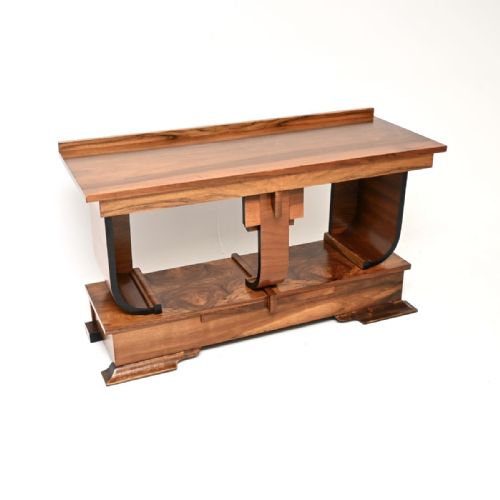
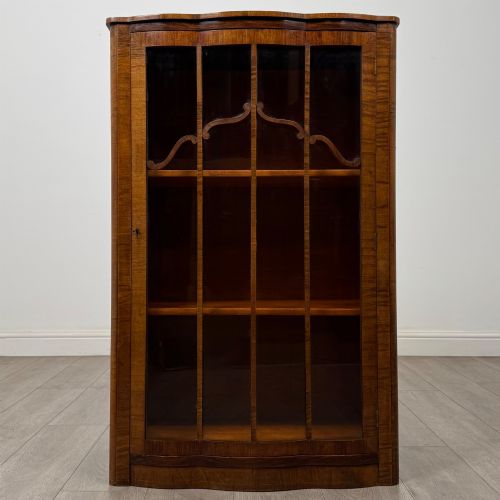


Art Deco Figure Stand
These art deco figure stand pieces combine sculptural presence with functional design, offering striking centrepieces for period interiors.
Art Deco Figure Stand
An art deco figure stand brings together figurative sculpture and utilitarian design, taking forms such as table lamps, powder puff stands, and console tables. These items incorporate human figures, often featuring dancers, nudes, or stylistic representations integrated directly into the object.
The pieces appearing on this page span the early decades of the twentieth century, drawing on periods from the nineteen-ten through to nineteen-forty. Buyers encounter variations that range from lighting fixtures featuring standing ladies to furniture pieces like walnut console tables and cocktail cabinets on stands.
Materials such as bronze, spelter, marble, and glass dominate the selection, often paired with walnut or figured veneer woodwork. The stylistic language relies on geometric lines, stylized figures, and industrial metals characteristic of the era.
Materials and construction
Metals form the core of many figures and stands, utilising bronze and spelter cast into detailed human and animal shapes. These metal elements are frequently combined with carved stone bases, onyx, or alabaster to add weight and contrast.
Cabinetry relies heavily on walnut and figured walnut veneers applied to display cabinets, console tables, and cocktail cabinets. Glass components, including lamp panels and decorative shades, complement the metalwork and polished timber surfaces.
Listings feature items spanning the nineteen-tens through to the nineteen-forties, employing bronze, spelter, marble, and walnut.
Judging quality in figure stands
Quality reveals itself through the crispness of the casting in metal figures and the precision of the timber veneers on furniture pieces. Superior examples demonstrate careful attention to anatomical detail in bronze and spelter studies, alongside well-matched wood grain patterns on walnut surfaces.
The integration of mixed media, such as combining glass, metal, and stone, distinguishes finer objects. Pieces that retain original patination, undamaged glass elements, and signed metal castings represent the higher end of the range.
Bruno Zach·Pierre le Faguays·Bohumil Rezl·Gustav Adolf Daumiller
The Art Deco Figure Stand Glossary
- Spelter
- A zinc alloy commonly used as a cost-effective alternative to bronze for sculptural figures during the early twentieth century. It accepts various patinations to imitate more expensive metals.
- Onyx
- A banded variety of chalcedony quartz frequently used for bases and decorative mounts on lamps and desk stands. Its natural striations provide a smooth, polished surface.
- Veneer
- A thin slice of wood, such as figured walnut, applied over a secondary timber base to create decorative grain patterns on furniture. This technique allows for symmetrical visual effects across larger surfaces.
- Patina
- The surface appearance acquired by metals and wood through age, handling, and oxidation. A stable patina indicates natural ageing rather than aggressive cleaning.
- Alabaster
- A fine-grained, translucent stone used for carving bookends and decorative stands. Its softness allows for delicate detail work and light diffusion in sculptural objects.
Art Deco Figure Stand: Frequently Asked Questions
What is an art deco figure stand?
An art deco figure stand is a decorative or functional object that incorporates a human or figural sculpture into its design. These pieces include lamps, inkwells, powder puff stands, and furniture on raised supports.
They reflect the design priorities of the interwar years, blending sculptural art with everyday items. The integration of the figure varies from structural lamp stems to decorative accents on desk accessories.
How do I date an art deco figure stand?
Dating relies on stylistic markers, material choices, and manufacturing techniques characteristic of the early twentieth century. Pieces from this era often display geometric motifs, stylized human forms, and materials typical of the nineteen-twenties and nineteen-thirties.
Maker signatures or foundry marks on metal castings provide more precise chronological anchors. Comparing the construction methods of the supporting woodwork or metal base also helps establish the production period.
Where should I place a figure stand in a room?
Console tables and cocktail cabinets on stands function well in hallways, living rooms, or dining spaces as focal points. Smaller items like table lamps, bookends, and powder puff stands suit side tables, desks, or mantelpieces.
Positioning these objects where lighting catches the metallic patinas or glass elements enhances their visual impact. Ensuring adequate clearance protects delicate projections like extended limbs or delicate glass shades.
How do I care for bronze and spelter stands?
Maintenance requires gentle dusting with a soft, dry cloth to prevent the accumulation of grit on detailed castings. Avoid using chemical polishes or abrasive cleaners, which can strip the original patina.
For pieces with mixed media like marble, glass, or wood, use cleaning methods appropriate to each specific material. Keeping objects away from direct sunlight and excessive moisture preserves the integrity of the finishes.