





Art Deco Figural Glass
Art deco figural glass brings together sculptural human and animal forms with utilitarian lighting and vessels, offering a distinct modernist aesthetic.
Art Deco Figural Glass
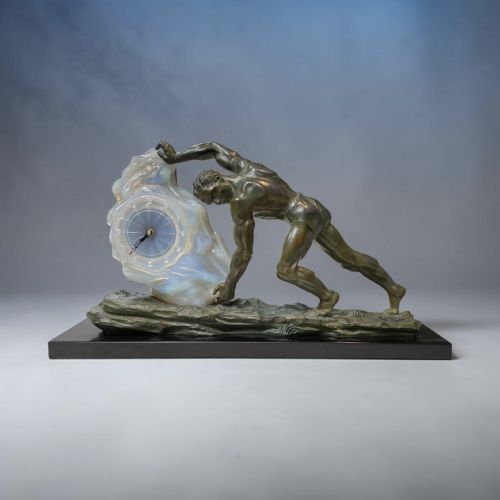
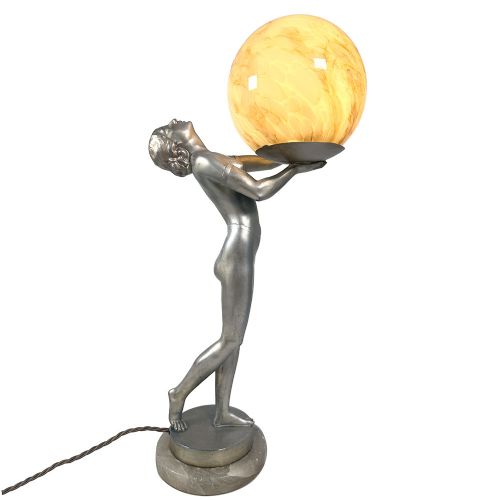
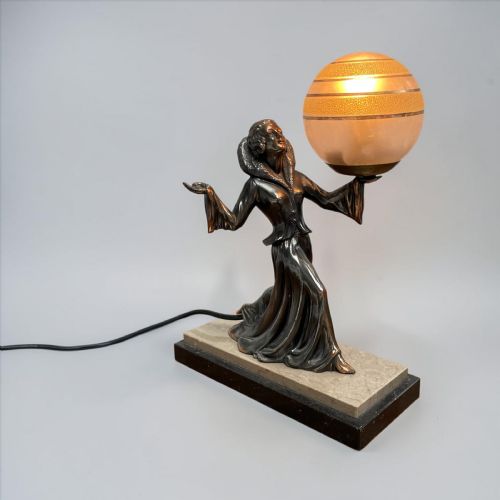
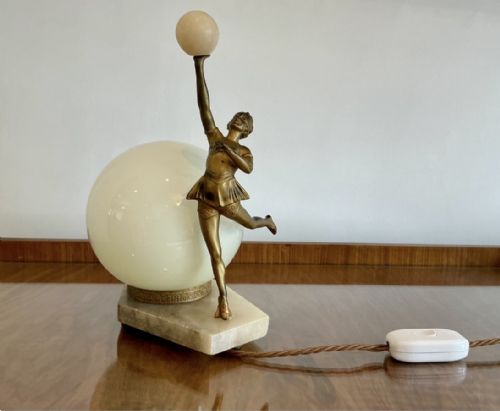
When searching for art deco figural glass, buyers encounter a selection dominated by table lamps, vases, and decorative statues that incorporate human or animal figures. The pieces on this page span the 1920s, 1930s, and 1940s, capturing the transition from ornate styling toward streamlined modernist forms.
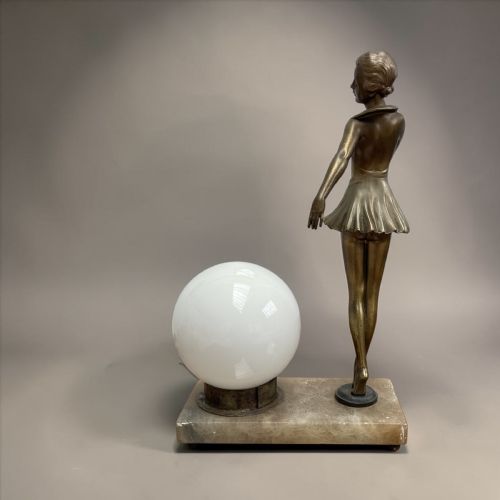
The most common form met here is the figural table lamp, where frosted or coloured glass is combined with metal bases to illuminate a central character. Alongside lamps, collectors find figural vases, comports, and desk inkwells that integrate sculptural elements into functional homeware.
Origins stretch across Britain, France, and Czechoslovakia, reflecting international production methods of the interwar period. French Neoclassical influences appear alongside bolder geometric Art Deco designs, uniting classical motifs with modern materials.
Distinctions in quality
Material selection separates standard production from superior pieces, with genuine bronze and heavy marble outlasting softer spelter and lighter stone. The clarity and colour saturation of the glass, whether peach, blue, or frosted, dictate the visual depth of the object.
Art Deco Figural Glass Retail Price Guide 2026
Typical asking prices for art deco figural glass among the pieces listed under this phrase on Sellingantiques today, from the lower quarter to the upper quarter. They describe what is for sale here now, not the wider market.
A cast gilded bronze chick with glass eyes occasionally watches over a desk from inside an inkwell.
Libochovice·Karl Ens·Anton Buschelberger·Baccarat·Walther and Sohne
The Art Deco Figural Glass Glossary
- Spelter
- A zinc-lead alloy commonly utilised as a substitute for bronze in decorative metalwork. It takes fine detail well but requires careful handling due to its brittle nature.
- Frosted glass
- Glass treated to create a translucent surface that diffuses light evenly. This technique softens the glow of table lamps and highlights moulded figural contours.
- Comport
- A decorative bowl raised on a high foot, used for serving fruit or as a centrepiece. In this inventory, comports incorporate figural glass designs into their structure.
- Patinated metal
- Metal treated with chemicals or heat to alter its surface colour and finish. This process creates darker, protective tones that accent the sculptural lines.
Art Deco Figural Glass: Frequently Asked Questions
Where were these glass pieces made?
Production centres span several European countries, including Britain, France, and Czechoslovakia. Each region brought distinct glassmaking traditions and metalworking techniques to the designs.
French workshops frequently utilised fine crystal and bronze, while Czech makers focused on coloured and pressed glass vessels.
How do I style a figural lamp?
These pieces function well as accent lighting on sideboards, desks, or mantelpieces. Their sculptural qualities allow them to act as standalone decorative art when unlit.
Pronounced bases of marble or chrome require stable surfaces that complement their substantial weight and industrial materials.
What materials make up these objects?
Primary components include moulded glass, frosted glass, and crystal combined with structural metalwork. Spelter, brass, bronze, and chrome provide the framework for the figures.
Bases are frequently weighted with solid marble or onyx to support the height of the figural compositions.