




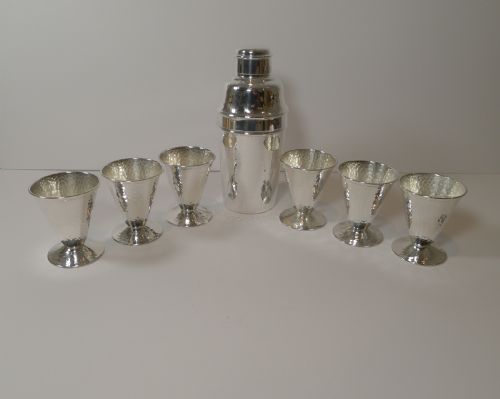
Art Deco Drinkware
Art deco drinkware brings geometric elegance and cocktail glamour to the home, making these stylish vessels essential for entertaining with period flair.
Art Deco Drinkware
When you search for art deco drinkware, you are looking at barware and glassware designed to capture the modernist spirit of the interwar decades. The pieces gathered here span the nineteen twenties, thirties, and forties, reflecting international tastes from France, Britain, Japan, and Czechoslovakia.
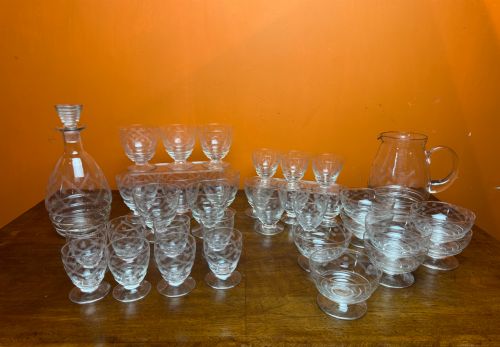
The most common forms you will meet on this page are cocktail shakers, decanter sets, and matched suites of drinking or liqueur glasses. These items range from compact spirit flasks to large suites containing dozens of engraved glasses for formal hosting.
Origins vary from European silver plate workshops to Japanese lacquer studios and Finnish glassworks. Each piece embodies the distinct aesthetic priorities of the interwar period, combining functionality with striking visual geometry.
How they were made
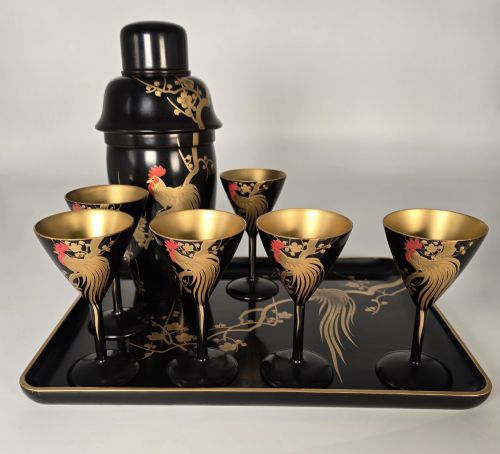
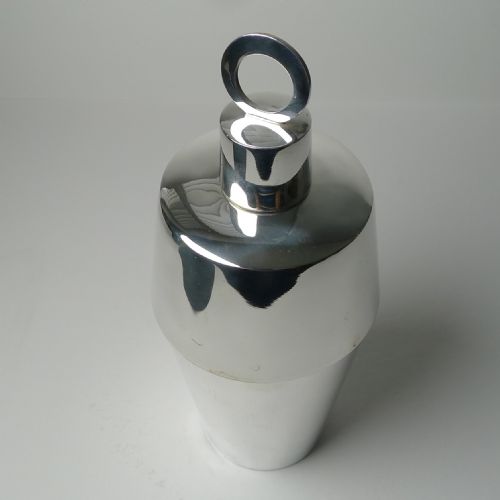
Makers of art deco drinkware utilised materials such as silver plate, EPNS, clear glass, and carved or engraved crystal alongside organic elements like wood and hand painted lacquer. Metal components were shaped, hammered, and plated to achieve high-contrast metallic sheens.
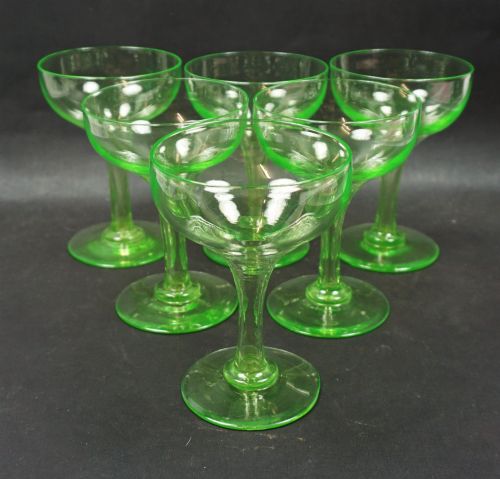
Glassware benefited from advanced techniques like vine etching and hand painting, creating crisp surface patterns that catch the light. Artisans applied gold leaf and coloured glass elements, such as the vibrant tones seen in tango liqueur glasses, to heighten the visual impact of each vessel.
Art Deco Drinkware Retail Price Guide 2026
Typical asking prices for art deco drinkware among the pieces listed under this phrase on Sellingantiques today, from the lower quarter to the upper quarter. They describe what is for sale here now, not the wider market.
Materials recorded across the inventory include silver plate, EPNS, clear glass, engraved glass, wood, lacquer, and gold leaf.
What varies in quality
Quality in art deco drinkware rests on the harmony of design execution, the crispness of applied decoration, and the weight of the materials. Master silversmiths and established Parisian plating houses achieved balanced proportions and secure fittings that lesser workshops missed.
In glassware, the depth and precision of engraved decoration or the saturation of coloured glass determine the grade of the piece. Complete cased sets with matched components command greater attention than assembled groups, as original factory pairings demonstrate unified design intent.
Maison Barra·William Hutton·Riihimaki·St. Medard
The Art Deco Drinkware Glossary
- EPNS
- Electroplated Nickel Silver. A base metal alloy coated with a thin layer of silver, commonly found on metal barware from this era.
- Tango
- A vibrant colour style associated with twentieth-century glassware, typically featuring striking orange and black contrasts.
- Decanter set
- A matched ensemble consisting of a stoppered bottle and a group of small drinking vessels used for serving spirits.
- Hammered silver plate
- A surface finish beaten by hand or machine to create dimpled textures that catch ambient light.
- Liqueur glass
- A small stemmed or footed drinking vessel designed specifically for holding concentrated after-dinner spirits.
Art Deco Drinkware: Frequently Asked Questions
What is art deco drinkware?
Art deco drinkware encompasses functional vessels, barware, and glassware produced during the interwar period, typically between the nineteen twenties and forties. These pieces emphasise geometric lines, modern materials, and sophisticated entertaining.
Items range from silver plated cocktail shakers to large suites of engraved drinking glasses and Japanese lacquer cocktail sets.
How do I use these pieces?
Many collectors use these vintage vessels for serving cocktails, spirits, and liqueurs during gatherings, bringing authentic period atmosphere to modern entertaining. Decanter sets and cocktail shakers function just as they did a century ago.
Careful hand washing preserves fragile elements like gold leaf, lacquer, and delicate glass etching over decades of regular use.
How do I date art deco drinkware?
Dating relies on stylistic markers, maker marks, and material combinations typical of specific decades between 1920 and 1940. Pieces from the twenties often feature bold experimental colours, while thirties designs lean toward streamlined silver plate and heavy crystal suites.
Maker stamps and country of origin signatures stamped onto metal bases or etched into glass further narrow down the exact manufacturing window.
Where were these items made?
These items originated across multiple international design centres, notably France, Britain, Czechoslovakia, Finland, and Japan. Each region applied distinct local manufacturing traditions to the overarching modern aesthetic of the era.
French ateliers focused heavily on luxury silver plate barware, while Scandinavian and Czech workshops excelled in decorative art glass.