







Art Deco Drinking Set
An art deco drinking set brings the spirited design of the interwar years straight to the modern bar.
Art Deco Drinking Set
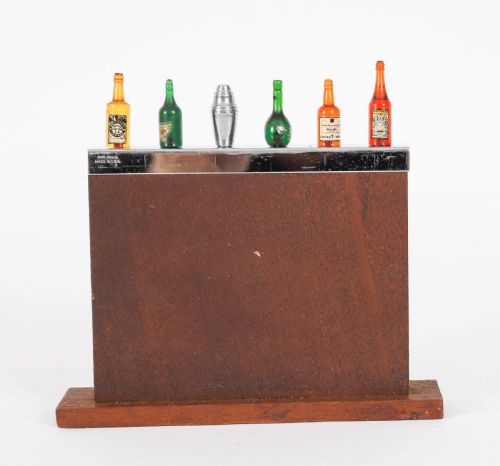
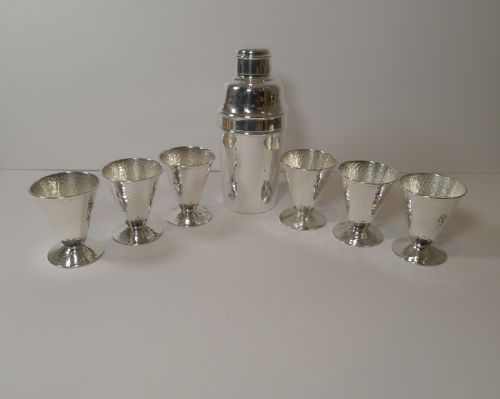
An art deco drinking set covers everything from comprehensive cocktail shaker and beaker assemblies to French glass suites and novelty stick collections. You will frequently encounter silver plated shaking vessels paired with matching cups, alongside colourful Czech glass drinks sets designed for home entertaining.
The objects span barware, liqueur services, and specialised accessories created during the 1920s, 1930s, and 1940s. Makers and designers of the period utilised clean lines and geometric arrangements to transform everyday hospitality into a stylish ritual.
Materials and construction
Makers shaped silver plate, sterling silver, and gleaming chrome into functional barware forms, often applying engine-turned decoration to add texture and catch the light. Glass components include clear glass and etched French suites, while plastic, Bakelite, and enamel provide sharp colour contrast.
Wood appears in supporting furniture forms such as nests of tables designed to accompany the service. Metal elements are soldered or cast, and novelty pieces like cocktail sticks feature detailed figurative elements.
Art Deco Drinking Set Retail Price Guide 2026
Typical asking prices for art deco drinking set among the pieces listed under this phrase on Sellingantiques today, from the lower quarter to the upper quarter. They describe what is for sale here now, not the wider market.
A cheerful 'Cherry Man' by Sudre stands ready to spear your olives with undeniable French flair.
Judging quality and execution
Quality rests on the integrity of the materials and the precision of the surface decoration, such as deep engine-turning on silver plate or crisp engraving on French glassware. Maker attribution, whether associated with firms like Mappin & Webb or designers like Jacques Adnet, distinguishes standard production from exceptional studio work.
The completeness of a service and the survival of fragile elements like enamel insets or matching beakers also determine the standing of a piece within its type.
Harry and Lou Epstein·Sudre·Elkington·Jacques Adnet·Maison Barra·Mappin & Webb Keith Murray
The Art Deco Drinking Set Glossary
- Engine-turned
- A mechanical decoration technique that cuts intricate, geometric patterns into metal surfaces using a lathe. This finish provides both visual depth and tactile grip on cocktail shakers.
- Tantalus
- A locking beverage frame that displays decanters while preventing unauthorized access to the contents. They are typically constructed from chrome, glass, and wood.
- Bakelite
- An early form of synthetic plastic prized for its durability and rich colour range. It frequently appears on handles and bar set fittings from the 1940s.
- Demitasse
- A small cup used for serving strong coffee or liqueurs after a meal. These often form part of a larger matched service alongside small-scale glassware.
Art Deco Drinking Set: Frequently Asked Questions
What is included in an art deco drinking set?
These sets typically comprise a combination of cocktail shakers, beakers, jugs, and serving trays in silver plate or glass. Some configurations extend to specialised pieces like novelty cocktail stick holders and liqueur services.
Compositions vary widely depending on whether the service was intended for a formal dining room or a portable home bar.
How do I care for silver plated barware?
Silver plated items require gentle hand washing with mild soap and soft cloths to preserve the metallic finish. Avoid abrasive pads or harsh chemical dips that can strip the plating over time.
Proper drying immediately after washing prevents water spots from forming on the engine-turned or polished surfaces.
Are these sets suitable for everyday use?
Most pieces are robust enough for occasional entertaining if handled with care, particularly items made from thick glass or sturdy chrome. However, fragile enamel work and delicate French engraved glassware are better reserved for display or careful handling.
Checking the internal condition of shakers and tantalus frames ensures they remain functional for beverage preparation.
How can I identify 1930s barware?
Look for characteristic modernist motifs, streamlined geometric forms, and the combination of chrome with glass or Bakelite. Signature materials like silver plate and specific fabrication techniques such as engine-turning point directly to the interwar decades.
Maker marks stamped onto the base of silver plated items or attributed styling can also help confirm the period of origin.