




Art Deco Dining Credenza
An art deco dining credenza anchors a room with bold geometric presence and generous storage, bringing period sophistication to any dining space.
Art Deco Dining Credenza
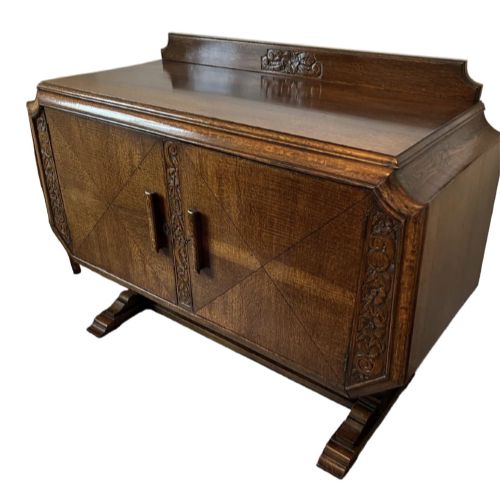
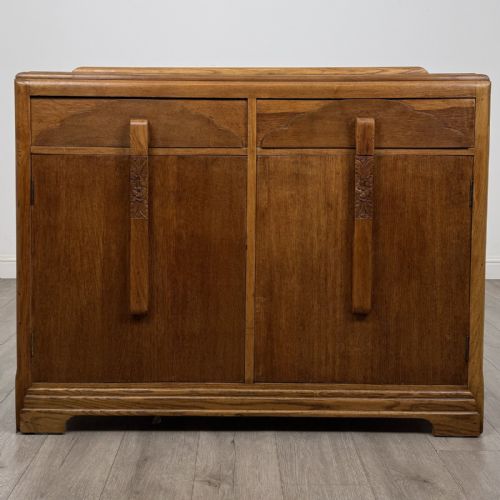
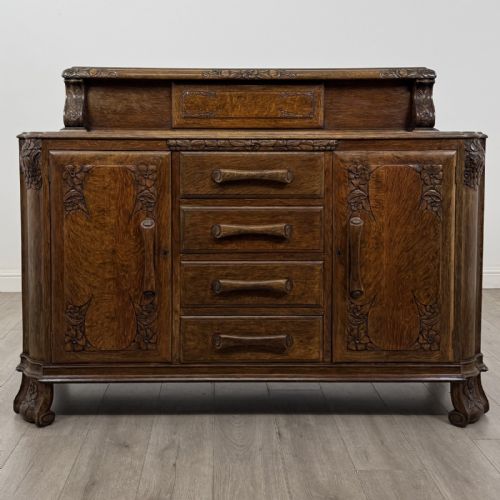
An art deco dining credenza primarily takes the form of a sideboard or buffet, designed for storing dining china and serving food. These pieces emerge predominantly from the 1920s and 1930s periods, embodying the design ethos of the interwar decades.
The versions you encounter here span English, French, and Italian origins, ranging from compact cabinets to large serving tables. Makers and retailers such as Maurice Adams, Hille, Heal's, and Epstein produced substantial storage units that dominate a dining room.
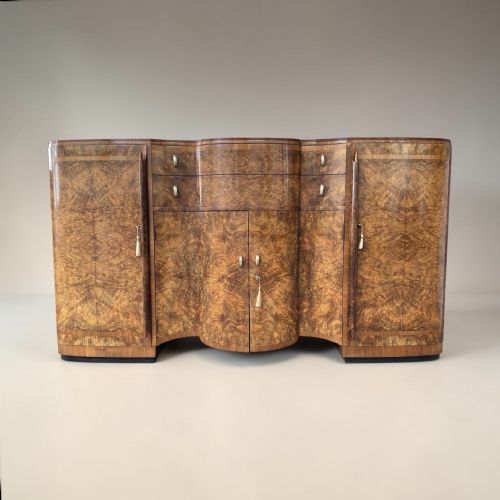
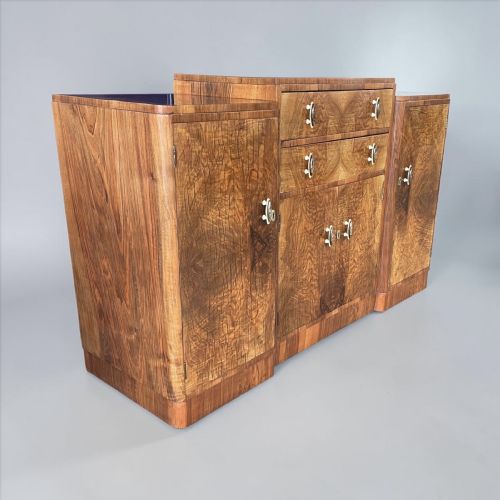
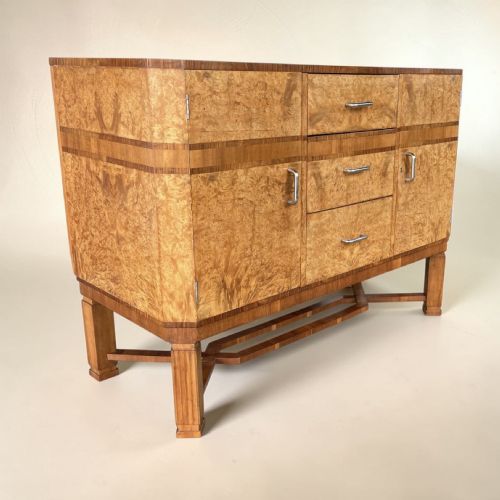
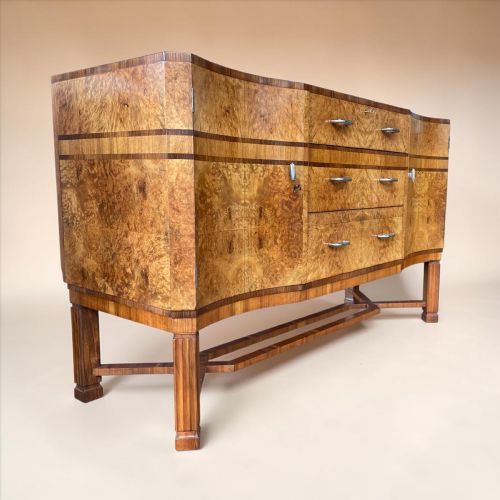
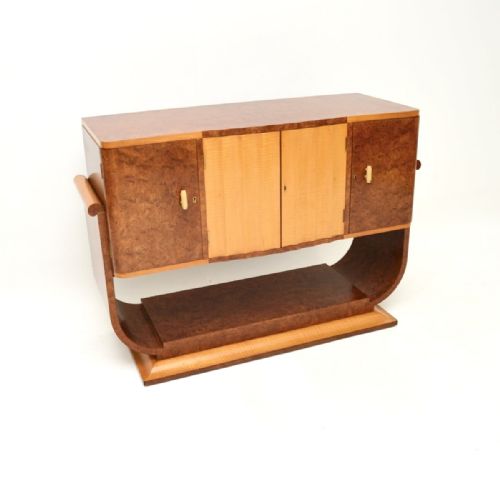
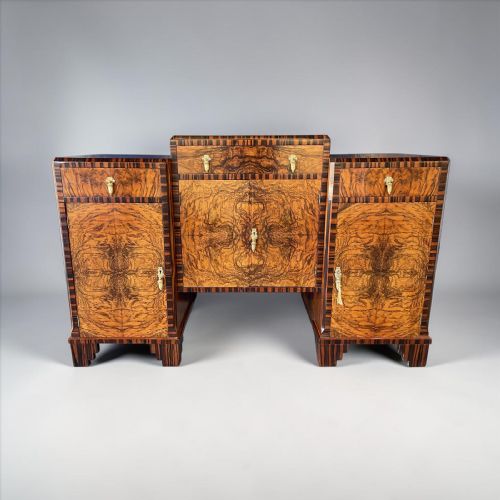
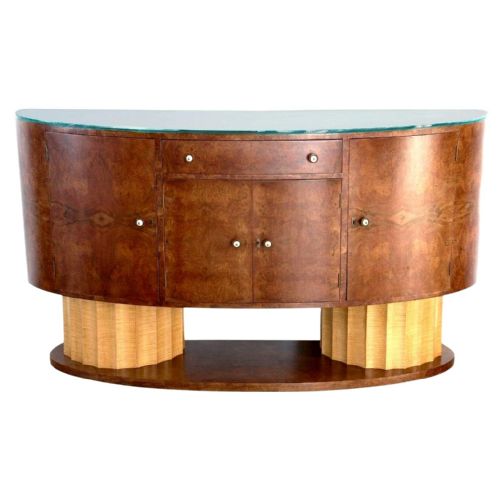
Sideboards and credenzas function as both practical storage and sculptural centrepieces. The selection reflects diverse interpretations of the style, from straightforward walnut cabinetry to serpentine forms inlaid with contrasting timbers.
How they were made
Cabinet makers utilised choice timbers, laying burr walnut, walnut veneer, mahogany, maple, and oak over sturdy hardwood carcases. Contrasting light woods such as sycamore often highlight geometric door panels and drawer fronts.
Metal elements including brass mounts, handles, and occasional bakelite details accent the wooden structures. Glazed sections and limed finishes appear alongside polished walnut to create varied textures across the front elevation.
Art Deco Dining Credenza Retail Price Guide 2026
Typical asking prices for art deco dining credenza among the pieces listed under this phrase on Sellingantiques today, from the lower quarter to the upper quarter. They describe what is for sale here now, not the wider market.
The furniture spans the 1920s and 1930s periods, originating from English, French, and Italian workshops.
What varies in quality
The distinction in quality rests upon the selection of wood veneers and the complexity of the cabinetwork. Pieces bearing attribution to known workshops demonstrate superior timber matching and more ambitious structural silhouettes.
Figured veneers like burr walnut require exceptional skill in book-matching across large cupboard doors. The integration of auxiliary materials such as brass and sycamore inlay further separates standard production from exceptional cabinet making.
Maurice Adams·Hille·Heals of London·Harry and Lou Epstein·Hamptons of Pall Mall London
The Art Deco Dining Credenza Glossary
- Burr walnut
- A wood veneer showing swirling, knotty grain patterns harvested from the growths of walnut trees. It creates highly decorative patterns across large cabinet doors.
- Credenza
- A sideboard or buffet cabinet traditionally used for dining room storage and serving. The form provides enclosed cupboard space and surface area.
- Serpentine
- A furniture front or edge shaped with a curving, concave-convex-concave contour. It adds fluid motion to the rigid geometry typical of the period.
- Limed oak
- Timber treated with a specialised finish that leaves a white pigment in the open grain. The process lightens the natural tone of the oak.
Art Deco Dining Credenza: Frequently Asked Questions
How do I use an art deco dining credenza?
These cabinets serve as practical storage for tableware, linens, and dining accessories while providing a surface for serving food. Their large proportions make them the visual anchor of a dining room.
They also function well in large hallways or living spaces as display and storage units. The interior compartments accommodate modern storage needs alongside period charm.
What is the difference between a sideboard and a credenza?
The terms are often used interchangeably to describe low storage cabinets used in dining rooms. Traditional sideboards typically feature cupboards and drawers across a broad base.
Credenzas share this storage purpose, though regional styles in France and Italy introduced distinct serpentine shapes and specific leg configurations.
How do I date an art deco credenza?
Dating relies on stylistic markers and construction methods associated with the 1920s and 1930s. Pieces from this era often utilise specific veneers like burr walnut alongside brass and bakelite hardware.
Maker marks, stamps, or labels inside drawers provide definitive attribution to firms active during the interwar period. The presence of limed oak or mahogany further helps place the piece within its decade of manufacture.
How do I care for walnut veneer?
Walnut veneer requires protection from direct sunlight and excessive moisture to prevent fading and warping. Regular dusting with a soft, dry cloth preserves the polished finish.
Conditioning the wood periodically with appropriate furniture wax maintains the depth of the grain. Avoid placing hot dishes directly on the wooden top surface.