


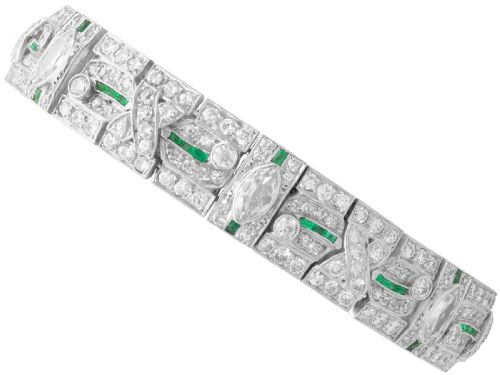


Art Deco Diamond Line Bracelet
An art deco diamond line bracelet brings crisp geometric rhythm and brilliant old-cut stones to the wrist in a timeless piece of jewellery.
Art Deco Diamond Line Bracelet
An art deco diamond line bracelet is a continuous chain of precious stones, most frequently set in platinum and dating from the 1920s and 1930s. These pieces combine rigorous geometric layouts with flexible links designed to drape fluidly around the wrist.
While the core of the selection belongs to the Art Deco period, related examples from the 1940s Retro and mid-century eras also appear. These later iterations often introduce warmer metals or bolder stone groupings while maintaining the continuous line format.
How they were made
Platinum serves as the primary metal for the earliest and most intricate examples, valued for its strength in holding tight diamond settings without bulk. Yellow gold, white gold, and rose gold appear across various pieces, particularly in examples from subsequent decades.
Master jewellers employed precise stone cutting, notably old-cut diamonds paired with calibrated sapphires, emeralds, and rubies. Individual links were articulated by hand to ensure the entire band moves smoothly.
The listings encompass items fashioned from platinum, yellow gold, white gold, and rose gold, spanning the 1910s to the 1960s.
What varies in quality
Quality rests on the uniformity and brilliance of the diamond selection, along with the precision of the platinum or gold metalwork. Superior pieces display seamless articulation between links and balanced gemstone proportions that maintain visual harmony from end to end.
The presence of secondary gemstones, such as matched sapphires or emeralds, adds another layer of distinction. Masterful French manufacturing or certified stones elevate certain examples above standard production.
The Art Deco Diamond Line Bracelet Glossary
- Line bracelet
- A flexible bracelet featuring a continuous line of gemstones, often diamonds, set in precious metal. This design is also frequently referred to as a tennis bracelet.
- Old-cut diamond
- A diamond cut by hand before modern machinery, characterised by a smaller table, higher crown, and broad facets that produce a soft, candlelight sparkle. These stones define genuine pieces from the early decades of the twentieth century.
- Platinum
- A dense, durable, and naturally white metal utilised extensively during the Art Deco period. It permitted delicate, lace-like metalwork that securely held numerous small diamonds.
- Collet setting
- A mounting style where a thin collar of metal encircles the girdle of a gemstone. This technique holds stones securely while exposing their sides to the light.
- Calibrated
- Gemstones cut to exact, uniform dimensions to fit specific geometric channels or borders within a design. This method is common in the arrangement of accent sapphires and emeralds.
Art Deco Diamond Line Bracelet: Frequently Asked Questions
What is an art deco diamond line bracelet?
An art deco diamond line bracelet is a flexible wrist ornament featuring a continuous row of diamonds, typically mounted in platinum. These items originated during the interwar years and are celebrated for their geometric design language.
Over time, similar flexible stone arrangements continued into the 1940s and mid-century periods, sometimes incorporating gold and coloured stones like sapphires or emeralds alongside the diamonds.
How do I date an art deco bracelet?
Dating relies on stylistic markers, metal choices, and stone cuts characteristic of specific decades. Pieces from the 1920s often feature platinum settings with intricate pierced work and old-cut diamonds.
Later decades, such as the 1940s and 1950s, introduced heavier yellow or rose gold settings and varied stone configurations. Hallmarks and maker signatures, when present, provide additional chronological guidance.
Can I wear a line bracelet daily?
These bracelets are designed for regular wear, provided the settings are secure and handled with reasonable care. Platinum and gold constructions from this era are robust, though vintage clasps and safety chains require periodic inspection by a jeweller.
Because antique stones and settings have age, storing the piece in a dedicated box prevents friction against other items of jewellery.
What is the difference between old-cut and modern diamonds?
Old-cut diamonds were shaped by hand rather than by modern automated machinery. They typically feature smaller tables, higher crowns, and larger facets that create a distinctive, subdued sparkle under varied lighting.
Modern stones prioritise brilliant-cut geometry designed for maximum white light return. Finding old-cut stones in these bracelets confirms their period authenticity.