




Art Deco Desk Set
An art deco desk set brings the geometric order of the interwar study to life through striking combinations of stone and metal.
Art Deco Desk Set
An art deco desk set encompasses matched desk accessories, inkstands, clock and garniture combinations, and writing cases produced during the early twentieth century. Buyers seeking an art deco desk set will encounter pieces spanning the 1910s to the 1930s, reflecting both late Art Nouveau transitions and full Streamline Moderne aesthetics.
Forms vary from simple green onyx desk stands and lapis-inlaid inkstands to elaborate clock sets featuring spelter animal figures, such as greyhounds, panthers, and German shepherds. Many examples integrate multiple instruments, pairing timepieces with barometers, thermometers, or matching ink pots within a unified architectural base.
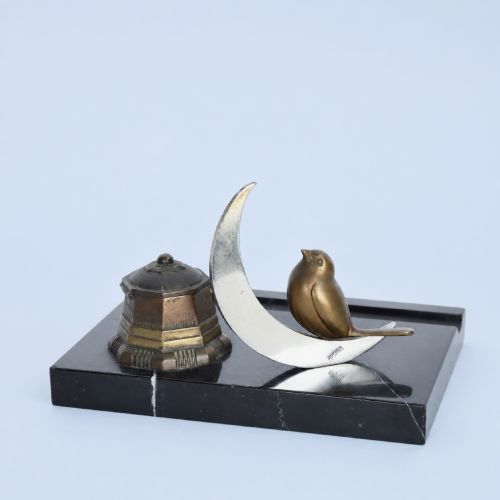
Origins stretch across English workshops and French studios, with distinct regional preferences for materials like black marble, shagreen, and bronze. Whether formed as a compact desk tidy with a bird motif or a larger bureau suite, these groupings served both utilitarian writing needs and decorative display.
Materials and construction
Makers utilised heavy natural stones like black marble and green onyx as the foundational plinths for inkstands and clock garnitures, cutting and polishing them to sharp geometric profiles. These stone bases often incorporated contrasting inlays of lapis or exotic woods to accentuate the linear rhythms characteristic of the period.
Metal elements relied on cast bronze, brass, and spelter, frequently shaped into stylized animal sculptures or modernist clock surrounds. Details like shagreen, crocodile leather, and glass added tactile contrast to the hard surfaces of the stone and metal components.
Art Deco Desk Set Retail Price Guide 2026
Typical asking prices for art deco desk set among the pieces listed under this phrase on Sellingantiques today, from the lower quarter to the upper quarter. They describe what is for sale here now, not the wider market.
German shepherds, panthers, and even Pierrot clowns keep permanent watch over these interwar inkwells and clocks.
Assessing quality and execution
The distinction between standard commercial pieces and finer work lies in the integration of materials and the precision of the casting. Superior examples feature crisp detailing in metal sculptures, tightly fitted stone joints, and original matching ink pots or thermometers that complete the composition without mismatched components.
Artistic collaboration elevates certain sets, particularly when recognised sculptors provided the metal figures mounted upon the marble or onyx bases. The harmony between the functional desk pieces and the decorative garniture elements determines the overall coherence and desirability of the ensemble.
Rowley Gallery·Michel Decoux·Joseph Lucas Ltd·Zimmermann
The Art Deco Desk Set Glossary
- Spelter
- An alloy of zinc and lead often used as a cost-effective alternative to bronze for figures and decorative mounts. It was frequently painted or electroplated to simulate more expensive metals.
- Garniture
- A set of ornamental objects, typically a clock flanked by matching side pieces such as vases, candelabra, or barometer units. On a desk or mantel, these pieces share a unified material and stylistic theme.
- Onyx
- A banded variety of chalcedony prized for its smooth, translucent layers in green, brown, or honey tones. It formed a popular heavy base material for desk sets and clocks.
- Shagreen
- Untanned leather with a rough, granulated surface, traditionally prepared from shark or ray skin. It was dyed in various colours and applied to boxes, lighters, and writing accessories.
- Inkstand
- A fitted tray or stand holding inkwells, pen rests, and sometimes a sander or wafer box. These desk accessories served as the central writing station before the widespread adoption of fountain pens.
Art Deco Desk Set: Frequently Asked Questions
What items are included in a typical desk set?
A standard desk set often brings together an inkstand with original glass pots, a pen tray, and sometimes a matching blotter or letter opener.
More elaborate configurations include clock and barometer combinations or matching cigarette boxes and table lighters designed in the same stone or metal.
How do I care for marble and onyx desk pieces?
Natural stone surfaces require gentle cleaning with a soft, dry cloth to remove dust without scratching the polished finish.
Avoid using harsh chemical cleaners or excess water, which can seep into unsealed stone joints or damage inlaid metal and leather elements.
Are the ink pots usually original to the stand?
Many surviving inkstands retain their original glass or crystal inserts with matching hinged metal lids, which is preferred by collectors.
Replacement liners do occur due to breakage over time, so checking the fit and glass characteristics helps determine originality.
How can I distinguish 1920s pieces from 1930s pieces?
Pieces from the 1920s frequently retain lingering Art Nouveau curves or feature whimsical animal sculptures like dogs and pierrots cast in spelter or bronze.
By contrast, 1930s Streamline Moderne and later art deco items lean toward starker architectural geometry, stepped marble plinths, and streamlined glass or chrome elements.