
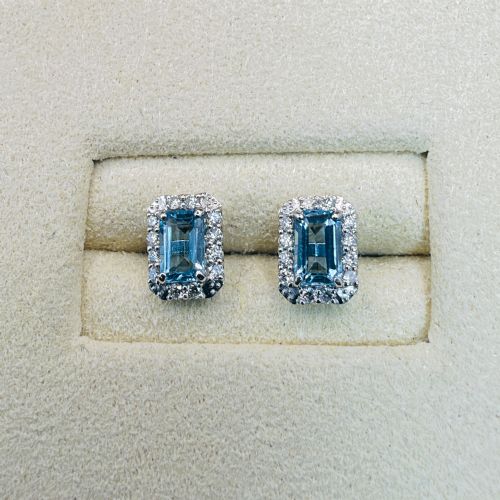


Art Deco Cluster Earrings
Art deco cluster earrings combine geometric symmetry with brilliant centre stones, offering collectors wearable pieces of 1930s design.
Art Deco Cluster Earrings
Art deco cluster earrings present a central gemstone framed by smaller surrounding stones in geometric layouts. These designs originate predominantly from the 1930s, alongside related Edwardian and mid-century examples.
Earrings in this selection take the form of stud earrings, drop earrings, and dangle earrings. Many pairs utilise a cluster formation to maximise the visual impact of diamonds, sapphires, emeralds, and aquamarines.
The aesthetic focuses on clean lines and structured patterns, often arranging stones in daisy shapes or target motifs. Collectors encounter both platinum settings and combinations of 18ct white gold with yellow gold accents.
How they were made
Platinum and 18ct white gold provide the durable metallic frameworks required to hold intricate stone arrangements securely. These metals allow for fine claw settings and millegrain edges that define the period style.
Goldsmiths combined precious metals with old cut, transitional cut, and rose cut diamonds alongside collet-set coloured gemstones. Enamel and paste appear in specific nineteenth-century pieces within the selection.
Screwbacks hide quietly behind lobes while nineteenth-century paste glints under candlelight.
What varies in quality
Quality rests in the precision of the metalwork and the uniformity of the stone matching. Superior examples display balanced proportions between the central stone and the surrounding cluster.
The choice of metal influences the calibre of the piece, with platinum and high-carat white gold settings representing the standard for fine examples. Gemstone clarity and colour saturation further distinguish the finer pieces from standard production.
The Art Deco Cluster Earrings Glossary
- Cluster earrings
- A style featuring a central gemstone surrounded by a border of smaller stones. This arrangement creates a larger visual presence on the earlobe.
- Platinum
- A dense, durable white metal utilised extensively in fine jewellery fabrication during the 1930s. Its strength permits delicate claw work.
- Old cut diamond
- A diamond cut by hand before modern machinery, characterised by a high crown and small table. These stones produce a distinctive softer light.
- Target cluster
- A concentric circular design reminiscent of a target, often pairing a central sapphire or ruby with diamond borders. This pattern remains typical of the period.
- Millegrain
- A decorative technique involving a row of tiny bead-like metallic dots along the edges of a setting. It provides a soft textural border to geometric lines.
Art Deco Cluster Earrings: Frequently Asked Questions
What periods do these earrings come from?
Pieces span from the nineteenth century through the Edwardian era to the 1930s and 1950s. The majority originate from the 1930s art deco period.
Earrings from this era display distinct geometric structures and platinum or white gold configurations.
Are these earrings for pierced ears?
Most options use standard post or drop fittings suited for pierced ears. Historical pieces occasionally feature screwbacks or specialised mechanisms.
Buyers should examine the specific fastening type noted in individual descriptions.
How do I care for antique cluster earrings?
Gentle cleaning with warm soapy water and a soft brush maintains the metal and stone brilliance. Ultrasonic cleaning requires caution with treated or softer gemstones.
Store pieces separately to prevent scratching among the cluster settings.