



Art Deco Clothing Cabinet
An art deco clothing cabinet offers striking geometric grain and generous storage, bringing unmistakable modernist elegance directly into your bedroom.
Art Deco Clothing Cabinet
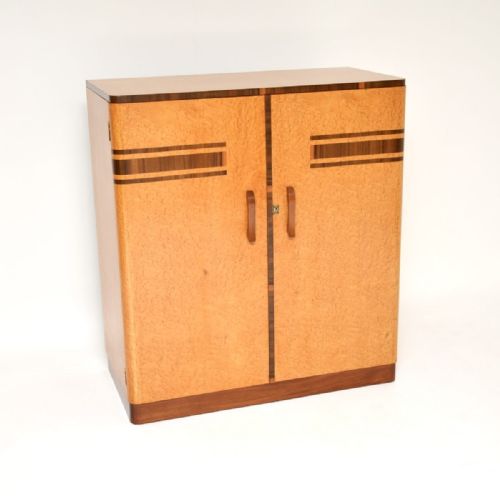
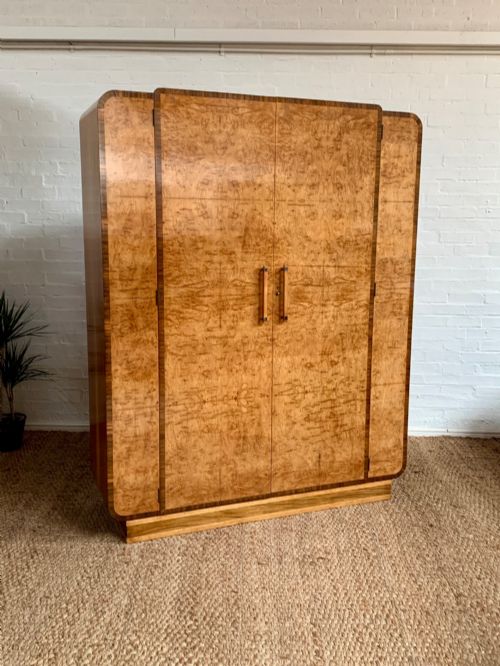
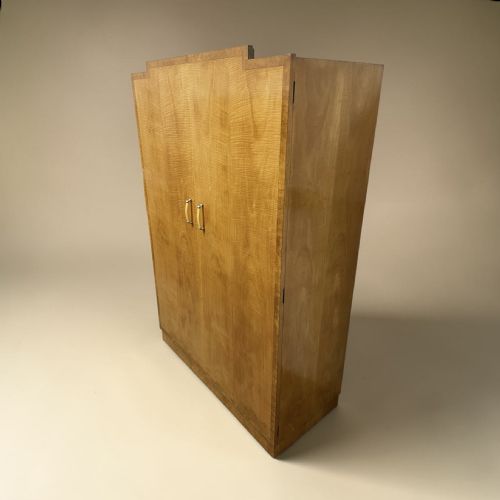
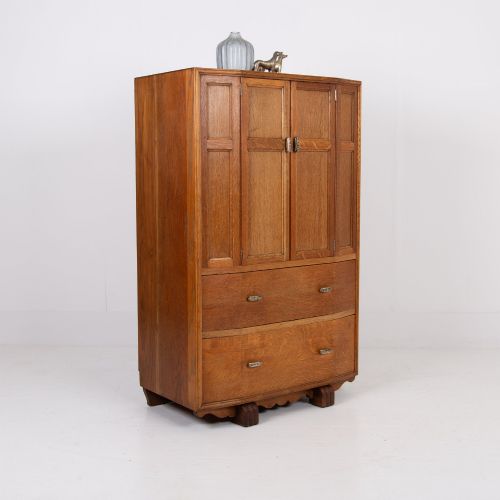
When you search for an art deco clothing cabinet, you are looking at substantial storage furniture built primarily during the 1920s and 1930s, alongside a few pieces from the 1910s and later revivals. These pieces function as wardrobes, double wardrobes, and compactum wardrobes designed to organise attire efficiently behind grand panelled doors.
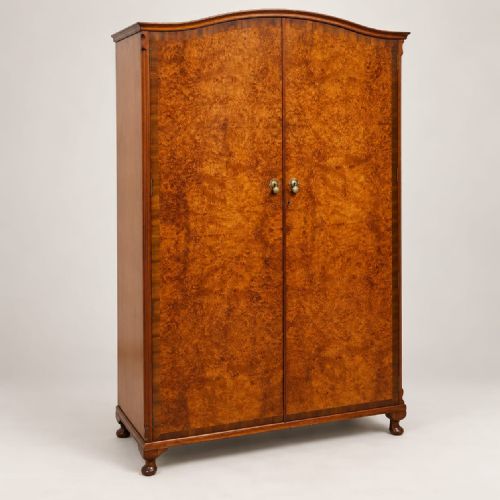
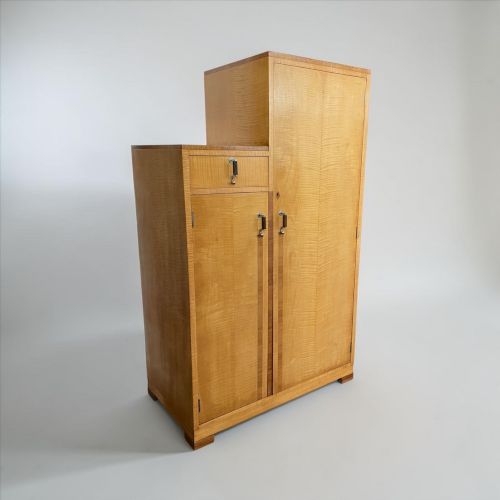
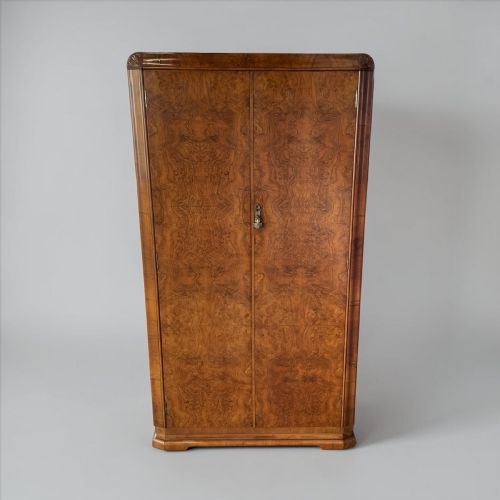
The versions you are most likely to meet on this page are finished in rich veneers of walnut, burr walnut, and birds-eye maple, often accented with contrasting timber or brass fittings. Their silhouettes range from restrained early twentieth-century forms to bold, architecturally massed modernist designs characteristic of the interwar period.
Materials and construction
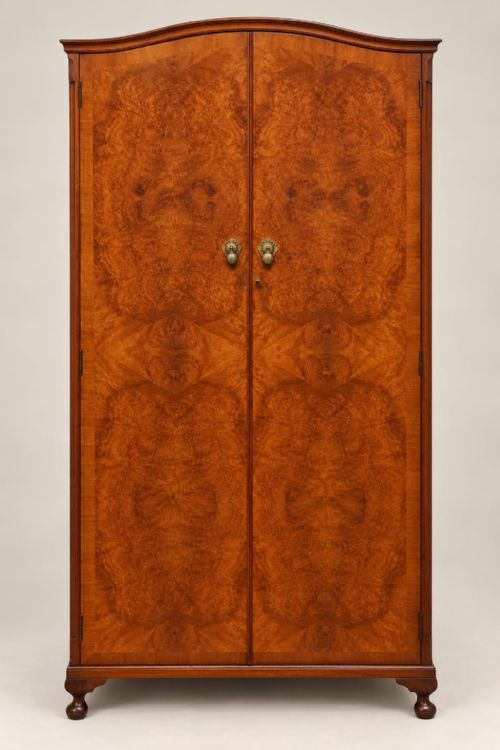
Cabinet makers utilised structural timber frames overlaid with carefully selected hardwood veneers, most notably burr walnut and birds-eye maple, to create symmetrical, highly figured patterns across the large front surfaces. These grain patterns define the aesthetic impact of each wardrobe, relying on book-matching techniques to produce dramatic visual mirroring.
Hardware details such as brass handles and occasional bakelite elements provide functional contrast to the polished wooden bodies. Construction methods focused on durability and clean lines, concealing interior compartments, hanging rails, and fitted shelving behind flush, heavy doors.
Art Deco Clothing Cabinet Retail Price Guide 2026
Typical asking prices for art deco clothing cabinet among the pieces listed under this phrase on Sellingantiques today, from the lower quarter to the upper quarter. They describe what is for sale here now, not the wider market.
Listings feature pieces spanning three decades from 1910 to 1930, constructed predominantly in walnut, burr walnut, and birds-eye maple.
Assessing quality and craftsmanship
The distinction between standard production and top-tier pieces rests heavily on the selection and application of the veneer. Superior examples display unbroken, mirrored grain across multiple doors, whereas lesser pieces utilise plain timber or simpler veneer cuts with less visual depth.
Attribution also shifts the standing of a piece, with designated makers commanding attention through superior internal carpentry, bespoke fittings, and heavier gauge hardware. The precision of the joinery and the integrity of the polished finish further separate mass-market items from master-workshop production.
Waring and Gillow·Harry and Lou Epstein
The Art Deco Clothing Cabinet Glossary
- Burr walnut
- A prized timber veneer harvested from the wart-like growths on walnut trees, yielding swirling, knotty grain patterns. It creates a rich, decorative surface texture on high-end interwar furniture.
- Compactum wardrobe
- A multi-functional clothing cabinet containing a combination of hanging space, drawers, and shelving within a single unit. This layout maximises internal storage for various types of attire.
- Birds-eye maple veneer
- A pale wood sliced to reveal small, circular disruptions in the grain that resemble tiny eyes. This timber provides a bright, contrasting element against darker woods like walnut.
- Bakelite
- An early synthetic thermosetting plastic utilised for handles and decorative trim on mid-century design pieces. Its dark, lustrous finish complements polished wood surfaces.
- Veneer
- A thin layer of superior wood glued to a base timber foundation to give the appearance of solid luxury material. Book-matching these sheets produces symmetrical patterns across wardrobe doors.
Art Deco Clothing Cabinet: Frequently Asked Questions
What is a compactum wardrobe?
A compactum wardrobe is a specialised clothing cabinet designed to house hanging garments, folded clothes, and drawers within one consolidated frame.
This all-in-one storage approach provides efficient organisation without requiring multiple separate bedroom furniture pieces.
How do I care for walnut veneer?
Walnut veneer requires protection from direct sunlight and excessive humidity to prevent the wood from fading or the glue beneath from failing.
Dust regularly with a dry cloth and occasionally apply a suitable wax polish to maintain the sheen.
Are these wardrobes easy to dismantle?
Many large interwar wardrobes were constructed as single solid units rather than knock-down furniture, meaning they require careful measurement for moving.
Professional removalists experienced with heavy cabinet furniture are recommended for safe transport and installation.
How do I distinguish 1920s pieces from later revivals?
Pieces from the 1920s and 1930s exhibit authentic construction methods, period timber selections, and original hardware fittings true to the modernist movement.
Revival pieces often utilise modern internal mechanisms and contemporary adhesives despite mirroring historical exterior styling.