

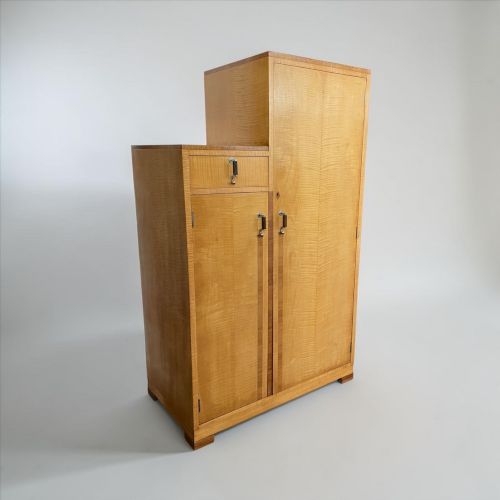
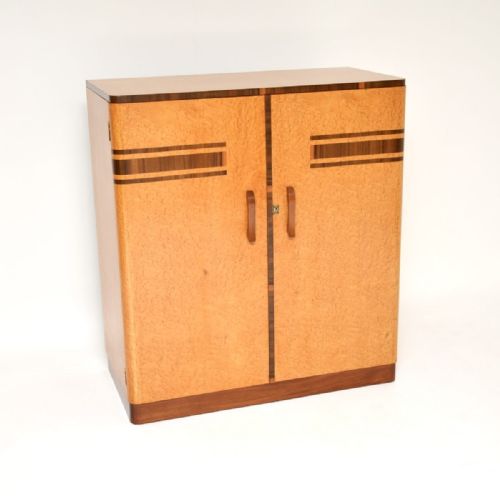
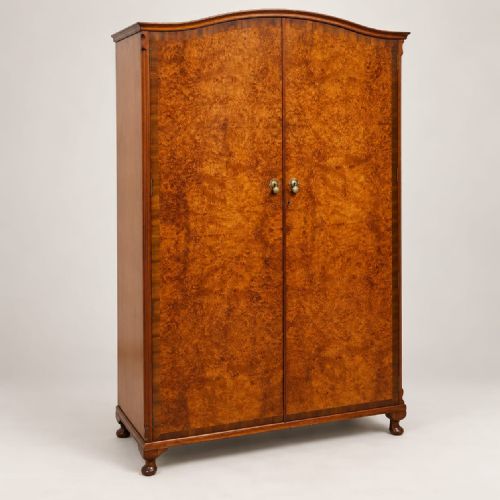
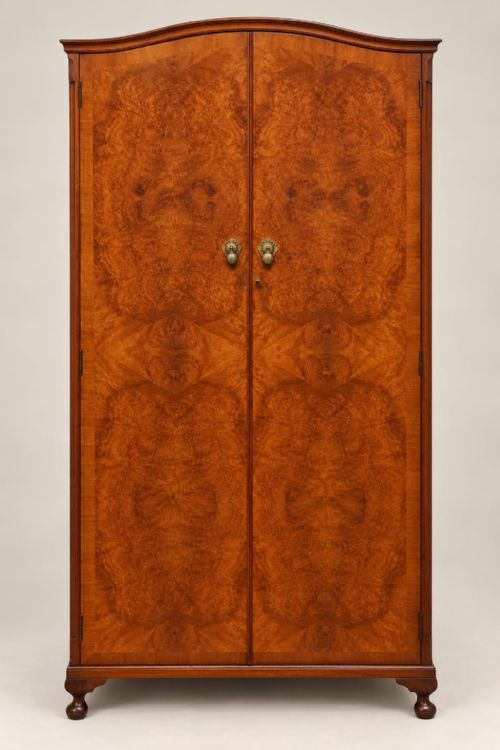


Art Deco Clothes Cabinet
An art deco clothes cabinet brings geometric warmth and striking wood grain directly into a bedroom.
Art Deco Clothes Cabinet
When you search for an art deco clothes cabinet, you encounter substantial storage furniture designed during the early decades of the twentieth century, primarily from nineteen thirty and nineteen twenty. The selection centres on wardrobes, double wardrobes, and compactum wardrobes executed in distinct modernist forms.
You are most likely to meet pieces built as compactum wardrobes or double wardrobes, which offer internal hanging space and fitted compartments behind paired doors. These items originate from the art deco and art deco revival styles, with earlier examples dating back to nineteen ten showing transitional characteristics.
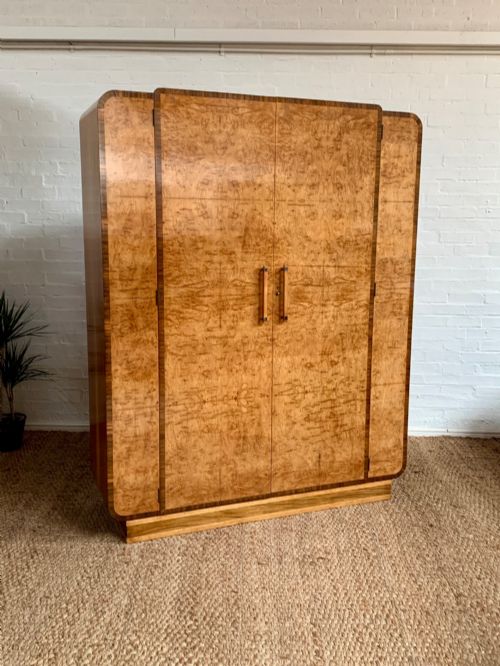
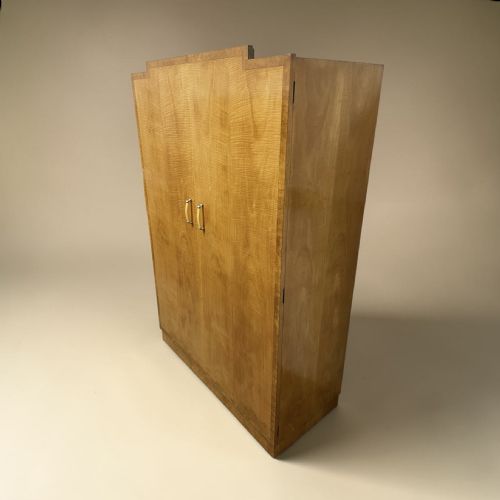
The forms range from small fitted wardrobes to large split side compactum variants designed to maximise interior storage whilst maintaining a clean exterior silhouette. Each piece reflects the functional requirements of domestic storage during the interwar period.
Materials and construction
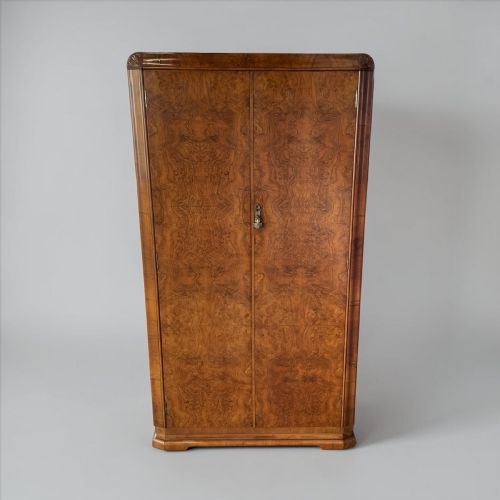
Cabinet makers utilised decorative wood veneers applied over timber carcases to achieve striking visual patterns on the main surfaces. Walnut and burr walnut dominate the construction, frequently paired with contrasting birds eye maple veneer and birch.
Hardware details rely on brass for handles, hinges, and structural accents, whilst early plastics such as bakelite appear on fittings and key escutcheons. The combination of figured grain patterns and metallic details defines the surface texture of these wardrobes.
Art Deco Clothes Cabinet Retail Price Guide 2026
Typical asking prices for art deco clothes cabinet among the pieces listed under this phrase on Sellingantiques today, from the lower quarter to the upper quarter. They describe what is for sale here now, not the wider market.
The listings span three distinct decades, with pieces recorded from nineteen ten, nineteen twenty, and nineteen thirty.
Assessing quality
Quality depends upon the selection and matching of wood veneers across the doors and panels, where symmetrical grain alignment elevates a piece visually. The choice between standard walnut and highly figured burr walnut or birds eye maple marks a clear distinction in material grade.
The integration of fitted internal compartments and the inclusion of named cabinet makers differentiate standard production pieces from higher tier commissions. Master workshops applied sophisticated veneering techniques that remain intact across the best preserved examples.
Waring and Gillow·Harry and Lou Epstein
The Art Deco Clothes Cabinet Glossary
- Compactum wardrobe
- A multi-functional storage piece that combines hanging space with internal drawers, shelves, and compartments within a single cabinet.
- Burr walnut
- A prized timber veneer harvested from the growth warts of walnut trees, yielding highly swirling and mottled grain patterns.
- Birds Eye maple veneer
- A decorative wood surface showing small, circular eye formations dotted across a pale golden background.
- Bakelite
- An early form of synthetic phenol formaldehyde resin utilised for handles, knobs, and decorative inserts on twentieth century furniture.
- Split side
- A cabinet construction style featuring distinct vertical divisions or stepped panels on the exterior flanking sections.
Art Deco Clothes Cabinet: Frequently Asked Questions
What is a compactum wardrobe?
A compactum wardrobe is a specialised storage unit that integrates hanging space alongside dedicated internal drawers and shelves within one unified frame.
This design style gained popularity for efficient bedroom organisation during the interwar period.
Where were these wardrobes used?
These large storage cabinets were positioned in principal bedrooms to hold garments, linens, and accessories.
Their substantial presence anchored the room design while concealing everyday attire behind panelled doors.
How do nineteen thirties pieces differ from nineteen tens?
Nineteen thirties pieces display geometric art deco styling with figured veneers and minimal ornamentation.
Nineteen tens examples tend to show heavier transitional proportions before the adoption of modernist design principles.