
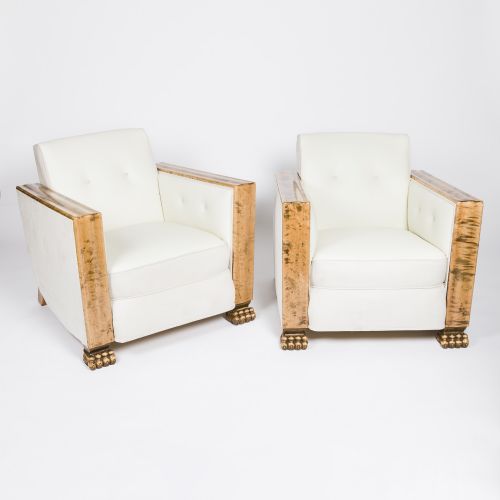


Art Deco Carved Armchairs
Art deco carved armchairs bring bold architectural lines and striking woodwork straight into a room, offering both sculptural presence and deep seating comfort.
How they were made
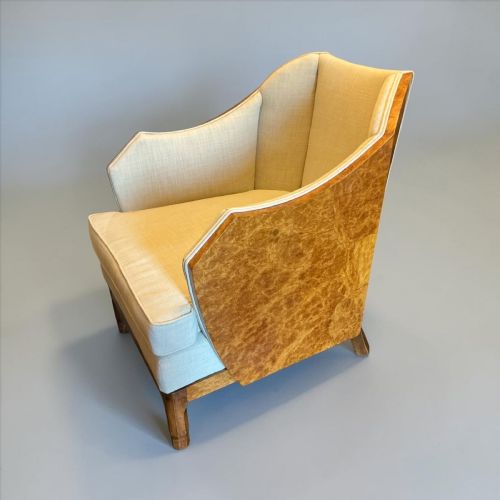
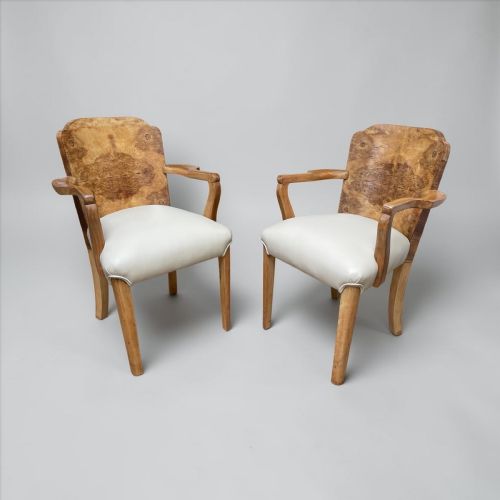
Frames rely on sturdy timbers such as oak, mahogany, elm, and birch, often incorporating burr birch or burr walnut veneers for rich surface grain. Woodworkers shaped these hardwoods into sweeping curves and distinct geometric frames that define the era.
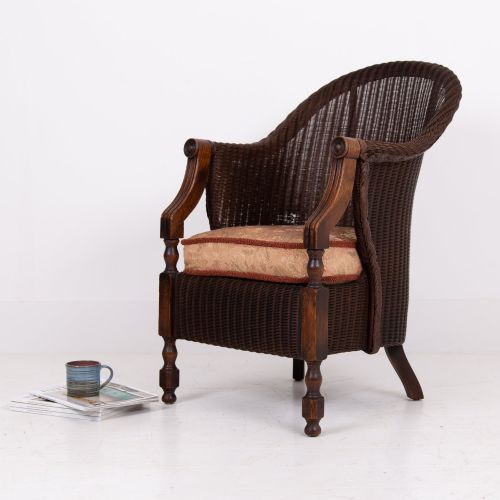
Upholstery techniques combined traditional sprung interiors with durable textiles like velvet, leather, fabric, and cane panels. Natural materials like wicker feature in specific conservatory and garden room designs from the period.
What varies in quality
Quality rests primarily in the ambition of the timber work and the integrity of the underlying frame construction. Finer examples display carefully selected burr veneers and crisp carved details that elevate the piece beyond standard production.
The sophistication of the silhouette also dictates standing, with barrel backs and deep club proportions demanding precise joinery to maintain structural balance. Original upholstery materials and intact cane work add historical depth to surviving pieces.
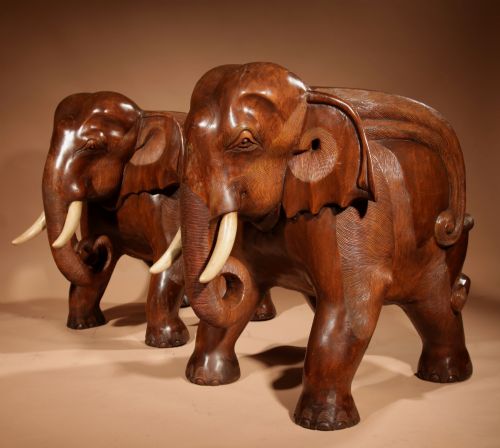
Elephant arm chairs appear among the selections, reminding us that early twentieth-century furniture names could be wonderfully eccentric.
The Art Deco Carved Armchairs Glossary
- Bergere
- A traditional French-style armchair with enclosed cane or wicker sides and back. This construction lightens the visual weight of heavy wooden frames.
- Barrel back
- A seating design where the backrest curves continuously around in a circular arc. This shape envelopes the sitter and provides sturdy lateral support.
- Burr walnut
- A prized wood veneer harvested from the growths of walnut trees. It exhibits intricate, swirling grain patterns highly valued in cabinet making.
- Cane
- Woven rattan or plant material used for seat panels and backrests. It offers flexible support while introducing textural contrast to polished wood.
Art Deco Carved Armchairs: Frequently Asked Questions
Where should I place an art deco armchair?
Art deco armchairs work best as statement seating in living rooms, studies, or large bedrooms where their distinct silhouette can be appreciated from multiple angles. Pairs look particularly striking positioned opposite a fireplace or flanking a central table.
Because these chairs have considerable visual weight, they need sufficient floor space around them rather than being crammed into a corner. Pairing them with simpler modern furnishings allows the carved woodwork and period lines to stand out.
How do I identify a 1920s armchair?
Chairs from the 1920s often feature distinctive geometric proportions, barrel back curves, or exposed mahogany and birch frames that bridge traditional forms with early modernism. Look for architectural armrest designs and characteristic wood veneers that signal the period.
Construction details such as traditional joinery and period upholstery textiles also help confirm the era of manufacture. Comparing the overall silhouette against known twentieth-century furniture styles clarifies the exact decade.
Are these chairs comfortable for daily use?
Club chairs and lounge armchairs from this era were engineered specifically for relaxation, offering deep seats and supportive padded backs. The generous proportions make them well suited for regular reading and lounging.
Comfort levels ultimately depend on the condition of the internal springing and padding. Many pieces retain supportive sprung interiors designed to withstand hours of sitting.
What is a bergere armchair?
A bergere armchair is characterised by wooden framing enclosing woven cane panels along the back and sides. This design originated in France and was revived during the art deco period to create lighter, more breathable seating.
The combination of exposed polished wood and natural cane creates a distinct textural contrast. These chairs offer a slightly airier aesthetic compared to fully upholstered club chairs.