
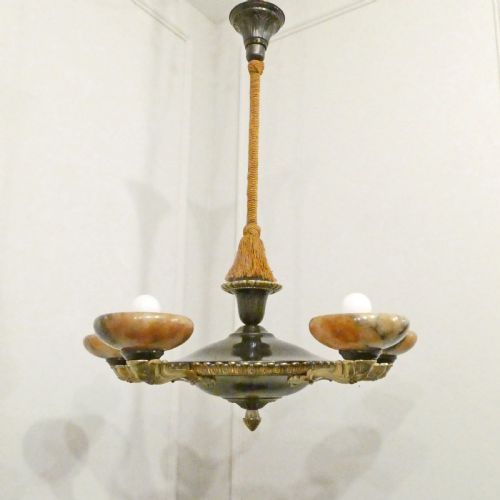


Art Deco Bowl Light
An art deco bowl light hangs overhead to diffuse a warm glow, combining geometric lines with natural materials from the interwar years.
Art Deco Bowl Light
An art deco bowl light is a ceiling-suspended fixture that directs illumination upwards or diffuses it softly through a central dish or shade. These pieces include plafonniers, hanging dish lights, and chandeliers designed to sit close to the ceiling or drop on cords and chains.
The versions most commonly met on this page date from the 1920s and 1930s, reflecting the shift toward streamlined domestic interiors. They arrive in forms ranging from simple pressed glass basins to carved alabaster bowls suspended by metal hardware.
Originating across different European centres, these lights utilise characteristic forms such as clam shells and opalescent basins. They serve as central architectural lighting for rooms requiring period character and diffused illumination.
How they were made
Glassmakers utilised pressing, moulding, and opalescent techniques to create patterned shades in satin glass, opal glass, and mirrored finishes. These methods allowed workshops to produce repeating geometric motifs and floral reliefs with consistent thickness.
Alabaster was hand-carved into heavy bowls and dishes, exploiting the natural veining of the stone to diffuse light evenly across the room. Metal components in brass, bronze, copper, and chrome were cast or spun to hold the heavy glass and stone elements securely.
Listings feature items exclusively from the 1920 and 1930 periods, executed in alabaster, frosted glass, brass, metal, chrome, copper, and bronze.
What varies in quality
Quality rests in the depth and clarity of the glass moulding, the purity of the alabaster veining, and the weight of the metal mounts. Heavy cast bronze or brass hardware and thick, flawless pressed glass distinguish finer examples from standard commercial production.
The integration of the design matters greatly, where the suspension cords, chains, and metal galleries complement the primary bowl rather than serving as generic replacements. Maker attribution, particularly concerning signed glass, elevates the standing of a fixture.
René Lalique
The Art Deco Bowl Light Glossary
- Alabaster
- A fine-grained, translucent stone used extensively for carved lighting bowls. Its natural opacity softens and diffuses bulb light effectively.
- Opalescent Glass
- Glass containing minerals that create a milky, iridescent appearance with shifting colour tones. It captures and scatters light across the surface of the shade.
- Satin Glass
- Glass treated with an acid bath or sandblasting to produce a smooth, matte finish. This texture reduces glare while maintaining high light transmission.
- Chandelier
- A branched hanging light fixture designed to hold multiple illumination points. In this context, it often incorporates a central bowl supported by arms or chains.
Art Deco Bowl Light: Frequently Asked Questions
How do I hang an art deco bowl light?
These fixtures require secure ceiling joists or pattresses to support the combined weight of heavy glass bowls and metal hardware. Professional installation by an electrician ensures the suspension chains or rods are correctly balanced.
Wiring must be checked to comply with modern safety standards while retaining the original ceiling rose where possible.
What is the difference between alabaster and glass bowls?
Alabaster is a natural stone that offers unique veining and a heavy, dense feel when suspended from the ceiling. Glass bowls provide uniform translucency and can be moulded into complex geometric or floral patterns.
Both materials serve the same primary function of diffusing direct bulb glare into a soft ambient glow.
How do I clean an alabaster bowl light?
Alabaster is porous and sensitive to moisture, so it requires dry dusting or wiping with a slightly damp cloth without harsh chemical detergents. Excess water can stain or damage the soft stone surface.
Glass shades can be removed and washed in warm soapy water before being dried thoroughly and reattached.
Are these lights suitable for low ceilings?
Flush-fitting plafonniers and dish lights sit tight against the ceiling plane, making them suitable for rooms with restricted vertical clearance. Pendants and chandeliers with longer cords or chains require higher ceilings to hang safely.
Checking the overall drop measurement before purchase ensures the fixture clears doorways and walking paths.